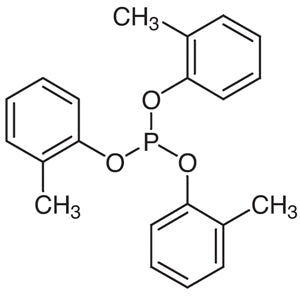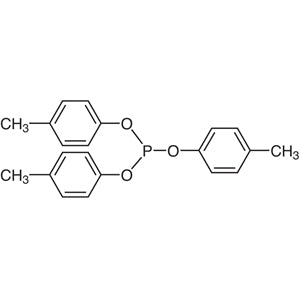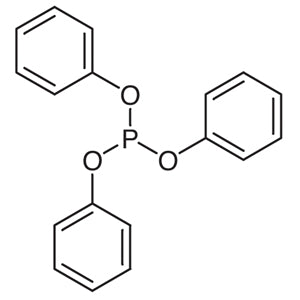
Triphenyl Phosphite (TCI T0510), with CAS number 101-02-0, is a versatile chemical compound widely used in laboratory settings, particularly in catalysis and inorganic chemistry. As a phosphorus-based compound, it plays a crucial role in various chemical reactions, including substitution and coupling reactions. Its reactivity and stability under specific conditions make it a valuable reagent for organic synthesis and purification processes. This compound is commonly found in research laboratories where it is utilized as a catalyst or reagent in the development of new chemical compounds.
One of the key properties that make Triphenyl Phosphite a preferred choice is its ability to form stable intermediates during chemical reactions. Its molecular structure allows it to interact effectively with a wide range of organic substrates, facilitating the formation of new bonds. Additionally, its relatively high stability under controlled laboratory conditions ensures consistent performance in various synthetic applications. These characteristics make it an essential component in the synthesis of heterocyclic compounds and other complex organic molecules.
In Indonesian laboratories, Triphenyl Phosphite is extensively used in organic chemistry research, catalytic processes, and compound synthesis. Its reactivity and effectiveness as a catalyst contribute to the success of many chemical reactions, making it a staple in both academic and industrial research settings. Its application spans across various scientific disciplines, supporting advancements in chemical innovation and development.
TCI brochures (PDF)
- Polymer Additives 2026-04-16 · p. 9
- Ligands 2025-12-01 · p. 8
Related TCI products
- Organic synthesis reactions benefit from Triphenyl Phosphite's ability to act as a catalyst in forming new chemical bonds.
- It is widely used in coupling reactions where it facilitates the formation of carbon-carbon bonds in complex organic molecules.
- In purification processes, it helps in the removal of impurities through its reactivity with unwanted byproducts.
- Its role in the synthesis of heterocyclic compounds is critical due to its ability to stabilize reactive intermediates.
- It is commonly employed in laboratory settings for the preparation of various organic compounds through substitution reactions.
| Brand | TCI |
|---|---|
| CAS number | 101-02-0 |
| Molecular formula | — |
| Purity | — |
| Category | Chemistry > Catalysis and Inorganic Chemistry > Phosphorous Compounds |
| Pack sizes | Available in various quantities as per supplier specifications |
| Physical form | Liquid |
| Storage | Store in a cool, dry place away from direct sunlight |
Triphenyl Phosphite should be stored in a cool, dry environment, away from direct sunlight and sources of heat. It is recommended to keep it in a tightly sealed container to prevent exposure to air and moisture. Due to its reactivity, it should be handled with care, using appropriate personal protective equipment such as gloves and safety goggles. It is important to ensure that it is stored separately from incompatible substances to avoid any potential chemical reactions. In laboratory settings, proper ventilation should be maintained when handling this compound to minimize inhalation risks. Always follow standard safety protocols to ensure safe handling and storage practices.
—
Produk Terkait
-
Tris(1,1,1,3,3,3-hexafluoro-2-propyl)Phosphite TCI T3353
Regular price From Rp 3.367.350,00Regular priceRp 2.354.100,00Sale price From Rp 3.367.350,00 -
TributylPhosphite TCI T0362
Regular price From Rp 903.000,00Regular priceRp 631.050,00Sale price From Rp 903.000,00 -
Tris(2,4-di-tert-butylphenyl)Phosphite TCI P1421
Regular price From Rp 477.750,00Regular priceRp 333.900,00Sale price From Rp 477.750,00 -
Tri-o-tolylPhosphite TCI P1416
Regular price From Rp 2.121.000,00Regular priceRp 1.482.600,00Sale price From Rp 2.121.000,00 -
TrihexylPhosphite TCI P1260
Regular price From Rp 1.378.650,00Regular priceRp 963.900,00Sale price From Rp 1.378.650,00 -
Tri-p-tolylPhosphite TCI P1175
Regular price From Rp 980.700,00Regular priceRp 685.650,00Sale price From Rp 980.700,00 -
TriisodecylPhosphite(mixtureofisomers) TCI T0420
Regular price From Rp 795.900,00Regular priceRp 556.500,00Sale price From Rp 795.900,00 -
Tris(2-ethylhexyl)Phosphite TCI P1169
Regular price From Rp 1.035.300,00Regular priceRp 723.450,00Sale price From Rp 1.035.300,00