Disodium 1,3-Propanedisulfonate is a chemical compound widely used in laboratory settings as a building block for various chemical reactions and syntheses. This compound plays a crucial role in organic chemistry by serving as a versatile reagent that supports the development of complex organic molecules. Its molecular structure allows it to participate in multiple types of reactions, making it an essential tool for researchers working on synthetic pathways. In the laboratory, it is frequently used to facilitate substitution and coupling reactions, contributing to the efficiency and success of chemical processes.
The key properties that make Disodium 1,3-Propanedisulfonate a preferred choice include its ability to act as an electron donor and its capacity to provide sulfonate ions, which are critical in many chemical transformations. These characteristics enable it to be an effective catalyst or reagent in reactions requiring high reactivity. Additionally, its stability under standard laboratory conditions ensures that it remains reliable and consistent in various experimental setups. This reliability, combined with its chemical versatility, makes it a valuable component in both research and industrial applications.
In Indonesian laboratories, Disodium 1,3-Propanedisulfonate is commonly used in organic and analytical chemistry research. It supports the development of new compounds and aids in qualitative and quantitative analysis. Its availability in the local market ensures that researchers can easily access this essential material for their experiments and studies.
Related TCI products
- TCI V0037 330581-20-9 Disodium 1-Naphthol-3,6-disulfonate Hydrate
- TCI N0268 525-05-3 Disodium 1-Nitroso-2-naphthol-3,6-disulfonate Monohydrate
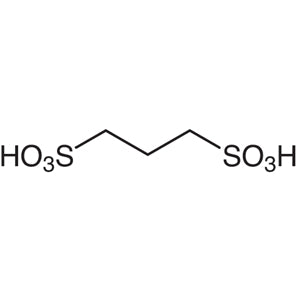
- TCI P1204 21668-77-9 1,3-Propanedisulfonic Acid (50-60% in Water)
- TCI A0308 853-68-9 Disodium Anthraquinone-2,6-disulfonate
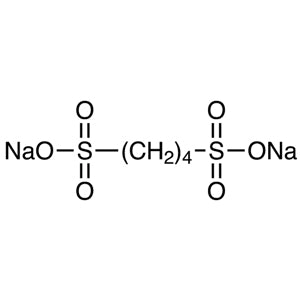
- TCI B0676 36589-61-4 Disodium 1,4-Butanedisulfonate
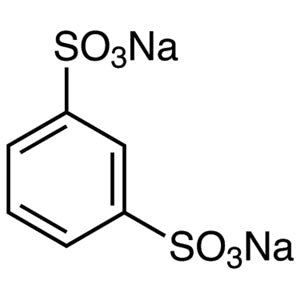
- TCI B0023 831-59-4 Disodium 1,3-Benzenedisulfonate
- Organic synthesis where sulfonate groups are required for functional group transformations.
- Coupling reactions that benefit from the electron-donating properties of the compound.
- Analytical chemistry applications involving ion exchange or chromatographic separations.
- Reactions requiring a stable and reactive sulfonate donor for substitution mechanisms.
- Research projects focused on the development of new organic compounds and chemical intermediates.
| Brand | TCI |
|---|---|
| CAS number | 36589-58-9 |
| Molecular formula | — |
| Purity | — |
| Category | Chemistry > Building Blocks > Non-Heterocyclic Building Blocks |
| Pack sizes | Available in various quantities as per standard laboratory supply |
| Physical form | Solid |
| Storage | Store in a cool, dry place away from moisture and direct sunlight |
Disodium 1,3-Propanedisulfonate should be stored in a cool, dry environment to maintain its chemical integrity. It is recommended to keep it in a sealed container to prevent exposure to moisture and air. The compound is generally stable under standard laboratory conditions, but it should be handled with care to avoid contamination. Suitable containers for storage include airtight glass or plastic vessels that are resistant to chemical interaction. General laboratory precautions include wearing appropriate personal protective equipment when handling the material to ensure safety. Proper storage and handling practices help preserve the compound's effectiveness and ensure safe usage in experimental settings.
—
Produk Terkait
-
Disodium1-Naphthol-3,6-disulfonateHydrate TCI V0037
Regular price Rp 584.850,00Regular price -
Disodium1-Nitroso-2-naphthol-3,6-disulfonateMonohydrate TCI N0268
Regular price From Rp 1.035.300,00Regular price -
1,3-PropanedisulfonicAcid(50-60%inWater) TCI P1204
Regular price Rp 1.749.300,00Regular price -
DisodiumAnthraquinone-2,6-disulfonate TCI A0308
Regular price From Rp 5.247.900,00Regular price -
Disodium1,4-Butanedisulfonate TCI B0676
Regular price Rp 4.691.400,00Regular price -
Disodium1,3-Benzenedisulfonate TCI B0023
Regular price From Rp 505.050,00Regular price -
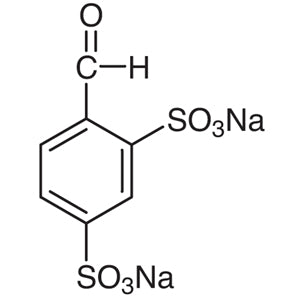
Disodium4-Formylbenzene-1,3-disulfonate TCI B0008
Regular price Rp 1.431.150,00Regular price -
Anthraquinone-1,5-disulfonicAcidDisodiumSalt TCI A0506
Regular price Rp 2.306.850,00Regular price