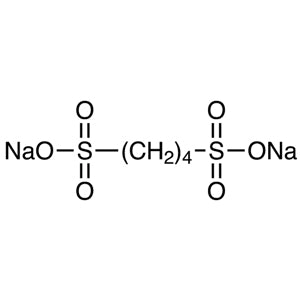
1,3-Propanedisulfonic Acid (50-60% in Water) is a versatile chemical compound widely used in laboratory settings for its reactivity and functional group versatility. This compound serves as a key building block in organic synthesis, particularly in substitution reactions and bond-forming processes. Its molecular structure, featuring two sulfonate groups connected by a three-carbon chain, makes it ideal for creating complex organic molecules. In research and development, it plays a critical role in the synthesis of functional compounds such as surfactants, polymers, and industrial chemicals.
The compound's strong acidic properties and solubility in water make it a preferred choice for various chemical applications. Its ability to participate in acid-base reactions and act as a catalyst in synthetic processes enhances its utility in laboratory experiments. Additionally, its stability under controlled conditions allows for consistent performance in different chemical environments. These characteristics make it a reliable reagent for both basic and advanced chemical research.
In Indonesian laboratories, 1,3-Propanedisulfonic Acid is extensively used in both fundamental and applied chemical research. It is commonly found in studies related to polymer chemistry, surfactant development, and industrial chemical synthesis. Its availability and chemical properties make it a standard component in many laboratory workflows, supporting a wide range of scientific investigations and innovations.
Related TCI products
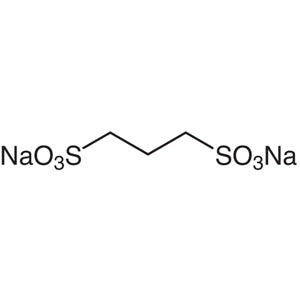
- TCI P1205 36589-58-9 Disodium 1,3-Propanedisulfonate
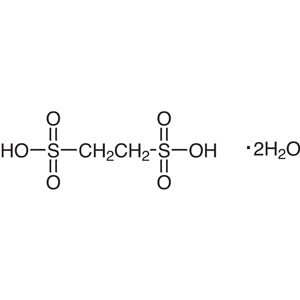
- TCI E0453 5982-56-9 1,2-Ethanedisulfonic Acid Dihydrate
- TCI S0136 89-08-7 4-Sulfophthalic Acid (contains 3-Sulfophthalic Acid) (ca 50% in Water)
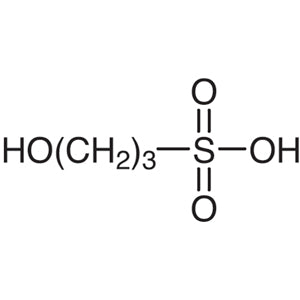
- TCI H0597 15909-83-8 3-Hydroxypropanesulfonic Acid (contains varying amounts of 3,3'-Oxydipropanesulfonic Acid) (ca 80% in Water, ca 78mol/L)
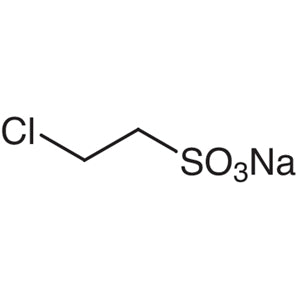
- TCI C1110 15484-44-3 Sodium 2-Chloroethanesulfonate (ca. 13% in Water)
- TCI V0037 330581-20-9 Disodium 1-Naphthol-3,6-disulfonate Hydrate
- Organic synthesis applications benefit from this compound's reactivity and ability to form stable intermediates in complex molecule creation.
- Surfactant development relies on its sulfonate groups, which provide surface-active properties essential for formulation processes.
- Polymer chemistry research utilizes its functional groups to modify polymer structures and enhance material properties.
- Industrial chemical synthesis leverages its versatility in creating a wide range of functional compounds for manufacturing.
- Acid-base reaction studies use its strong acidic nature to control reaction conditions and catalyze desired chemical transformations.
| Brand | TCI |
|---|---|
| CAS number | 21668-77-9 |
| Molecular formula | — |
| Purity | — |
| Category | Chemistry > Building Blocks > Non-Heterocyclic Building Blocks |
| Pack sizes | 500g, 1kg |
| Physical form | Liquid |
| Storage | Store in a cool, dry place away from direct sunlight and incompatible materials. |
This compound should be stored in a cool, dry environment, away from direct sunlight and sources of heat. It is recommended to use sealed containers made of materials compatible with its chemical properties, such as glass or polyethylene. Due to its acidic nature, it should be handled with appropriate personal protective equipment, including gloves and safety goggles. Avoid contact with incompatible substances such as strong oxidizing agents. Ensure proper ventilation in the workspace to minimize inhalation of vapors. Regularly inspect storage containers for integrity to prevent leaks or contamination. Proper storage and handling practices are essential to maintain the compound's stability and ensure safe laboratory operations.
—
Produk Terkait
-
Disodium1,3-Propanedisulfonate TCI P1205
Regular price Rp 1.246.350,00Regular price -
1,2-EthanedisulfonicAcidDihydrate TCI E0453
Regular price From Rp 1.458.450,00Regular price -
4-SulfophthalicAcid(contains3-SulfophthalicAcid)(ca50%inWater) TCI S0136
Regular price From Rp 557.550,00Regular price -
3-HydroxypropanesulfonicAcid(containsvaryingamountsof3,3'-OxydipropanesulfonicAcid)(ca80%inWater,ca78mol/L) TCI H0597
Regular price From Rp 1.353.450,00Regular price -
Sodium2-Chloroethanesulfonate(ca.13%inWater) TCI C1110
Regular price From Rp 637.350,00Regular price -
Disodium1-Naphthol-3,6-disulfonateHydrate TCI V0037
Regular price Rp 584.850,00Regular price -
Disodium1,4-Butanedisulfonate TCI B0676
Regular price Rp 4.691.400,00Regular price -
Disodium1-Nitroso-2-naphthol-3,6-disulfonateMonohydrate TCI N0268
Regular price From Rp 1.035.300,00Regular price