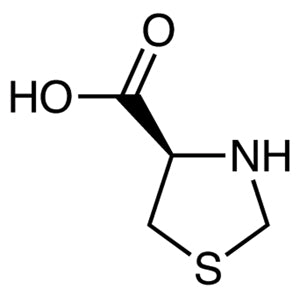
(S)-(+)-1-(2-Pyrrolidinylmethyl)pyrrolidine is a chiral compound widely used in asymmetric synthesis to produce molecules with specific optical configurations. This reagent plays a crucial role in laboratories where precise control over molecular structure is required. It is commonly employed in reactions that demand chiral catalysts or reagents to generate products with defined biological activity. Its unique chiral properties make it an essential tool in the development of pharmaceutical and organic compounds.
The compound's chiral characteristics allow for highly selective interactions with substrates, enhancing reaction efficiency and yield. Its stability under various chemical conditions ensures consistent performance across multiple experiments. This reliability makes it a preferred choice for researchers aiming to achieve reproducible results in complex synthetic processes. Additionally, its molecular structure supports specific interactions that are vital for achieving the desired stereochemistry in target molecules.
In Indonesian laboratories, this compound is utilized by chemists, pharmacologists, and biotechnologists for the synthesis of new compounds. It is particularly valuable in research areas requiring precise molecular control, such as drug development and organic synthesis. Its role in creating optically active compounds is critical for advancing scientific studies in both academic and industrial settings.
TCI brochures (PDF)
- Asymmetric Organocatalysts 2025-06-12 · p. 7
- Asymmetric Synthesis 2026-03-18 · p. 8
Related TCI products
- TCI A0945 64030-44-0 (S)-(+)-2-(Anilinomethyl)pyrrolidine
- TCI M1183 84466-85-3 (S)-(-)-1-Methyl-2-(1-piperidinomethyl)pyrrolidine
- TCI M1169 84025-81-0 (R)-2-(Methoxymethyl)pyrrolidine
- TCI M1161 63126-47-6 (S)-2-(Methoxymethyl)pyrrolidine
- TCI B6611 848821-61-4 (2S)-2-[Bis[3,5-bis(trifluoromethyl)phenyl][(trimethylsilyl)oxy]methyl]pyrrolidine
- TCI T3080 1089663-51-3 N-(2-Thiophenesulfonyl)-L-prolinamide
- Asymmetric Synthesis: This compound is ideal for asymmetric synthesis due to its chiral properties, enabling the production of optically active compounds with high stereocontrol.
- Pharmaceutical Research: Its use in pharmaceutical research allows for the development of drugs with specific stereochemistry, enhancing their biological activity and efficacy.
- Organic Chemistry Experiments: It supports complex organic reactions where precise stereochemical outcomes are necessary for the synthesis of target molecules.
- Biotransformation Studies: The compound's reactivity makes it suitable for studying enzyme-catalyzed reactions and metabolic pathways in biochemical research.
- Chiral Ligand Development: It is used in the design and testing of chiral ligands for catalytic processes, improving reaction selectivity and efficiency.
| Brand | TCI |
|---|---|
| CAS number | 51207-66-0 |
| Molecular formula | — |
| Purity | — |
| Category | Chemistry > Asymmetric Synthesis > Chiral Catalysts, Chiral Ligands, Chiral Reagents |
| Pack sizes | Available in various quantities as per supplier specifications |
| Physical form | Solid or liquid depending on the batch |
| Storage | Store in a cool, dry place away from light and moisture |
This compound should be stored in a cool, dry environment, away from direct light and moisture to maintain its stability and effectiveness. It is recommended to use airtight containers to prevent exposure to air and humidity. In laboratory settings, proper personal protective equipment should be worn when handling the material to ensure safety. The compound is generally non-hazardous under normal conditions, but care should be taken to avoid contamination. It is important to keep the material in a secure location to prevent accidental exposure or misuse. Regular monitoring of storage conditions is advised to ensure optimal preservation of its chemical properties.
—
Produk Terkait
-
(S)-(+)-2-(Anilinomethyl)pyrrolidine TCI A0945
Regular price From Rp 1.829.100,00Regular price -
(S)-(-)-1-Methyl-2-(1-piperidinomethyl)pyrrolidine TCI M1183
Regular price Rp 3.710.700,00Regular price -
(R)-2-(Methoxymethyl)pyrrolidine TCI M1169
Regular price From Rp 3.525.900,00Regular price -
(S)-2-(Methoxymethyl)pyrrolidine TCI M1161
Regular price From Rp 3.232.950,00Regular price -
(2S)-2-[Bis[3,5-bis(trifluoromethyl)phenyl][(trimethylsilyl)oxy]methyl]pyrrolidine TCI B6611
Regular price Rp 7.129.500,00Regular price -
N-(2-Thiophenesulfonyl)-L-prolinamide TCI T3080
Regular price Rp 3.155.250,00Regular price -
trans-4-(tert-Butyldiphenylsilyloxy)-L-proline TCI B3440
Regular price From Rp 4.823.700,00Regular price -
L-Thioproline TCI T0219
Regular price From Rp 1.590.750,00Regular price


![(2S)-2-[Bis[3,5-bis(trifluoromethyl)phenyl][(trimethylsilyl)oxy]methyl]pyrrolidine (CAS 848821-61-4) - TCI B6611 - AMI Scientific](http://amiscientific.com/cdn/shop/files/TCI2510B6611.jpg?v=1767094028&width=533)