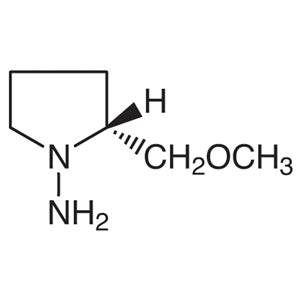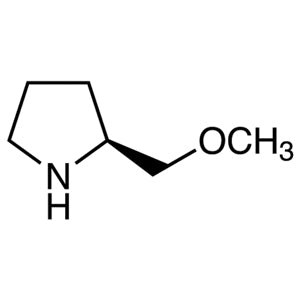
TCI M1161, also known as (S)-2-(Methoxymethyl)pyrrolidine with CAS number 63126-47-6, is a chiral reagent widely used in asymmetric synthesis. This compound plays a crucial role in laboratories by enabling the selective formation of chiral molecules, which are essential in pharmaceutical and biochemical research. Its application allows scientists to produce compounds with specific stereochemistry, which is vital for drug development and other advanced chemical processes. Due to its unique molecular structure, it is a key component in the synthesis of bioactive molecules with high specificity and efficiency.
The compound’s chiral nature and reactivity make it a preferred choice for researchers aiming to achieve high enantioselectivity in their reactions. Its ability to interact selectively with substrates enhances the effectiveness of synthetic pathways, reducing the need for additional purification steps. This reagent is particularly valuable in complex syntheses where precise control over molecular structure is required. Its stability and compatibility with various reaction conditions further contribute to its reliability in laboratory settings.
In Indonesian laboratories, this compound is commonly used in chemical, pharmaceutical, and biotechnology research. Local scientists rely on it to develop new synthetic methods that produce active compounds efficiently and cost-effectively. Its role in advancing research in these fields is significant, supporting innovation in drug discovery and other scientific applications.
TCI brochures (PDF)
- Asymmetric Organocatalysts 2025-06-12 · p. 7
- Asymmetric Synthesis 2026-03-18 · p. 8
Related TCI products
- TCI M1169 84025-81-0 (R)-2-(Methoxymethyl)pyrrolidine
- TCI A0945 64030-44-0 (S)-(+)-2-(Anilinomethyl)pyrrolidine
- TCI P1241 51207-66-0 (S)-(+)-1-(2-Pyrrolidinylmethyl)pyrrolidine
- TCI B6611 848821-61-4 (2S)-2-[Bis[3,5-bis(trifluoromethyl)phenyl][(trimethylsilyl)oxy]methyl]pyrrolidine
- TCI T3080 1089663-51-3 N-(2-Thiophenesulfonyl)-L-prolinamide
- TCI B3440 259212-61-8 trans-4-(tert-Butyldiphenylsilyloxy)-L-proline
- Asymmetric Synthesis: This compound is ideal for asymmetric synthesis due to its chiral nature, enabling the selective formation of enantiomers with high efficiency.
- Pharmaceutical Research: It is widely used in drug development to create chiral compounds with specific biological activities and improved therapeutic effects.
- Organic Chemistry Studies: Researchers use it to explore new synthetic pathways and reaction mechanisms in organic chemistry, enhancing the understanding of stereochemical control.
- Biotransformation Studies: Its reactivity makes it suitable for studying how chiral compounds interact with biological systems and undergo metabolic transformations.
- Green Chemistry Initiatives: It supports sustainable chemical processes by enabling efficient and selective reactions that minimize waste and byproducts.
| Brand | TCI |
|---|---|
| CAS number | 63126-47-6 |
| Molecular formula | — |
| Purity | — |
| Category | Chemistry > Asymmetric Synthesis > Chiral Reagents |
| Pack sizes | Available in various quantities as per standard laboratory supply |
| Physical form | Liquid |
| Storage | Store in a cool, dry place away from light and moisture |
This compound should be stored in a cool, dry environment, away from direct light and moisture to maintain its chemical integrity. It is recommended to use airtight containers made of glass or polyethylene to prevent contamination and degradation. Due to its chiral nature, it is important to handle it with care to avoid any unintended racemization or loss of enantiomeric purity. In laboratory settings, proper personal protective equipment such as gloves and safety goggles should be worn when handling this material. It is also advisable to keep it in a well-ventilated area to ensure safe working conditions. Regular monitoring of storage conditions will help ensure the compound remains effective for its intended applications.
—
Produk Terkait
-
(R)-2-(Methoxymethyl)pyrrolidine TCI M1169
Regular price From Rp 3.525.900,00Regular price -
(S)-(+)-2-(Anilinomethyl)pyrrolidine TCI A0945
Regular price From Rp 1.829.100,00Regular price -
(S)-(+)-1-(2-Pyrrolidinylmethyl)pyrrolidine TCI P1241
Regular price From Rp 2.279.550,00Regular price -
(2S)-2-[Bis[3,5-bis(trifluoromethyl)phenyl][(trimethylsilyl)oxy]methyl]pyrrolidine TCI B6611
Regular price Rp 7.129.500,00Regular price -
N-(2-Thiophenesulfonyl)-L-prolinamide TCI T3080
Regular price Rp 3.155.250,00Regular price -
trans-4-(tert-Butyldiphenylsilyloxy)-L-proline TCI B3440
Regular price From Rp 4.823.700,00Regular price -
(R)-(+)-1-Amino-2-(methoxymethyl)pyrrolidine TCI A1337
Regular price Rp 8.082.900,00Regular price


![(2S)-2-[Bis[3,5-bis(trifluoromethyl)phenyl][(trimethylsilyl)oxy]methyl]pyrrolidine (CAS 848821-61-4) - TCI B6611 - AMI Scientific](http://amiscientific.com/cdn/shop/files/TCI2510B6611.jpg?v=1767094028&width=533)