Diethyl 1-Pyrrolidinemethylphosphonate is a chemical compound widely used in organic synthesis reactions. It plays a crucial role in laboratories where the formation of carbon-carbon bonds is required. This reagent is particularly valuable in the synthesis of heterocyclic compounds and organophosphorus compounds due to its unique molecular structure. Its ability to participate in specific chemical reactions makes it a versatile tool for chemists working on complex molecular structures.
The compound is known for its reactivity and stability under controlled conditions, which makes it a preferred choice for synthetic chemists. Its molecular structure allows it to act as both an electron donor and a reactive species in various reaction mechanisms. These properties enable it to be used in a wide range of synthetic pathways, enhancing the efficiency and success rate of chemical reactions. The compound's stability in certain environments further supports its reliability in laboratory settings.
In Indonesian laboratories, Diethyl 1-Pyrrolidinemethylphosphonate is commonly used in organic chemistry research, especially in the synthesis of complex compounds. It is a key reagent in experiments that require high reactivity and controlled chemical behavior. Many research institutions and universities in Indonesia rely on this compound for their experimental work, emphasizing its importance in both academic and industrial chemical research.
TCI brochures (PDF)
Related TCI products
- TCI D4074 62999-73-9 Diethyl (1,3-Dithian-2-yl)phosphonate
- TCI D3981 133113-76-5 Dimethyl 2-(1,3-Dithiole)phosphonate
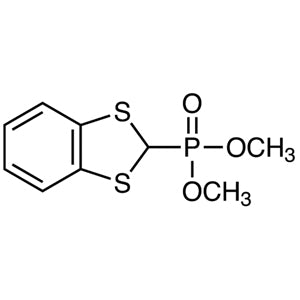
- TCI D3992 62217-35-0 Dimethyl 1,3-Benzodithiol-2-ylphosphonate
- TCI D5814 13086-84-5 Di-tert-butyl Phosphonate
- TCI T2718 115754-62-6 Tributyl(1,3-dioxolan-2-ylmethyl)phosphonium Bromide
- TCI T1514 13411-42-2 2-Trimethylsilyl-1,3-dithiane
- Organic synthesis of heterocyclic compounds due to its ability to participate in C-C bond formation reactions.
- Synthesis of organophosphorus compounds where its molecular structure enables specific chemical reactivity.
- Research in complex molecular structures requiring high reactivity and controlled chemical behavior.
- Development of pharmaceutical and agrochemical compounds through its role in synthetic pathways.
- Use in academic and industrial laboratories for experiments involving electron donation and reactive mechanisms.
| Brand | TCI |
|---|---|
| CAS number | 51868-96-3 |
| Molecular formula | — |
| Purity | — |
| Category | Chemistry > Synthetic Reagents > C-C Bond Formation |
| Pack sizes | Available in various quantities as per standard reagent packaging |
| Physical form | Solid |
| Storage | Store in a cool, dry place away from moisture and direct sunlight |
This compound should be stored in a cool, dry environment to maintain its chemical stability. It is recommended to use airtight containers to prevent exposure to moisture and air, which can affect its reactivity. Proper labeling of storage containers is essential for safety and identification. Handling should be done with appropriate personal protective equipment to minimize direct contact. The compound should be kept away from incompatible materials to ensure safe storage. Regular inspection of storage conditions is advised to maintain optimal laboratory safety and reagent integrity.
—
Produk Terkait
-
Diethyl(1,3-Dithian-2-yl)phosphonate TCI D4074
Regular price Rp 4.056.150,00Regular price -
Dimethyl2-(1,3-Dithiole)phosphonate TCI D3981
Regular price From Rp 5.910.450,00Regular price -
Dimethyl1,3-Benzodithiol-2-ylphosphonate TCI D3992
Regular price Rp 3.976.350,00Regular price -
Di-tert-butylPhosphonate TCI D5814
Regular price From Rp 848.400,00Regular price -
Tributyl(1,3-dioxolan-2-ylmethyl)phosphoniumBromide TCI T2718
Regular price Rp 4.081.350,00Regular price -
2-Trimethylsilyl-1,3-dithiane TCI T1514
Regular price From Rp 4.081.350,00Regular price -
[(1H-Benzotriazol-1-yl)methyl]triphenylphosphoniumChloride TCI B4486
Regular price From Rp 1.193.850,00Regular price -
1-Methyl-2-(methylsulfonyl)benzimidazole TCI M2860
Regular price From Rp 3.048.150,00Regular price




![111198-09-5 [(1H-Benzotriazol-1-yl)methyl]triphenylphosphonium Chloride - AMI Scientific](http://amiscientific.com/cdn/shop/files/TCI2510B4486.jpg?v=1768204328&width=533)