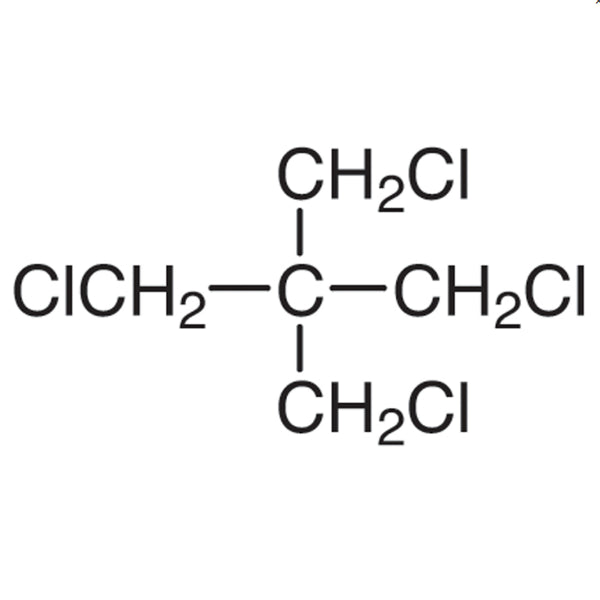
Pentaerythrityl Tetrachloride is a chemical compound widely used in laboratory settings as a foundational building block in various chemical reactions. It plays a crucial role in organic chemistry, particularly in the synthesis of complex molecules. This compound is valued for its stability and reactivity, making it a versatile tool for chemists. Its molecular structure allows for efficient participation in substitution and elimination reactions, which are essential in creating new chemical entities. Due to its predictable behavior, it is often selected for use in research that requires precision and consistency.
The compound's chemical properties, including its high reactivity and stable molecular structure, make it a preferred choice among researchers. Its symmetrical molecular framework enhances its utility in reactions that demand structural integrity. This stability allows it to serve as a reliable precursor in the synthesis of heterocyclic compounds, polymers, and industrial chemicals. The compound’s ability to undergo various chemical transformations without significant structural degradation further supports its widespread use in both academic and industrial research environments.
In Indonesian laboratories, Pentaerythrityl Tetrachloride is commonly used in organic chemistry research, especially in higher education institutions and research centers. Its relevance spans across multiple fields, including chemistry, pharmacy, and materials science. The compound is particularly useful in studies that require the development of new chemical compounds or the optimization of existing synthetic pathways. Its availability and reliability make it a key component in the chemical research landscape in Indonesia.
- Organic synthesis is a key application where Pentaerythrityl Tetrachloride serves as a versatile building block for creating complex molecules due to its reactivity and stable structure.
- Polymer research benefits from this compound as it can participate in chain reactions, contributing to the formation of various polymer structures.
- Heterocyclic compound synthesis relies on this material because of its ability to undergo substitution and elimination reactions, essential for ring formation.
- Industrial chemical production utilizes this compound as a precursor for manufacturing a wide range of chemical products.
- Material science research incorporates this compound in the development of new materials due to its chemical versatility and structural stability.
| Brand | TCI |
|---|---|
| CAS number | 3228-99-7 |
| Molecular formula | — |
| Purity | — |
| Category | Chemistry > Building Blocks > Non-Heterocyclic Building Blocks |
| Pack sizes | Available in various quantities as per standard laboratory supply |
| Physical form | Solid or liquid depending on the specific product variant |
| Storage | Store in a cool, dry place away from light and moisture |
Pentaerythrityl Tetrachloride should be stored in a cool, dry environment to maintain its chemical stability. It is recommended to keep it in airtight containers to prevent exposure to moisture and air, which could affect its reactivity. Laboratory personnel should handle the compound with care, using appropriate personal protective equipment such as gloves and safety goggles. Due to its chemical nature, it should be stored away from incompatible substances to avoid potential reactions. Regular inspection of storage conditions ensures the compound remains in optimal condition for use in research applications. Proper labeling and storage practices are essential to ensure safety and maintain the integrity of the material.
—
Produk Terkait
-
PentaerythritylTetrabromide TCI P0752
Regular price From Rp 1.644.300,00Regular price -
PentaerythritylTetraiodide TCI P0737
Regular price Rp 6.148.800,00Regular price -
1,1,1,3-Tetrachloropropane TCI T2426
Regular price Rp 1.856.400,00Regular price -
1,1,2,3-Tetrachloropropane TCI T0707
Regular price Rp 6.836.550,00Regular price -
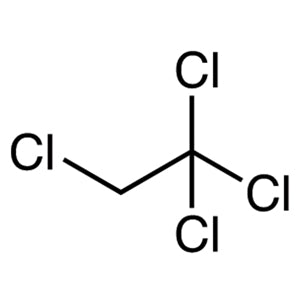
1,1,1,2-Tetrachloroethane TCI T0695
Regular price Rp 2.571.450,00Regular price -
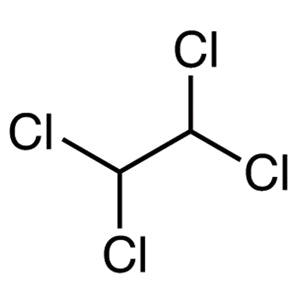
1,1,2,2-Tetrachloroethane TCI T0063
Regular price From Rp 477.750,00Regular price -
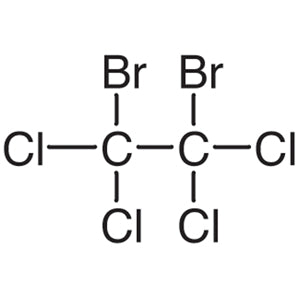
1,2-Dibromo-1,1,2,2-tetrachloroethane TCI D1987
Regular price Rp 1.431.150,00Regular price -
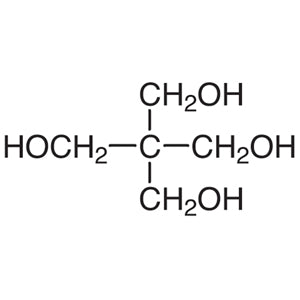
Pentaerythritol TCI P0039
Regular price From Rp 477.750,00Regular price