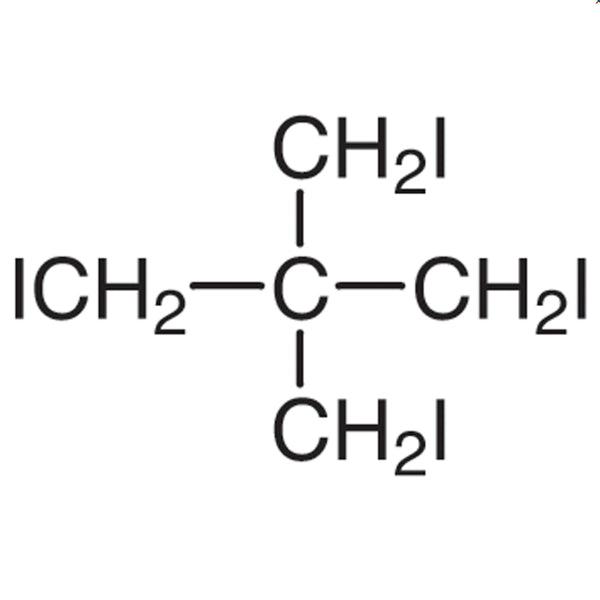
Pentaerythrityl Tetraiodide is a chemical compound widely used in laboratory settings for the synthesis of complex organic molecules. As a non-heterocyclic building block, it plays a crucial role in the development of new compounds with diverse applications in pharmaceuticals, materials science, and chemical industries. This compound is valued for its structural versatility and reactivity, making it an essential tool for chemists engaged in synthetic research. Its ability to participate in various chemical reactions, such as substitution and functional group transformations, enhances its utility in organic synthesis.
The compound is known for its stable molecular structure and high reactivity, which make it a preferred choice for researchers. It exhibits compatibility with a range of solvents and reagents, allowing for flexibility in experimental design. These properties enable it to be used in multiple reaction conditions, contributing to its popularity among scientists. Its chemical stability ensures consistent results, which is vital for reproducibility in laboratory experiments.
In Indonesian laboratories, Pentaerythrityl Tetraiodide is commonly used in both fundamental and applied chemical research. It supports the synthesis of organic compounds and is a key component in the inventory of laboratories focused on chemical synthesis. Its availability ensures that researchers can conduct high-quality experiments that meet national scientific standards.
Related TCI products
- Organic Synthesis: Pentaerythrityl Tetraiodide is ideal for creating complex organic structures due to its reactivity and structural versatility.
- Pharmaceutical Development: It is used in the synthesis of compounds with potential therapeutic applications, supporting drug discovery efforts.
- Material Science Research: The compound is employed in the development of new materials with specific chemical properties and functional characteristics.
- Chemical Reagent Testing: Its stability and reactivity make it suitable for testing various chemical reactions and reaction mechanisms.
- Educational Research: It is a valuable tool for teaching and learning advanced chemical synthesis techniques in academic and research settings.
| Brand | TCI |
|---|---|
| CAS number | 1522-88-9 |
| Molecular formula | — |
| Purity | — |
| Category | Chemistry > Building Blocks > Non-Heterocyclic Building Blocks |
| Pack sizes | Available in various quantities as per supplier specifications |
| Physical form | Solid |
| Storage | Store in a cool, dry place away from light and moisture |
Pentaerythrityl Tetraiodide should be stored in a cool, dry environment, away from direct light and moisture to maintain its chemical stability. It is recommended to use airtight containers to prevent exposure to air and humidity, which could affect its reactivity. Proper labeling of storage containers is essential for safety and traceability. In laboratory settings, it should be handled with appropriate personal protective equipment, such as gloves and safety goggles, to ensure safe handling. The compound is non-toxic in its solid form but should be treated with care during synthesis processes to avoid any potential hazards. Regular monitoring of storage conditions is advised to ensure the compound remains suitable for use in chemical experiments.
—
Produk Terkait
-
PentaerythritylTetrachloride TCI P1295
Regular price From Rp 1.829.100,00Regular price -
PentaerythritylTetrabromide TCI P0752
Regular price From Rp 1.644.300,00Regular price -
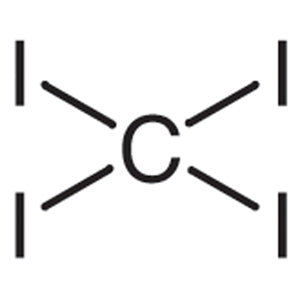
CarbonTetraiodide TCI C0936
Regular price Rp 3.287.550,00Regular price -
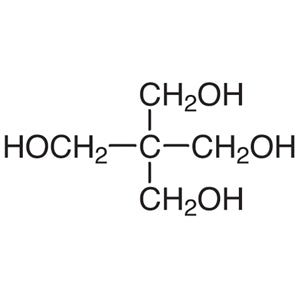
Pentaerythritol TCI P0039
Regular price From Rp 477.750,00Regular price -
PentaerythritolTetrakis[3-(3,5-di-tert-butyl-4-hydroxyphenyl)propionate] TCI P0932
Regular price Rp 955.500,00Regular price -
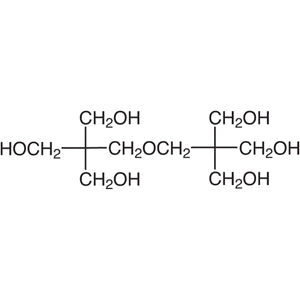
Dipentaerythritol TCI D1342
Regular price From Rp 505.050,00Regular price -
PentaerythritolTribromide TCI T1687
Regular price From Rp 955.500,00Regular price -
PentaerythritolDistearate(mixture) TCI P0738
Regular price Rp 1.590.750,00Regular price


![6683-19-8 Pentaerythritol Tetrakis[3-(3,5-di-tert-butyl-4-hydroxyphenyl)propionate] - AMI Scientific](http://amiscientific.com/cdn/shop/files/TCI2510P0932.jpg?v=1769143269&width=533)