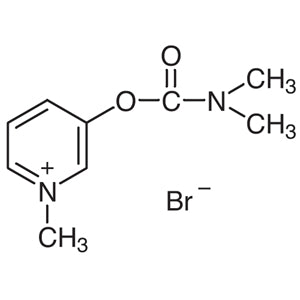
Pyridostigmine Bromide is a chemical compound widely used in pharmacological and biochemical research. It plays a crucial role in laboratory settings where the study of drug mechanisms, particularly those affecting the nervous system, is essential. This compound is commonly employed in experimental studies to investigate the effects of acetylcholinesterase inhibitors, which are vital in understanding nerve signal transmission processes. As a pharmaceutical research reagent, it supports the development and testing of drugs that target cholinergic pathways, making it an indispensable tool for researchers in life sciences.
The compound is chemically stable and soluble in organic solvents, which enhances its usability in a variety of chemical and biochemical experiments. These properties make it a preferred choice for laboratories requiring reliable and consistent reagents. Its stability ensures that it maintains its chemical integrity during storage and use, contributing to the accuracy and reproducibility of experimental results. Additionally, its relatively safe handling profile, when proper precautions are followed, makes it a practical option for routine laboratory work.
In Indonesian laboratories, Pyridostigmine Bromide is extensively used in drug research and biochemical studies. It is a key component in experiments related to pharmacology, neurochemistry, and drug development. Many educational and research institutions in Indonesia rely on this compound for conducting experiments that explore molecular interactions and physiological effects of various chemical substances.
- Pharmacological research involving acetylcholinesterase inhibition is well-suited for Pyridostigmine Bromide due to its known mechanism of action and effectiveness in studying cholinergic pathways.
- Biochemical studies on nerve signal transmission benefit from this compound as it enables the investigation of enzyme inhibition and neurotransmitter activity.
- Drug development projects often use Pyridostigmine Bromide to test the efficacy and safety of new compounds targeting the nervous system.
- Neurochemical experiments require this reagent to analyze the impact of acetylcholinesterase inhibitors on synaptic function and neuronal activity.
- Toxicological studies may incorporate Pyridostigmine Bromide to assess the effects of cholinergic agents on biological systems under controlled conditions.
| Brand | TCI |
|---|---|
| CAS number | 101-26-8 |
| Molecular formula | — |
| Purity | — |
| Category | Life Science > Biochemicals and Reagents > Pharmaceutical Research Reagents |
| Pack sizes | Available in various quantities as per standard laboratory reagent packaging |
| Physical form | Solid powder |
| Storage | Store in a cool, dry place away from direct sunlight and moisture |
Pyridostigmine Bromide should be stored in a cool, dry environment to maintain its chemical stability and prevent degradation. It is recommended to keep the compound in a tightly sealed container to avoid exposure to moisture and air, which could affect its integrity. Proper ventilation is essential when handling this material to minimize inhalation risks. Laboratory personnel should wear appropriate personal protective equipment, such as gloves and safety goggles, to ensure safe handling. While the compound is generally considered safe under normal conditions, it should be handled with care to avoid any potential irritation or contamination. Following standard laboratory safety protocols is crucial to ensure the safe use and storage of this reagent.
—
Produk Terkait
-
TCI B5774 5,10-Bis(4,4,5,5-tetramethyl-1,3,2-dioxaborolan-2-yl)naphtho[1,2-c:5,6-c']bis([1,2,5]oxadiazole)
Regular price Rp 10.255.350,00Regular price -
Dihydroiodide TCI B6569
Regular price From Rp 1.936.200,00Regular price -
Trifluoromethanesulfonate TCI B7003
Regular price From Rp 1.936.200,00Regular price
![5,10-Bis(4,4,5,5-tetramethyl-1,3,2-dioxaborolan-2-yl)naphtho[1,2-c:5,6-c']bis([1,2,5]oxadiazole) - TCI B5774 - AMI Scientific](http://amiscientific.com/cdn/shop/files/TCI2510B5774.jpg?v=1769180228&width=533)