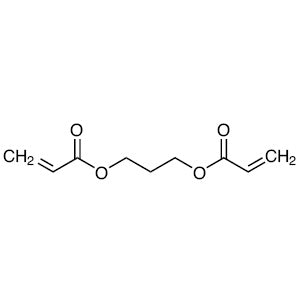
Diethyl 1,4-Phenylenediacrylate is a chemical compound widely used in laboratory settings for its versatility in organic synthesis and polymer chemistry. As a key building block, it serves as a monomer in the production of various polymers, including epoxy resins and polyacrylates. Its role in creating complex molecular structures makes it an essential tool for researchers working on material development and chemical innovation. This compound is particularly valuable in applications that require controlled polymerization and cross-linking reactions.
One of the main reasons for its popularity is its chemical stability under specific conditions and its reactivity with a wide range of reagents. These properties allow it to be easily incorporated into different synthetic pathways, making it a preferred choice for both academic and industrial research. Its well-defined molecular structure also facilitates accurate synthesis and analysis, ensuring predictable outcomes in experimental processes. The liquid form of Diethyl 1,4-Phenylenediacrylate further enhances its usability in various chemical reactions, especially those involving mixing or polymerization.
In Indonesian laboratories, Diethyl 1,4-Phenylenediacrylate is commonly used in chemical research, particularly in higher education institutions and research organizations. Due to its broad applications and availability, it is a go-to compound for chemists working on organic synthesis and material science projects. Its reliability and effectiveness make it a staple in the chemical laboratories of Indonesia.
Related TCI products
- TCI P1338 7549-44-2 Dimethyl 1,4-Phenylenediacrylate
- TCI P2898 24493-53-6 Propane-1,3-diyl Diacrylate (stabilized with MEHQ)
- TCI N0790 2223-82-7 Neopentyl Glycol Diacrylate (stabilized with MEHQ)
- TCI P1309 16323-43-6 1,4-Phenylenediacrylic Acid
- TCI A0231 2049-80-1 Diethyl Allylmalonate
- TCI A0089 762-21-0 Diethyl Acetylenedicarboxylate
- Organic synthesis applications benefit from Diethyl 1,4-Phenylenediacrylate due to its reactivity and ability to form stable intermediates in complex reaction sequences.
- Polymerization processes utilize this compound as a monomer to create epoxy resins and polyacrylates, offering structural versatility and chemical resistance.
- Material development research relies on this compound to design new polymers with tailored properties for industrial and biomedical applications.
- Analytical chemistry experiments use Diethyl 1,4-Phenylenediacrylate as a reference standard for spectroscopic and chromatographic analysis.
- Cross-linking studies in polymer science leverage its chemical structure to enhance the mechanical and thermal properties of synthesized materials.
| Brand | TCI |
|---|---|
| CAS number | 17088-28-7 |
| Molecular formula | — |
| Purity | — |
| Category | Chemistry > Building Blocks > Non-Heterocyclic Building Blocks |
| Pack sizes | Available in various quantities as per standard laboratory supply |
| Physical form | Liquid |
| Storage | Store in a cool, dry place away from direct sunlight and incompatible materials |
Diethyl 1,4-Phenylenediacrylate should be stored in a cool, dry environment to maintain its chemical stability and prevent degradation. It is recommended to use sealed containers made of glass or high-density polyethylene to minimize exposure to air and moisture. Since it is a reactive chemical, it should be kept away from strong oxidizing agents and incompatible substances. In laboratory settings, proper ventilation is essential when handling this compound to ensure safe working conditions. Always follow standard safety protocols, including the use of personal protective equipment, to prevent any potential hazards during handling and experimentation.
—
Produk Terkait
-
Dimethyl1,4-Phenylenediacrylate TCI P1338
Regular price From Rp 2.809.800,00Regular price -
Propane-1,3-diylDiacrylate(stabilizedwithMEHQ) TCI P2898
Regular price From Rp 2.227.050,00Regular price -
NeopentylGlycolDiacrylate(stabilizedwithMEHQ) TCI N0790
Regular price From Rp 823.200,00Regular price -
1,4-PhenylenediacrylicAcid TCI P1309
Regular price From Rp 637.350,00Regular price -
DiethylAllylmalonate TCI A0231
Regular price From Rp 2.068.500,00Regular price -
DiethylAcetylenedicarboxylate TCI A0089
Regular price From Rp 2.837.100,00Regular price -
Diethyl1,3-Acetonedicarboxylate TCI A0055
Regular price From Rp 1.140.300,00Regular price -
TerephthalaldehydeMono(diethylAcetal) TCI T1401
Regular price Rp 3.578.400,00Regular price