1-Phenylisoquinoline is a chemical compound widely used in various chemical experiments and scientific research. It belongs to the category of ligands for functional metal complexes, making it highly relevant in the synthesis of organic compounds and the study of chemical reactivity. In the laboratory, this compound is frequently used as a building block in the creation of metal complexes, particularly in the fields of materials science and coordination chemistry. Its unique structure allows it to form stable bonds with metal ions, which is essential for the development of advanced materials and catalytic systems.
The compound's high reactivity and ability to form strong coordination bonds with metals make it a preferred choice for researchers. Its stability under certain conditions further enhances its usability, simplifying storage and handling. These properties contribute to its effectiveness in a wide range of chemical reactions, making it a valuable tool for scientists working on complex molecular structures. Additionally, its chemical stability ensures that it maintains its integrity during various experimental procedures, which is crucial for accurate and reproducible results.
In Indonesian laboratories, 1-Phenylisoquinoline is commonly used in organic chemistry and materials science research. Researchers from educational institutions and research organizations rely on this compound for experiments requiring metal complexes. Its role in the development of new materials and advanced chemical systems makes it an essential component in many scientific studies conducted in Indonesia.
TCI brochures (PDF)
- Ligands 2025-12-01 · p. 16
Related TCI products
- TCI T2685 435293-93-9 Tris[1-phenylisoquinoline-C2,N]iridium(III) (purified by sublimation)
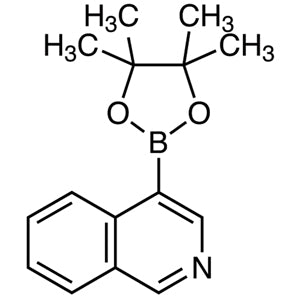
- TCI I0739 685103-98-4 4-(4,4,5,5-Tetramethyl-1,3,2-dioxaborolan-2-yl)isoquinoline
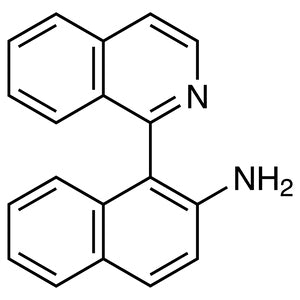
- TCI A2221 664302-70-9 1-(2-Amino-1-naphthyl)isoquinoline
- TCI I1246 6624-49-3 Isoquinoline-3-carboxylic Acid
- TCI I0942 80278-67-7 Isoquinoline-5-carboxaldehyde
- TCI I0671 486-73-7 Isoquinoline-1-carboxylic Acid
- Organic synthesis experiments benefit from 1-Phenylisoquinoline due to its ability to form stable metal complexes, enhancing reaction efficiency and product yield.
- Coordination chemistry studies utilize this compound to investigate metal-ligand interactions and the formation of various metal complexes.
- Materials science research employs it as a building block for creating advanced materials with specific functional properties.
- Catalytic reactions often incorporate 1-Phenylisoquinoline to improve reaction rates and selectivity in chemical transformations.
- Analytical chemistry applications use it as a reference standard for identifying and quantifying metal complexes in solution.
| Brand | TCI |
|---|---|
| CAS number | 3297-72-1 |
| Molecular formula | — |
| Purity | — |
| Category | Materials Science > Material Building Blocks > Ligands for Functional Metal Complexes |
| Pack sizes | Available in various quantities as per standard laboratory supply |
| Physical form | Solid, crystalline |
| Storage | Store in a cool, dry place away from light and moisture |
1-Phenylisoquinoline should be stored in a cool, dry place, away from direct light and moisture to maintain its chemical stability. It is recommended to use airtight containers to prevent exposure to air and potential degradation. Due to its reactivity, it should be handled in a well-ventilated area, and appropriate personal protective equipment, such as gloves and safety goggles, should be worn. Avoid contact with incompatible substances, and ensure proper disposal procedures are followed to comply with laboratory safety standards. Regular monitoring of storage conditions is essential to ensure the compound remains in optimal condition for use in experiments.
—
Produk Terkait
-
Tris[1-phenylisoquinoline-C2,N]iridium(III)(purifiedbysublimation) TCI T2685
Regular price Rp 10.733.100,00Regular price -
4-(4,4,5,5-Tetramethyl-1,3,2-dioxaborolan-2-yl)isoquinoline TCI I0739
Regular price From Rp 2.386.650,00Regular price -
1-(2-Amino-1-naphthyl)isoquinoline TCI A2221
Regular price Rp 7.446.600,00Regular price -
Isoquinoline-3-carboxylicAcid TCI I1246
Regular price From Rp 2.809.800,00Regular price -
Isoquinoline-5-carboxaldehyde TCI I0942
Regular price From Rp 3.790.500,00Regular price -
Isoquinoline-1-carboxylicAcid TCI I0671
Regular price From Rp 1.590.750,00Regular price -
IsoquinolineN-Oxide TCI I0540
Regular price Rp 2.650.200,00Regular price -
Isoquinoline-3-carboxylicAcidMonohydrate TCI I0509
Regular price From Rp 2.068.500,00Regular price
![435293-93-9 Tris[1-phenylisoquinoline-C2,N]iridium(III) (purified by sublimation) - AMI Scientific](http://amiscientific.com/cdn/shop/files/TCI2510T2685.jpg?v=1767143248&width=533)