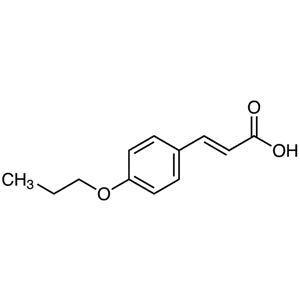
(E)-4-Propoxycinnamic Acid is a chemical compound widely used as a building block in the synthesis of complex molecules. It plays a crucial role in various laboratory applications, particularly in organic chemistry, where it serves as a versatile intermediate. Its molecular structure, consisting of a cinnamic acid group and a propoxy group, allows it to participate in multiple chemical reactions, including substitution and polymerization processes. This compound is essential for researchers aiming to develop new materials, pharmaceuticals, and functional chemicals. Its stability and controlled reactivity make it a reliable choice for experimental work.
The compound is known for its non-volatile nature and resistance to degradation, which ensures consistent performance over time. These properties make it ideal for long-term storage and repeated use in laboratory settings. Its chemical stability also reduces the risk of unwanted side reactions, enhancing the accuracy and reproducibility of experiments. Additionally, its compatibility with a wide range of solvents and reagents makes it a flexible option for various synthetic pathways. These characteristics contribute to its popularity among chemists and researchers.
In Indonesian laboratories, (E)-4-Propoxycinnamic Acid is commonly used in pharmaceutical and materials research. It is a key component in the development of new drugs and advanced polymers. Its application spans across academic and industrial research, supporting both fundamental and applied studies. The compound's reliability and versatility make it a valuable resource for scientists working in diverse chemical fields.
Related TCI products
- Used in organic synthesis for creating complex molecules due to its reactive functional groups and structural versatility.
- Applied in polymer science for kopolimerisasi reactions because of its ability to form stable intermediates and participate in chain growth.
- Utilized in pharmaceutical research for the development of new drug compounds due to its compatibility with various synthetic pathways.
- Employed in material science for the creation of functional polymers and coatings because of its chemical stability and reactivity.
- Integrated into analytical chemistry for the synthesis of reference standards and calibration compounds due to its predictable chemical behavior.
| Brand | TCI |
|---|---|
| CAS number | 151539-67-2 |
| Molecular formula | — |
| Purity | — |
| Category | Chemistry > Building Blocks > Non-Heterocyclic Building Blocks |
| Pack sizes | Available in various quantities as per standard laboratory supply |
| Physical form | Solid, crystalline powder |
| Storage | Store in a cool, dry place away from direct sunlight and moisture |
(E)-4-Propoxycinnamic Acid should be stored in a cool, dry environment to maintain its chemical integrity and prevent degradation. It is recommended to keep the compound in a sealed container to avoid exposure to moisture and air, which could affect its stability. Suitable containers include glass or high-density polyethylene (HDPE) bottles with tight-fitting lids. In laboratory settings, it is important to handle the compound with care, using appropriate personal protective equipment such as gloves and safety goggles. While it is generally non-hazardous, proper ventilation should be maintained when working with it to ensure a safe and controlled environment. Its non-volatile nature reduces the risk of evaporation, making it easier to manage in storage and use.
—
Produk Terkait
-
4-EthoxycinnamicAcid TCI E0856
Regular price Rp 1.298.850,00Regular price -
2,3,4-TrimethoxycinnamicAcid TCI T2016
Regular price From Rp 875.700,00Regular price -
2,4,5-TrimethoxycinnamicAcid TCI T1393
Regular price Rp 2.094.750,00Regular price -
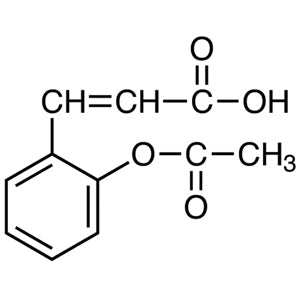
2-AcetoxycinnamicAcid TCI A2413
Regular price From Rp 1.565.550,00Regular price -
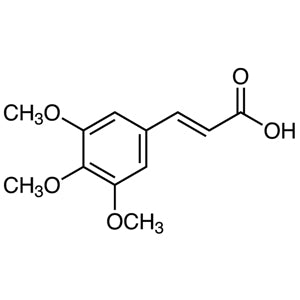
(E)-3,4,5-TrimethoxycinnamicAcid TCI T1104
Regular price Rp 2.597.700,00Regular price -
cis-2-MethoxycinnamicAcid TCI M0761
Regular price From Rp 2.147.250,00Regular price -
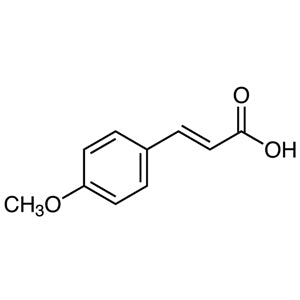
trans-4-MethoxycinnamicAcid TCI M0576
Regular price Rp 1.724.100,00Regular price -
trans-2-MethoxycinnamicAcid TCI M0449
Regular price Rp 2.730.000,00Regular price