4-(1-Pyrrolidinyl)piperidine from TCI (product code P1932) is a heterocyclic amine. It consists of a piperidine ring with a pyrrolidine ring attached at the 4-position. The molecule has two nitrogen atoms: a secondary nitrogen in the piperidine ring that stays available for further reaction, and a tertiary nitrogen in the pyrrolidine ring. This structure makes the compound an important heterocyclic building block in medicinal chemistry. The pyrrolidinyl-piperidine fragment appears often in the design of bioactive molecules and drug candidates, so synthesis laboratories keep this material on hand as a dependable starting reagent.
Chemists choose this compound mainly because the secondary NH on the piperidine ring can be alkylated or acylated. It can also take part in reductive amination and C–N coupling reactions. These reactions let researchers attach the whole cyclic diamine fragment to another molecular scaffold in a single step. The compound's basic, polar character can also change the solubility and pharmacokinetic properties of the target compound, so researchers often use it when optimizing structures. TCI supplies the material at consistent purity, which helps keep reaction outcomes reproducible from batch to batch and from one experiment to the next.
In Indonesia, this material is relevant to medicinal chemistry and pharmacy laboratories at universities that synthesize derivatives of bioactive compounds. Research laboratories building libraries of drug-like amine compounds also use it. Graduate students and academic research groups often use it for structure–activity relationship studies, where they compare several amine substituents on a shared core. Industrial research and development teams working on early-stage synthetic routes may also use it as a ready-made fragment instead of building the bicyclic amine themselves.
Related TCI products
- TCI P2428 10282-30-1 4-(1-Pyrrolidinyl)benzonitrile
- TCI B5002 877399-74-1 tert-Butyl 4-[4-(4,4,5,5-Tetramethyl-1,3,2-dioxaborolan-2-yl)pyrazol-1-yl]piperidine-1-carboxylate
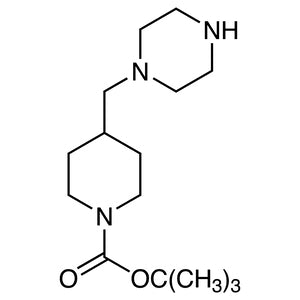
- TCI D5966 381722-48-1 tert-Butyl 4-(Piperazin-1-ylmethyl)piperidine-1-carboxylate
- TCI B5847 167484-18-6 Benzyl Spiro[indoline-3,4'-piperidine]-1'-carboxylate
- TCI P2296 50607-30-2 2,4-Piperidinedione
- TCI P2148 334981-10-1 4-[(1-Pyrrolidinylsulfonyl)methyl]aniline
- N-alkylation reactions: the free secondary NH on the piperidine ring reacts with alkyl halides or similar electrophiles, so the whole pyrrolidinyl-piperidine unit can be attached to a target scaffold.
- N-acylation and amide formation: the secondary amine couples readily with acid chlorides or activated carboxylic acids, giving amide derivatives that are useful in medicinal chemistry compound series.
- Reductive amination: the piperidine nitrogen condenses with aldehydes or ketones and is then reduced, offering a mild route for joining the cyclic diamine fragment to carbonyl-containing intermediates.
- C–N coupling reactions: as a secondary cyclic amine, it can serve as the nucleophilic partner in C–N bond-forming couplings with aryl electrophiles to build arylpiperidine-type structures.
- Structure optimization studies: its basic, polar character can change the solubility and pharmacokinetic profile of the target compound, which makes it valuable when researchers adjust lead structures in drug discovery work.
| Brand | TCI (product code P1932) |
|---|---|
| CAS number | 5004-07-9 |
| Molecular formula | — |
| Purity | — |
| Category | Chemistry > Building Blocks > Heterocyclic Building Blocks |
| Pack sizes | see the product listing for available TCI pack sizes |
| Physical form | refer to the TCI label and Certificate of Analysis supplied with the product |
| Storage | keep tightly closed in a cool, dry place, following the conditions on the TCI label and SDS |
Store 4-(1-Pyrrolidinyl)piperidine in its original, tightly sealed TCI container in a cool, dry, well-ventilated area away from direct sunlight and heat. Keep it away from acids, acid chlorides, and strong oxidizing agents, because it is an amine. Reseal the container promptly after use so that the material takes up as little moisture and atmospheric carbon dioxide as possible. Handle it in a fume hood and wear suitable gloves, safety glasses, and a laboratory coat. Avoid contact with skin and eyes and avoid breathing vapors or dust. Always read the Safety Data Sheet before use and follow your institution's chemical waste disposal procedures.
—
Produk Terkait
-
4-(1-Pyrrolidinyl)benzonitrile TCI P2428
Regular price From Rp 1.220.100,00Regular price -
tert-Butyl4-[4-(4,4,5,5-Tetramethyl-1,3,2-dioxaborolan-2-yl)pyrazol-1-yl]piperidine-1-carboxylate TCI B5002
Regular price From Rp 1.696.800,00Regular price -
tert-Butyl4-(Piperazin-1-ylmethyl)piperidine-1-carboxylate TCI D5966
Regular price From Rp 1.510.950,00Regular price -
BenzylSpiro[indoline-3,4'-piperidine]-1'-carboxylate TCI B5847
Regular price Rp 7.526.400,00Regular price -
2,4-Piperidinedione TCI P2296
Regular price From Rp 769.650,00Regular price -
4-[(1-Pyrrolidinylsulfonyl)methyl]aniline TCI P2148
Regular price From Rp 637.350,00Regular price -
1-(1-Methylpiperidin-4-yl)piperazine TCI M3757
Regular price From Rp 2.068.500,00Regular price -
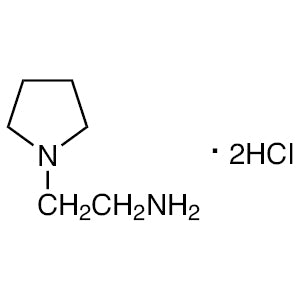
2-(1-Pyrrolidinyl)ethanamineDihydrochloride TCI A3393
Regular price Rp 1.881.600,00Regular price

![877399-74-1 tert-Butyl 4-[4-(4,4,5,5-Tetramethyl-1,3,2-dioxaborolan-2-yl)pyrazol-1-yl]piperidine-1-carboxylate - AMI Scientific](http://amiscientific.com/cdn/shop/files/TCI2510B5002_79e00c7c-6778-4604-beae-188e01d7ad50.jpg?v=1767854889&width=533)
![Benzyl Spiro[indoline-3,4'-piperidine]-1'-carboxylate (CAS 167484-18-6) - TCI B5847 - AMI Scientific](http://amiscientific.com/cdn/shop/files/TCI2510B5847.jpg?v=1767092839&width=533)

![334981-10-1 4-[(1-Pyrrolidinylsulfonyl)methyl]aniline - AMI Scientific](http://amiscientific.com/cdn/shop/files/TCI2510P2148.jpg?v=1767135798&width=533)