(R)-4-Phenylthiazolidine-2-thione is a chiral auxiliary from the thiazolidine-2-thione family. The molecule is a five-membered ring that contains sulfur and nitrogen. It carries a thiocarbonyl group and a stereogenic centre with a phenyl group at the 4-position. In the laboratory, chemists attach this auxiliary to a substrate for a limited time, usually as an N-acyl thiazolidinethione. It then guides the diastereoselective formation of new stereocentres. When the transformation is complete, the auxiliary is cleaved from the product, leaving the newly built chiral framework.
Thiazolidinethione auxiliaries have several advantages over classical oxazolidinones. The thiocarbonyl group coordinates strongly to metals such as titanium and tin. Because of this, chemists can steer asymmetric aldol reactions toward the diastereomer they want by choosing the reaction conditions. The N-acyl bond in thiazolidinethiones is also generally easier to cleave. A range of nucleophiles can release the auxiliary and convert the product directly into an aldehyde, ester, amide, or acid. The phenyl group provides effective steric shielding, and the defined (R) configuration sets the direction of stereochemical induction.
In Indonesia, this auxiliary is relevant to research groups working on total synthesis, natural product chemistry, and the development of chiral building blocks. University organic chemistry laboratories and research institutes can use it in projects where reliable stereocontrol is essential, such as building polyketide-type fragments or optically active intermediates. It also suits advanced teaching and thesis work in asymmetric methodology, where students compare auxiliary-based strategies and study how metal choice and reaction conditions affect diastereoselectivity in carbon–carbon bond formation.
TCI brochures (PDF)
- Chiral Auxiliaries and Optical Resolving Agents 2025-06-17 · p. 4
Related TCI products
- TCI P1960 185137-29-5 (S)-4-Phenylthiazolidine-2-thione
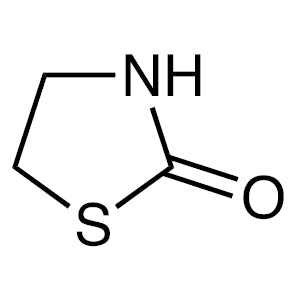
- TCI T3926 2682-49-7 Thiazolidin-2-one
- TCI T1974 127657-29-8 3-Ethyl (-)-Thiazolidine-3,4-dicarboxylate
- TCI T1325 30097-06-4 Thiazolidine-2,4-dicarboxylic Acid
- TCI T1324 16310-13-7 Thiazolidine-2-carboxylic Acid
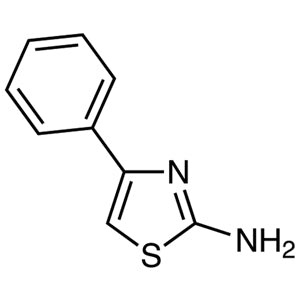
- TCI A2846 2010-06-2 2-Amino-4-phenylthiazole
- Asymmetric aldol reactions: the thiocarbonyl group coordinates strongly to titanium or tin, so chemists can select the reaction conditions that favour the desired aldol diastereomer.
- Diastereoselective synthesis of new stereocentres: once attached to a substrate as an N-acyl thiazolidinethione, the auxiliary directs bond formation through the steric shielding of its phenyl group.
- Direct conversion to aldehydes, esters, amides, or acids: the N-acyl bond is relatively easy to cleave, so different nucleophiles can release the auxiliary and deliver the target functional group in one step.
- Total synthesis and natural product chemistry: its predictable stereochemical induction from the defined (R) configuration helps research groups build complex chiral fragments reliably over multi-step routes.
- Methodology research and advanced teaching: it is a useful alternative to classical oxazolidinone auxiliaries for comparative studies of stereocontrol, metal coordination effects, and auxiliary cleavage strategies.
| Brand | TCI (product code P1959) |
|---|---|
| CAS number | 110199-18-3 |
| Molecular formula | — |
| Purity | — |
| Category | Chemistry > Asymmetric Synthesis > Chiral Auxiliaries |
| Pack sizes | as offered in the TCI catalogue for this product code |
| Physical form | refer to the TCI product label and Certificate of Analysis |
| Storage | follow the conditions on the TCI label and Safety Data Sheet |
Store (R)-4-Phenylthiazolidine-2-thione in its original, tightly closed manufacturer container. Keep it in a cool, dry, well-ventilated area, away from direct sunlight, heat sources, moisture, and incompatible substances such as strong oxidising agents. If the material is repackaged, use clean, dry, chemically compatible glass containers with secure closures and clear labels. Always follow the storage conditions on the TCI label and Safety Data Sheet. When handling the material, wear suitable personal protective equipment, including a lab coat, safety glasses, and chemical-resistant gloves. Work in a fume hood to avoid inhaling dust or vapour. Do not let it come into contact with your skin or eyes. Dispose of residues and contaminated materials according to local regulations and institutional chemical waste procedures.
—
Product Categories
Produk Terkait
-
(S)-4-Phenylthiazolidine-2-thione TCI P1960
Regular price Rp 4.823.700,00Regular priceRp 3.388.350,00Sale price Rp 4.823.700,00 -
Thiazolidin-2-one TCI T3926
Regular price From Rp 1.113.000,00Regular priceRp 793.800,00Sale price From Rp 1.113.000,00 -
3-Ethyl(-)-Thiazolidine-3,4-dicarboxylate TCI T1974
Regular price Rp 610.050,00Regular priceRp 442.050,00Sale price Rp 610.050,00 -
Thiazolidine-2,4-dicarboxylicAcid TCI T1325
Regular price Rp 2.013.900,00Regular priceRp 1.423.800,00Sale price Rp 2.013.900,00 -
Thiazolidine-2-carboxylicAcid TCI T1324
Regular price From Rp 822.150,00Regular priceRp 590.100,00Sale price From Rp 822.150,00 -
2-Amino-4-phenylthiazole TCI A2846
Regular price From Rp 1.351.350,00Regular priceRp 960.750,00Sale price From Rp 1.351.350,00 -
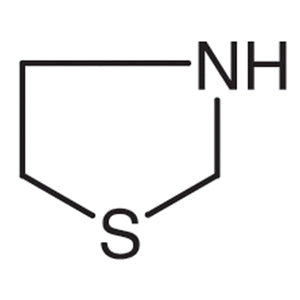
Thiazolidine TCI T0793
Regular price From Rp 1.618.050,00Regular priceRp 1.146.600,00Sale price From Rp 1.618.050,00 -
2-Phenylthiazole TCI P3197
Regular price From Rp 2.384.550,00Regular priceRp 1.683.150,00Sale price From Rp 2.384.550,00