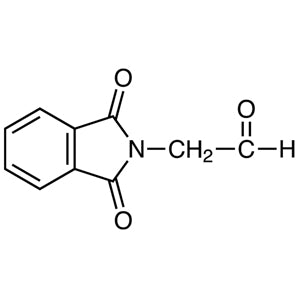
Phthalimidoacetaldehyde from TCI is an aldehyde that carries a phthalimide group on the alpha carbon. In practice, it behaves as aminoacetaldehyde with its nitrogen protected by a phthalimide group. It is a heterocyclic building block used to install a two-carbon fragment that ends in a protected amine. In synthetic laboratories it gives chemists a practical, controlled route to amines, amino acids, and nitrogen-containing heterocycles, which makes it a useful intermediate in multistep organic synthesis.
Chemists choose this material because it pairs a reactive aldehyde with a stable protected amine in one molecule. The aldehyde group can take part in reductive amination, Wittig or Horner–Wadsworth–Emmons olefination, aldol reactions, and nucleophilic additions. The phthalimide group protects the nitrogen through these steps. It can then be removed, for example with hydrazine as in the Gabriel method, to give a primary amine. This helps avoid the over-alkylation that often happens when free amines are used directly, so syntheses are cleaner and easier to predict.
In Indonesia, this compound is useful to synthetic organic chemistry, medicinal chemistry, and pharmaceutical laboratories that build nitrogen-containing molecules such as amino acid analogues, ligands, and bioactive compounds. University research groups, institutional research laboratories, and industrial R&D teams can use it when they need a dependable way to add a protected aminoethyl unit. As a TCI product, it gives Indonesian researchers a recognised reagent source for routine synthesis work and for exploratory projects in drug discovery and materials chemistry.
Related TCI products
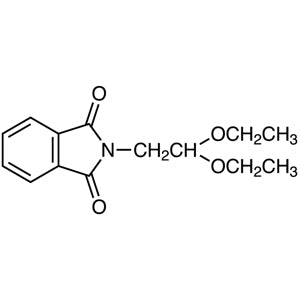
- TCI P1229 78902-09-7 2-Phthalimidoacetaldehyde Diethyl Acetal
- TCI A0201 58052-80-5 Acetaldehyde Ammonia Trimer
- TCI T4311 104-09-6 2-(p-Tolyl)acetaldehyde
- TCI B2481 60656-87-3 (Benzyloxy)acetaldehyde (stabilized with BHT)
- TCI A0928 28069-74-1 Acetaldehyde Ethyl cis-3-Hexenyl Acetal
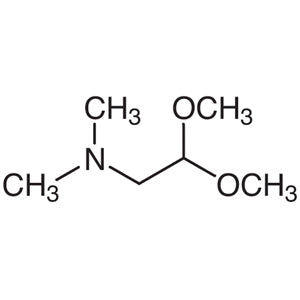
- TCI D1704 38711-20-5 (Dimethylamino)acetaldehyde Dimethyl Acetal
- Reductive amination: the reactive aldehyde condenses with amines and is then reduced, giving protected aminoethyl-substituted amines while the phthalimide keeps the original nitrogen from reacting further.
- Wittig and Horner–Wadsworth–Emmons olefination: the aldehyde reacts with phosphorus ylides or phosphonate carbanions to form alkenes that carry a protected amine, which helps when building unsaturated nitrogen-containing chain extensions.
- Aldol reactions and nucleophilic additions: the carbonyl group accepts enolates and other nucleophiles, letting chemists form new carbon–carbon bonds next to a masked primary amine for more elaboration later.
- Synthesis of amino acids and their analogues: the two-carbon fragment ending in a protected nitrogen is a convenient starting point for building amino acid frameworks and related structures in medicinal chemistry programmes.
- Gabriel-type primary amine release: after the main transformations are done, the phthalimide can be removed with hydrazine to reveal a primary amine without the over-alkylation problems seen with free amines.
| Brand | TCI (product code P2010) |
|---|---|
| CAS number | 2913-97-5 |
| Molecular formula | — |
| Purity | — |
| Category | Chemistry > Building Blocks > Heterocyclic Building Blocks |
| Pack sizes | see the available pack options on the product page |
| Physical form | see the TCI product label and Certificate of Analysis |
| Storage | keep in the original sealed container and follow the manufacturer's storage instructions |
Keep Phthalimidoacetaldehyde in its original, tightly closed container in a cool, dry, well-ventilated place, away from heat, direct sunlight, and incompatible materials such as strong oxidising agents. Aldehydes can be sensitive to air and moisture, so reseal the container promptly after each use. Always check the TCI label and Safety Data Sheet for the recommended storage temperature and any specific requirements. Handle the material in a fume hood, wearing suitable gloves, safety glasses, and a laboratory coat. Avoid breathing dust or vapour and avoid contact with skin and eyes. Dispose of waste according to local regulations and your institution's chemical safety procedures.
—
Produk Terkait
-
2-PhthalimidoacetaldehydeDiethylAcetal TCI P1229
Regular price Rp 2.623.950,00Regular priceRp 1.850.100,00Sale price Rp 2.623.950,00 -
AcetaldehydeAmmoniaTrimer TCI A0201
Regular price Rp 822.150,00Regular priceRp 590.100,00Sale price Rp 822.150,00 -
2-(p-Tolyl)acetaldehyde TCI T4311
Regular price Rp 3.100.650,00Regular priceRp 2.168.250,00Sale price Rp 3.100.650,00 -
(Benzyloxy)acetaldehyde(stabilizedwithBHT) TCI B2481
Regular price Rp 1.510.950,00Regular priceRp 1.056.300,00Sale price Rp 1.510.950,00 -
AcetaldehydeEthylcis-3-HexenylAcetal TCI A0928
Regular price Rp 769.650,00Regular priceRp 537.600,00Sale price Rp 769.650,00 -
(Dimethylamino)acetaldehydeDimethylAcetal TCI D1704
Regular price Rp 2.597.700,00Regular priceRp 1.832.250,00Sale price Rp 2.597.700,00 -
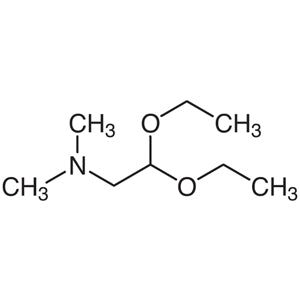
(Dimethylamino)acetaldehydeDiethylAcetal TCI D1703
Regular price Rp 1.881.600,00Regular priceRp 1.331.400,00Sale price Rp 1.881.600,00 -
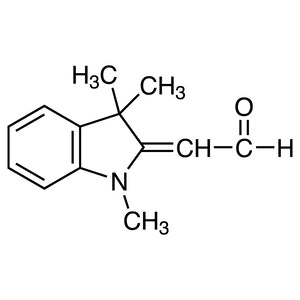
2-(1,3,3-Trimethylindolin-2-ylidene)acetaldehyde TCI T2235
Regular price Rp 955.500,00Regular priceRp 683.550,00Sale price Rp 955.500,00