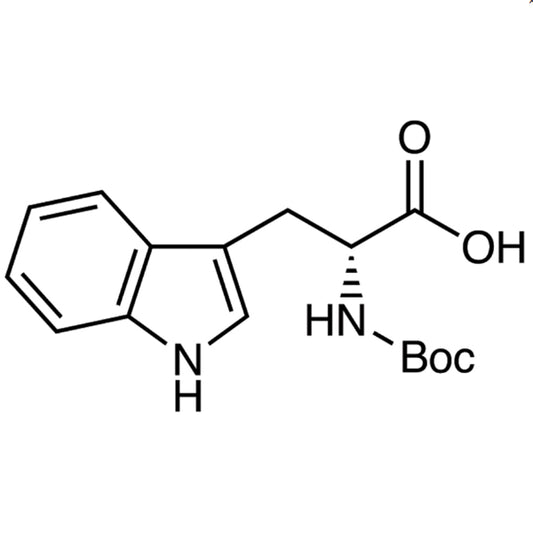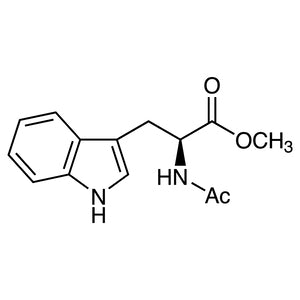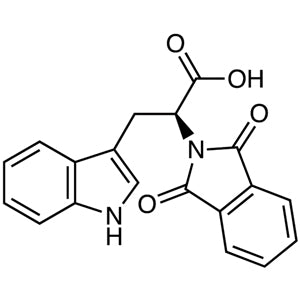
N-Phthalyl-L-tryptophan from TCI is a derivative of the amino acid L-tryptophan in which the alpha-amino group is protected by a phthaloyl group. In research literature the compound is also known by the code RG108. In biochemistry and cell biology laboratories, it is used as a non-nucleoside inhibitor of DNA methyltransferase (DNMT) in epigenetic studies. In chemistry laboratories, it can serve as a protected tryptophan derivative for organic synthesis. This gives it a role in both biomedical research and synthetic chemistry.
Its main appeal in epigenetic research is that it inhibits DNMT without being a nucleoside analogue. It does not need to be incorporated into DNA to act, unlike classical inhibitors such as the azacytidine analogues. For this reason, researchers often use it as a comparison tool when studying how DNA methylation affects gene expression. On the chemistry side, the phthaloyl group is a stable amine protecting group that can be removed with hydrazine. The compound also keeps the L configuration of its parent tryptophan, so it is useful in syntheses that need a specific chirality.
In Indonesia, research in epigenetics, cancer cell biology, and stem cells continues to grow in the biomedical laboratories of universities and research institutions. Researchers in these fields need well-characterised reagents from established brands such as TCI to get reproducible results in gene expression and DNA methylation studies. Organic and medicinal chemistry groups that work on amino acid derivatives and chiral synthesis can also use this compound as a protected tryptophan building block in their synthetic routes.
TCI brochures (PDF)
- Epigenetics Research Reagents 2024-11-22 · p. 1
- Cancer Research Reagents 2025-04-01 · p. 8
- Antimicrobials and Antitumor Agents for Research and Experimental Use 2025-04-24 · p. 15
- Amino Acids and Peptide Synthesis Reagents 2025-08-14 · p. 24
- Pharmaceutical Ingredients for Research and Experimental Use 2026-03-09 · p. 15
- Reagents for Biological Research 2025-03-11 · p. 62
Related TCI products
- Epigenetic research: it is used as a non-nucleoside DNMT inhibitor, so researchers can study DNA methylation without relying on compounds that must be incorporated into DNA.
- Gene expression studies: it serves as a comparison tool for examining how changes in DNA methylation affect gene expression in cultured cells and experimental models.
- Cancer cell biology: it supports research into how DNA methylation contributes to cancer, a field that is growing in Indonesian university and institutional biomedical laboratories.
- Stem cell research: it gives researchers a way to probe the role of DNMT activity and DNA methylation in stem cell behaviour and differentiation studies.
- Organic synthesis: it acts as a protected tryptophan derivative with a stable phthaloyl group that hydrazine can remove, and it keeps the L configuration needed in chiral synthesis.
| Brand | TCI (product code P2023) |
|---|---|
| CAS number | 48208-26-0 |
| Molecular formula | — |
| Purity | — |
| Category | Life Science > Biochemicals and Reagents > Amino Acids |
| Pack sizes | please check the current product listing for available pack sizes |
| Physical form | refer to the TCI product label and Certificate of Analysis |
| Storage | follow the storage conditions on the TCI label and Safety Data Sheet (SDS) |
Store N-Phthalyl-L-tryptophan in its original, tightly closed manufacturer's container, in a cool, dry, well-ventilated area away from direct sunlight, heat sources, and incompatible materials. If the label or SDS gives a specific storage temperature, follow it. Close the container promptly after each use to limit exposure to moisture and air. Handle the compound in line with good laboratory practice: wear a lab coat, safety glasses, and chemical-resistant gloves, and avoid creating or breathing in dust. Weigh it in a ventilated area or fume hood. Read the Safety Data Sheet before use, and dispose of waste according to institutional and local regulations.
—
Product Categories
- Biochemicals and ReagentsAmino AcidsN-Protected Amino Acids
- Biochemicals and ReagentsPharmaceutical Research Reagents (for Experimental Use)Antitumor Research Reagents (for Experimental Use)
- Molecular BiologyEpigeneticsBioactive Small Molecules for Epigenetic Research
- Pharmaceutical Development and Drug Discovery ResearchPharmaceutical Research Reagents (for Experimental Use)Antitumor Research Reagents (for Experimental Use)
Produk Terkait
-
Phthalyl-DL-glutamicAcid TCI P0338
Regular price From Rp 1.193.850,00Regular price -
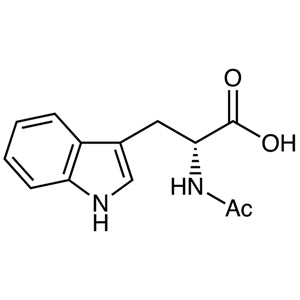
N-Acetyl-D-tryptophan TCI A0119
Regular price From Rp 769.650,00Regular price -
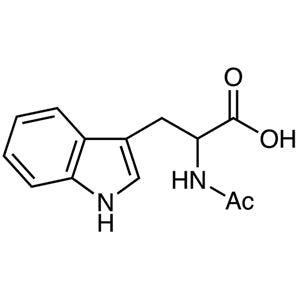
N-Acetyl-DL-tryptophan TCI A0120
Regular price From Rp 637.350,00Regular price -
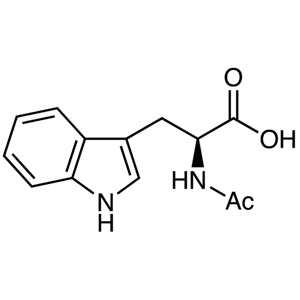
N-Acetyl-L-tryptophan TCI A0121
Regular price From Rp 477.750,00Regular price -
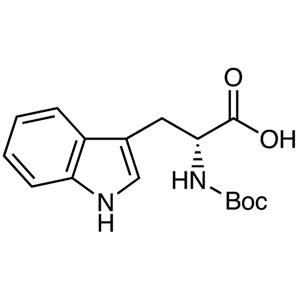
N-(tert-Butoxycarbonyl)-D-tryptophan TCI B2259
Regular price From Rp 823.200,00Regular price -
N-(tert-Butoxycarbonyl)-L-tryptophan TCI B1639
Regular price Rp 2.411.850,00Regular price -
MethylN-Acetyl-L-tryptophanate TCI A3486
Regular price From Rp 1.776.600,00Regular price -
N-Acetyl-L-tryptophanEthylEster TCI A0122
Regular price Rp 1.140.300,00Regular price