![189028-93-1 (S)-4-Phenyl-3-[5-(4-fluorophenyl)-5-oxopentanoyl]-2-oxazolidinone - AMI Scientific](http://amiscientific.com/cdn/shop/files/TCI2510P2111.jpg?v=1769057483&width=1946)
![189028-93-1 (S)-4-Phenyl-3-[5-(4-fluorophenyl)-5-oxopentanoyl]-2-oxazolidinone - AMI Scientific](http://amiscientific.com/cdn/shop/files/TCI2510P2111.jpg?v=1769057483&width=1445)
(S)-4-Phenyl-3-[5-(4-fluorophenyl)-5-oxopentanoyl]-2-oxazolidinone is a complex chemical compound widely used in synthetic laboratory reactions. As a building block in organic chemistry, it serves as a foundational component for the synthesis of more complex organic molecules. Its unique structure and functional groups make it a versatile reagent in various chemical processes. This compound is particularly valuable in the development of new chemical entities, especially those with heterocyclic frameworks and fluorinated substitutions. Its presence in Indonesian laboratories underscores its importance in both academic and industrial research settings.
The compound's preferred status stems from its molecular complexity and the presence of a fluorinated group on its carbon chain. The fluorine atoms contribute to the molecule's chemical stability and enhance its reactivity in different synthetic pathways. Additionally, the oxazolidinone ring provides a reactive site for further chemical modifications, making it ideal for substitution reactions and bond formation. These properties make it a sought-after reagent in organic synthesis, especially for creating compounds with specific biological activities.
In Indonesian laboratories, this compound is commonly used in scientific research and pharmaceutical development. It plays a key role in the synthesis of bioactive compounds, supporting advancements in drug discovery and chemical innovation. Many research institutions and universities rely on it for experimental purposes, contributing to the growth of chemical technology and scientific knowledge in the region.
TCI brochures (PDF)
- Fluorination Reagents, Fluorinated Building Blocks 2026-03-18 · p. 16
Related TCI products
- Organic synthesis of bioactive compounds due to its reactive oxazolidinone ring and fluorinated substituents.
- Development of pharmaceuticals where fluorinated heterocyclic structures are required for enhanced biological activity.
- Research in chemical engineering for the creation of complex organic molecules with tailored properties.
- Academic studies in medicinal chemistry to explore new synthetic routes and molecular structures.
- Industrial applications in chemical manufacturing for the production of specialized organic intermediates.
| Brand | TCI |
|---|---|
| CAS number | 189028-93-1 |
| Molecular formula | — |
| Purity | — |
| Category | Chemistry > Building Blocks > Fluorinated Building Blocks |
| Pack sizes | Available in standard laboratory quantities as per supplier specifications |
| Physical form | Solid or crystalline, depending on manufacturer |
| Storage | Store in a cool, dry place away from moisture and direct sunlight |
This compound should be stored in a cool, dry environment to maintain its chemical integrity. It is recommended to keep it in airtight containers to prevent exposure to moisture and air, which may affect its stability. Due to its reactive nature, it should be handled with appropriate personal protective equipment, including gloves and safety goggles. Storage should be in a well-ventilated area to minimize any potential risks associated with its chemical properties. Avoid direct contact with skin or inhalation of vapors during handling. Proper labeling and storage conditions are essential to ensure safe usage in laboratory settings.
—
Produk Terkait
-
Benzyl4-FluorophenylKetone TCI B3213
Regular price Rp 2.359.350,00Regular price -
Bis(4-fluorophenyl)Ether TCI B2648
Regular price From Rp 1.326.150,00Regular price -
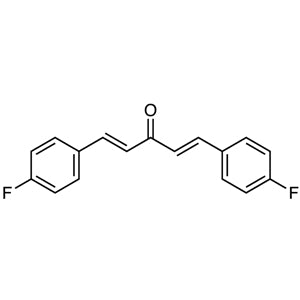
trans,trans-1,5-Bis(4-fluorophenyl)-1,4-pentadien-3-one TCI B2283
Regular price Rp 1.167.600,00Regular price -
4-FluorophenylAcetate TCI A1429
Regular price Rp 955.500,00Regular price -
3-FluorophenylIsocyanate TCI I0554
Regular price Rp 1.856.400,00Regular price -
4-FluorophenylIsocyanate TCI I0339
Regular price From Rp 1.220.100,00Regular price -
2-FluorophenylIsocyanate TCI I0338
Regular price From Rp 1.565.550,00Regular price -
Methyl2-(4-Fluorophenyl)acetate TCI F1418
Regular price Rp 2.306.850,00Regular price