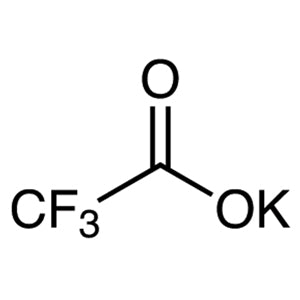
Potassium Trifluoroacetate (KTFAC), with CAS number 2923-16-2, is a chemical compound widely used in laboratory settings for its versatility in organic synthesis and chemical reactions. As a fluorinated building block, it plays a crucial role in the development of fluorinated compounds, which are essential in pharmaceutical and material sciences. Its unique molecular structure, featuring strong carbon-fluorine bonds, contributes to its reactivity and stability, making it a valuable reagent in various chemical processes.
The compound’s polar nature and good solubility in organic solvents enhance its usability in a wide range of chemical reactions. Its controlled reactivity and stability make it a preferred choice for researchers and students alike. Additionally, KTFAC is non-toxic and environmentally safe, reducing the risks associated with handling and disposal. This combination of chemical properties ensures its reliability in both academic and industrial laboratory environments.
In Indonesian laboratories, KTFAC is commonly used in organic chemistry research, particularly in substitution reactions and the synthesis of heterocyclic compounds. Its availability and ease of use make it a staple in educational institutions and research centers across the country. Its relevance extends to fields such as pharmaceutical development and material science, supporting innovation and discovery in these areas.
TCI brochures (PDF)
- Trifluoromethylating Reagents 2024-08-27 · p. 3
- Metallic Salts 2025-11-06 · p. 12
- Fluorination Reagents, Fluorinated Building Blocks 2026-03-18 · p. 9
Related TCI products
- Organic Synthesis: KTFAC is widely used in the synthesis of fluorinated compounds due to its reactivity and stability, enabling the creation of complex molecular structures.
- Heterocyclic Compound Formation: Its role in substitution reactions makes it ideal for the synthesis of heterocyclic compounds, which are essential in pharmaceutical research.
- Fluorination Reactions: The compound's fluorinated structure makes it suitable for fluorination processes, enhancing the functional properties of organic molecules.
- Educational Research: KTFAC is commonly used in academic settings for teaching and research, supporting students and researchers in understanding fluorinated chemistry.
- Material Science Applications: Its chemical properties are beneficial in the development of new materials, contributing to advancements in polymer and composite science.
From the TCI brochure
- Conversion of Ar-X to Ar-CF3
- CuI, Pyridine
| Brand | TCI |
|---|---|
| CAS number | 2923-16-2 |
| Molecular formula | — |
| Purity | — |
| Category | Chemistry > Building Blocks > Fluorinated Building Blocks |
| Pack sizes | Available in various quantities as per standard laboratory supply |
| Physical form | Solid, typically in powder or crystalline form |
| Storage | Store in a cool, dry place away from moisture and direct sunlight |
Data from the TCI brochure
| Kemasan | 25 g / 100 g |
|---|
Source: TCI brochure RR012 (2024-08-27)
Potassium Trifluoroacetate should be stored in a cool, dry environment to maintain its chemical integrity. It is recommended to keep it in airtight containers to prevent moisture absorption, which could affect its stability. Due to its polar nature, it is advisable to store it away from incompatible substances such as strong oxidizers. In laboratory settings, proper personal protective equipment should be worn when handling the compound to ensure safety. Regular monitoring of storage conditions is essential to prevent degradation and maintain the compound's effectiveness for research and educational purposes.
References cited in the TCI brochure
- Mao Chen. Rapid and Efficient Trifluoromethylation of Aromatic and Heteroaromatic Compounds Using Potassium Trifluoroacetate Enabled by a Flow System Angewandte Chemie International Edition, 2013. doi:10.1002/anie.201306094
Product Categories
- Building BlocksFluorinated Building BlocksNon-Heterocyclic Fluorinated Building Blocks
- Catalysis and Inorganic ChemistryMetallic Salts [Catalysis and Inorganic Chemistry]Trifluoroacetate Salts [Metallic Salts]
- Synthetic ReagentsFluorination Reagents [Synthetic Reagents]Trifluoromethylation [Synthetic Reagents]
Produk Terkait
-
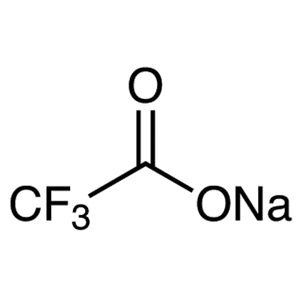
SodiumTrifluoroacetate TCI T1336
Regular price From Rp 637.350,00Regular price -
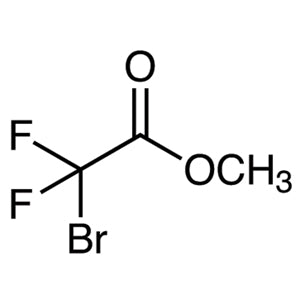
MethylBromodifluoroacetate TCI M2020
Regular price From Rp 2.439.150,00Regular price -
Lithium2,2,2-Trifluoroacetate TCI L0446
Regular price From Rp 1.167.600,00Regular price -
Silver(I)Trifluoroacetate TCI I1171
Regular price From Rp 1.988.700,00Regular price -
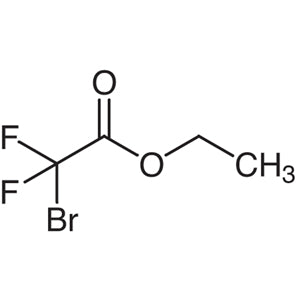
EthylBromodifluoroacetate TCI B1463
Regular price From Rp 717.150,00Regular price -
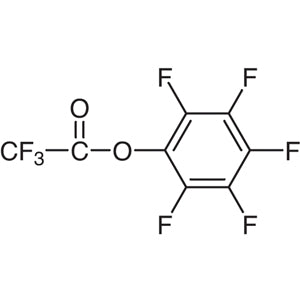
PentafluorophenylTrifluoroacetate TCI P1894
Regular price From Rp 1.644.300,00Regular price -
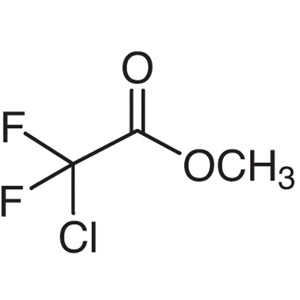
MethylChlorodifluoroacetate TCI C1586
Regular price From Rp 689.850,00Regular price -
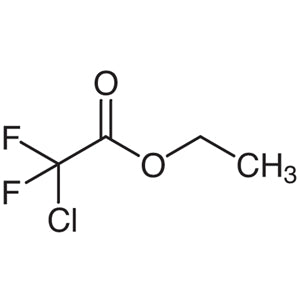
EthylChlorodifluoroacetate TCI C1458
Regular price Rp 1.856.400,00Regular price