Pentafluorophenyl Trifluoromethanesulfonate is a highly reactive chemical compound used as a fundamental building block in the synthesis of complex organic molecules. This reagent plays a crucial role in laboratory settings, particularly in organic chemistry and materials research, where its unique chemical properties enable the formation of new molecular structures. It is widely utilized in substitution reactions and bond-forming processes, making it an essential component in the development of advanced chemical compounds. Due to its high reactivity, it is often employed in precision-driven experiments that require controlled chemical transformations.
The compound’s chemical stability under specific conditions, combined with its high reactivity towards various reagents, makes it a preferred choice for applications requiring both accuracy and efficiency. Its ability to participate in a wide range of chemical reactions allows researchers to achieve desired outcomes with greater control. Additionally, its high boiling point ensures that it remains stable during high-temperature reactions, making it suitable for a variety of synthetic protocols. These characteristics contribute to its value in both academic and industrial research environments.
In Indonesian laboratories, Pentafluorophenyl Trifluoromethanesulfonate is commonly used in organic synthesis, materials science, and chemical research. Its reactivity and versatility make it an important reagent for scientists working on complex chemical processes. It is frequently found in research settings where precise chemical reactions are required, supporting the development of new compounds and materials. Its role in advancing scientific research is significant, particularly in the context of laboratory work in Indonesia.
TCI brochures (PDF)
- Sulfonylation Reagents 2023-01-20 · p. 3
- Condensing Agents 2025-11-18 · p. 5
- Fluorination Reagents, Fluorinated Building Blocks 2026-03-18 · p. 36
Related TCI products
- TCI P2231 244633-31-6 Pentafluorophenyl 4-Nitrobenzenesulfonate
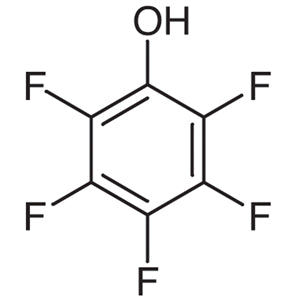
- TCI P0919 771-61-9 Pentafluorophenol
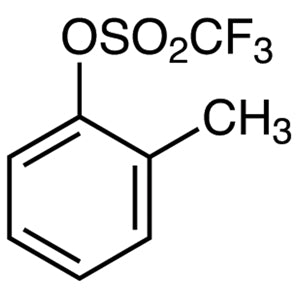
- TCI T3357 66107-34-4 o-Tolyl Trifluoromethanesulfonate
- TCI T1894 151600-02-1 6-Bromo-2-naphthyl Trifluoromethanesulfonate
- TCI B5012 17763-78-9 4-Biphenylyl Trifluoromethanesulfonate
- TCI N0934 152873-78-4 1,4-Naphthalenebis(trifluoromethanesulfonate)
- Organic synthesis where high reactivity and controlled chemical transformations are essential for forming complex molecular structures.
- Materials research involving the development of new polymers and functional materials through precise chemical reactions.
- Chemical reaction optimization in laboratories requiring accurate and reproducible results for scientific studies.
- Advanced synthetic protocols that demand reagents capable of participating in a wide range of chemical transformations.
- Research in pharmaceutical and industrial chemistry where the formation of new compounds is a primary objective.
| Brand | TCI |
|---|---|
| CAS number | 60129-85-3 |
| Molecular formula | — |
| Purity | — |
| Category | Chemistry > Building Blocks > Non-Heterocyclic Building Blocks |
| Pack sizes | Available in various sizes as per standard chemical supply practices |
| Physical form | Liquid |
| Storage | Store in a cool, dry place away from moisture and direct sunlight |
Pentafluorophenyl Trifluoromethanesulfonate should be stored in a cool, dry environment, away from moisture and direct sunlight. It is recommended to use sealed, chemically inert containers to prevent contamination and maintain stability. Due to its high reactivity, it should be handled with care, using appropriate personal protective equipment such as gloves and safety goggles. It is important to ensure proper ventilation in the laboratory to minimize exposure. Storage should be in a secure location that is inaccessible to unauthorized personnel. Always follow standard laboratory safety protocols when working with reactive chemical compounds.
—
Produk Terkait
-
Pentafluorophenyl4-Nitrobenzenesulfonate TCI P2231
Regular price From Rp 848.400,00Regular priceRp 593.250,00Sale price From Rp 848.400,00 -
Pentafluorophenol TCI P0919
Regular price From Rp 1.590.750,00Regular priceRp 1.111.950,00Sale price From Rp 1.590.750,00 -
o-TolylTrifluoromethanesulfonate TCI T3357
Regular price From Rp 2.491.650,00Regular priceRp 1.741.950,00Sale price From Rp 2.491.650,00 -
6-Bromo-2-naphthylTrifluoromethanesulfonate TCI T1894
Regular price From Rp 3.605.700,00Regular priceRp 2.521.050,00Sale price From Rp 3.605.700,00 -
4-BiphenylylTrifluoromethanesulfonate TCI B5012
Regular price From Rp 1.538.250,00Regular priceRp 1.075.200,00Sale price From Rp 1.538.250,00 -
1,4-Naphthalenebis(trifluoromethanesulfonate) TCI N0934
Regular price From Rp 2.809.800,00Regular priceRp 1.964.550,00Sale price From Rp 2.809.800,00 -
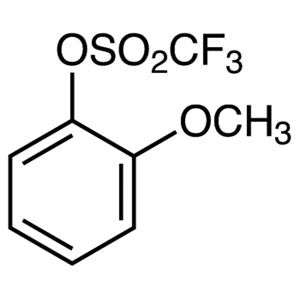
2-MethoxyphenylTrifluoromethanesulfonate TCI M2792
Regular price From Rp 1.113.000,00Regular priceRp 793.800,00Sale price From Rp 1.113.000,00 -
2,4,6-TriisopropylbenzenesulfonylChloride TCI T0459
Regular price From Rp 2.227.050,00Regular priceRp 1.557.150,00Sale price From Rp 2.227.050,00