


Palladium 5% on Alumina is a catalytic material widely used in chemical reactions, particularly in reduction and oxidation processes. It is a composite of palladium, a transition metal, supported on alumina, which serves as a stable base. This formulation is highly effective in accelerating chemical reactions without being consumed in the process. Its versatility makes it a valuable tool in various laboratory applications, supporting both research and industrial chemical processes. The material is especially useful in organic synthesis and hydrogenation reactions, where its catalytic properties are essential for achieving desired chemical transformations.
One of the key advantages of Palladium 5% on Alumina is its excellent catalytic performance, even under mild conditions such as low temperatures and normal pressure. It maintains stability in reaction environments and remains active after multiple uses, making it a cost-effective and reliable choice for laboratory settings. Its resistance to corrosion and degradation further enhances its longevity and reusability, ensuring consistent performance over time. These properties make it a preferred option for researchers and chemists working in both academic and industrial laboratories.
In Indonesian laboratories, Palladium 5% on Alumina is commonly used in chemical research, particularly by higher education institutions and research organizations. Its availability and quality make it a go-to material for a wide range of catalytic applications. It is especially favored for its ability to support various types of chemical reactions, contributing to the advancement of scientific research in the region.
TCI brochures (PDF)
- Transition Metal Catalysts 2026-04-10 · p. 13
- Suzuki-Miyaura Cross Coupling Reaction 2025-12-01 · p. 22
Related TCI products
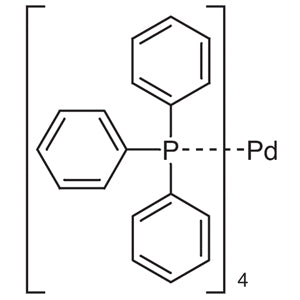
- TCI T1350 14221-01-3 Tetrakis(triphenylphosphine)palladium(0)
- TCI B3224 31277-98-2 Bis[1,2-bis(diphenylphosphino)ethane]palladium(0)
- TCI B3161 53199-31-8 Bis(tri-tert-butylphosphine)palladium(0)
- TCI B3160 95408-45-0 [1,1'-Bis(di-tert-butylphosphino)ferrocene]palladium(II) Dichloride
- TCI B2064 95464-05-4 [1,1'-Bis(diphenylphosphino)ferrocene]palladium(II) Dichloride Dichloromethane Adduct
- TCI B2055 29934-17-6 Bis(tricyclohexylphosphine)palladium(II) Dichloride
- Organic synthesis reactions benefit from Palladium 5% on Alumina due to its ability to catalyze complex transformations efficiently and selectively.
- Hydrogenation processes utilize this material because of its high activity and stability under varying reaction conditions.
- Oxidation reactions in chemical synthesis are supported by this catalyst due to its effectiveness in promoting electron transfer and reaction pathways.
- Catalytic testing in research labs relies on this material for its consistent performance and reusability across multiple experiments.
- Industrial-scale chemical processes incorporate this catalyst for its reliability and efficiency in large-scale reaction systems.
| Brand | TCI |
|---|---|
| CAS number | 7440-05-3 |
| Molecular formula | — |
| Purity | — |
| Category | Chemistry > Catalysis and Inorganic Chemistry > Transition Elements |
| Pack sizes | Available in various quantities as per supplier specifications |
| Physical form | Powder or granular, depending on application requirements |
| Storage | Store in a cool, dry place away from moisture and direct sunlight |
Palladium 5% on Alumina should be stored in a cool, dry environment to maintain its catalytic properties and prevent degradation. It is recommended to keep the material in airtight containers to minimize exposure to moisture and air, which can affect its performance. Suitable storage containers include glass or stainless steel vessels that are resistant to chemical reactions. In laboratory settings, it is important to handle the material with care, using appropriate personal protective equipment to ensure safety. Regular inspection of storage conditions is advised to maintain the integrity of the catalyst and ensure its effectiveness for future use.
—
Product Categories
- Catalysis and Inorganic ChemistryTransition Elements [Catalysis and Inorganic Chemistry]Palladium [Catalysis and Inorganic Chemistry]
- Catalysis and Inorganic ChemistryCross-coupling Reaction using Transition Metal Catalysts [C-C Bond Formation]Palladium Catalysts [Cross-coupling Reaction using Transition Metal Catalysts]
- Synthetic ReagentsC-C Bond Formation [Synthetic Reagents]Cross-coupling Reaction using Transition Metal Catalysts [C-C Bond Formation]
Produk Terkait
-
Tetrakis(triphenylphosphine)palladium(0) TCI T1350
Regular price From Rp 1.405.950,00Regular price -
Bis[1,2-bis(diphenylphosphino)ethane]palladium(0) TCI B3224
Regular price Rp 2.306.850,00Regular price -
Bis(tri-tert-butylphosphine)palladium(0) TCI B3161
Regular price From Rp 2.650.200,00Regular price -
[1,1'-Bis(di-tert-butylphosphino)ferrocene]palladium(II)Dichloride TCI B3160
Regular price From Rp 6.758.850,00Regular price -
[1,1'-Bis(diphenylphosphino)ferrocene]palladium(II)DichlorideDichloromethaneAdduct TCI B2064
Regular price From Rp 2.068.500,00Regular price -
Bis(tricyclohexylphosphine)palladium(II)Dichloride TCI B2055
Regular price From Rp 2.147.250,00Regular price -
Bis(triphenylphosphine)palladium(II)Diacetate TCI B2042
Regular price From Rp 2.889.600,00Regular price -
Bis(tri-o-tolylphosphine)palladium(II)Dichloride TCI B2026
Regular price From Rp 2.068.500,00Regular price
![31277-98-2 Bis[1,2-bis(diphenylphosphino)ethane]palladium(0) - AMI Scientific](http://amiscientific.com/cdn/shop/files/TCI2510B3224_8c85b882-6dd5-4a37-880a-a8e8601dc8ca.jpg?v=1767431836&width=533)

![95408-45-0 [1,1'-Bis(di-tert-butylphosphino)ferrocene]palladium(II) Dichloride - AMI Scientific](http://amiscientific.com/cdn/shop/files/TCI2510B3160_a4c0b85c-059a-4cb6-9b5d-8c432346ca89.jpg?v=1767431571&width=533)
![95464-05-4 [1,1'-Bis(diphenylphosphino)ferrocene]palladium(II) Dichloride Dichloromethane Adduct - AMI Scientific](http://amiscientific.com/cdn/shop/files/TCI2510B2064_55725750-1d93-4607-a5e5-5c490594863a.jpg?v=1767330765&width=533)


