

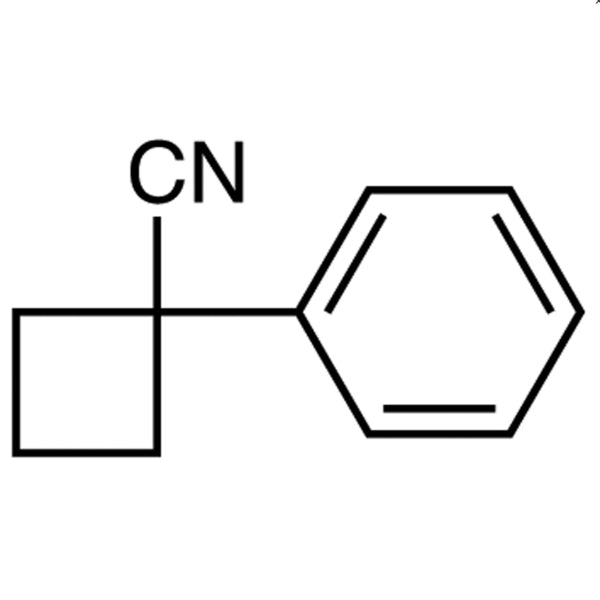
1-Phenylcyclobutanecarbonitrile is a chemical compound widely used as a building block in the synthesis of complex molecules. Its unique molecular structure consists of a cyclobutane ring connected to a nitrile group and a phenyl group. In the laboratory, this compound plays a crucial role in reactions that require the formation of stable carbon-carbon bonds. Its versatility makes it an essential tool for chemists working on organic synthesis and material development. The compound's stability and controlled reactivity allow it to be used in various chemical processes, making it a valuable resource for both research and educational purposes.
This compound is preferred due to its chemical stability and the ability to manipulate its electronic properties through the nitrile group. The cyclobutane ring contributes to the formation of highly stable compounds, while the nitrile group provides reactivity that can be tailored for specific reactions. These characteristics make it ideal for use in organic chemistry research, where precise control over molecular structures is essential. Its predictable behavior under different reaction conditions ensures reliable results, making it a trusted choice for scientists and researchers.
In Indonesian laboratories, 1-Phenylcyclobutanecarbonitrile is commonly used in scientific research, educational institutions, and chemical product development. It is a key component in experiments that require specific molecular structures, supporting advancements in both academic and industrial chemistry. Its widespread use highlights its importance in the chemical research landscape of Indonesia.
Related TCI products
- TCI A3039 103646-82-8 5-Amino-1-(p-tolyl)pyrazole-4-carbonitrile
- TCI P2253 2201-23-2 1-Phenylcyclohexanecarbonitrile
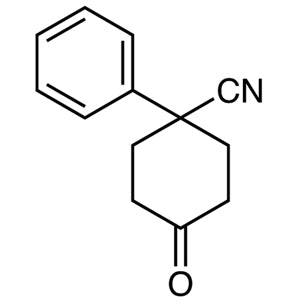
- TCI O0470 25115-74-6 4-Oxo-1-phenylcyclohexanecarbonitrile
- TCI M3704 174886-05-6 1-Methylcyclobutan-1-amine Hydrochloride
- TCI C4103 24973-49-7 [1,1'-Biphenyl]-2-carbonitrile
- TCI C3911 4426-11-3 Cyclobutanecarbonitrile
- Organic synthesis applications benefit from its stable cyclobutane structure and reactive nitrile group, enabling the creation of complex molecular frameworks.
- Research in pharmaceutical development utilizes its unique chemical properties for designing novel compounds with targeted biological activity.
- Educational institutions use it as a teaching tool to demonstrate the principles of molecular structure and chemical reactivity in organic chemistry.
- Material science laboratories incorporate it into the synthesis of polymers and specialty chemicals due to its ability to form stable carbon-carbon bonds.
- Industrial chemical development projects rely on its versatility for the production of high-performance materials and functional compounds.
| Brand | TCI |
|---|---|
| CAS number | 14377-68-5 |
| Molecular formula | — |
| Purity | — |
| Category | Chemistry > Building Blocks > Non-Heterocyclic Building Blocks |
| Pack sizes | Available in various quantities as per supplier specifications |
| Physical form | Solid |
| Storage | Store in a cool, dry place away from light and moisture |
This compound should be stored in a cool, dry environment, away from direct light and moisture to maintain its chemical stability. It is recommended to use airtight containers made of materials compatible with organic solvents to prevent contamination. Due to its reactivity, it should be handled with appropriate personal protective equipment, including gloves and safety goggles. In a laboratory setting, it should be stored separately from incompatible substances to avoid any potential chemical interactions. Proper ventilation is also essential when working with this compound to ensure a safe and controlled environment.
—
Produk Terkait
-
5-Amino-1-(p-tolyl)pyrazole-4-carbonitrile TCI A3039
Regular price Rp 3.312.750,00Regular price -
1-Phenylcyclohexanecarbonitrile TCI P2253
Regular price Rp 2.491.650,00Regular price -
4-Oxo-1-phenylcyclohexanecarbonitrile TCI O0470
Regular price Rp 2.174.550,00Regular price -
1-Methylcyclobutan-1-amineHydrochloride TCI M3704
Regular price Rp 3.605.700,00Regular price -
[1,1'-Biphenyl]-2-carbonitrile TCI C4103
Regular price From Rp 2.094.750,00Regular price -
Cyclobutanecarbonitrile TCI C3911
Regular price From Rp 1.458.450,00Regular price -
1-(4-Chlorophenyl)cyclobutanecarbonitrile TCI C3161
Regular price From Rp 2.757.300,00Regular price -
2'-Bromo-[1,1'-biphenyl]-3-carbonitrile TCI B6956
Regular price From Rp 2.757.300,00Regular price



![[1,1'-Biphenyl]-2-carbonitrile (CAS 24973-49-7) - TCI C4103 - AMI Scientific](http://amiscientific.com/cdn/shop/files/TCI2510C4103.jpg?v=1769180472&width=533)


![2'-Bromo-[1,1'-biphenyl]-3-carbonitrile (CAS 690260-67-4) - TCI B6956 - AMI Scientific](http://amiscientific.com/cdn/shop/files/TCI2510B6956.jpg?v=1771058291&width=533)