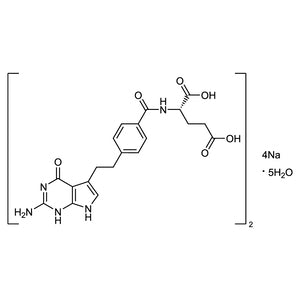
Pemetrexed is a chemical compound widely used in pharmacological and biochemical research to study drug mechanisms and the development of medical therapies. It plays a crucial role in experimental settings where the inhibition of dihydrofolate reductase enzymes is essential, particularly in cancer-related studies. As a pharmaceutical research reagent, it is vital for assessing biological activity and toxicity in laboratory experiments. Its application spans across various scientific investigations aimed at understanding how drugs interact with biological systems and how they can be optimized for therapeutic use.
One of the key reasons Pemetrexed is preferred in laboratory settings is its chemical stability under specific conditions, which allows it to be used in multiple analytical methods. Its complex molecular structure enables specific interactions with biological targets, making it ideal for high-precision research. This compound is also available in various packaging options, facilitating its use in experiments of different scales. Its versatility and reliability make it a valuable tool for researchers working in both academic and industrial environments.
In Indonesian laboratories, Pemetrexed is commonly used in applied medical and pharmacological research. It supports efforts to develop new therapies, understand biological responses to drugs, and test the efficacy and safety of pharmacological compounds. Its availability ensures that researchers can conduct experiments with consistent and reliable results, contributing to advancements in medical science and drug development.
TCI brochures (PDF)
- Immune System, Inflammation, Allergy Research Reagents 2025-05-26 · p. 2
- Antimicrobials and Antitumor Agents for Research and Experimental Use 2025-04-24 · p. 15
- Pharmaceutical Ingredients for Research and Experimental Use 2026-03-09 · p. 15
- Cancer research involving enzyme inhibition and drug mechanism studies benefits from Pemetrexed’s ability to target dihydrofolate reductase, making it ideal for studying anti-cancer therapies.
- Pharmacological toxicity testing relies on Pemetrexed to evaluate the safety and biological impact of drug candidates in controlled environments.
- Biochemical assays require Pemetrexed for its stability and reactivity, supporting accurate measurement of enzyme activity and drug interactions.
- Drug development projects use Pemetrexed to assess the effectiveness of potential therapeutic agents in pre-clinical trials.
- Medical research applications leverage Pemetrexed’s specificity to investigate biological responses and optimize treatment strategies for various diseases.
| Brand | TCI |
|---|---|
| CAS number | 137281-23-3 |
| Molecular formula | — |
| Purity | — |
| Category | Life Science > Biochemicals and Reagents > Pharmaceutical Research Reagents |
| Pack sizes | Available in multiple packaging options for different experimental scales |
| Physical form | — |
| Storage | Store in a cool, dry place away from direct sunlight |
Pemetrexed should be stored in a cool, dry environment, away from direct sunlight and sources of heat. It is recommended to keep the compound in airtight containers to prevent moisture absorption and contamination. Proper labeling of storage containers is essential to ensure safe handling and prevent accidental exposure. In laboratory settings, it is important to follow standard safety protocols, including the use of personal protective equipment when handling the compound. Regular monitoring of storage conditions helps maintain the integrity and stability of the reagent, ensuring its effectiveness in research applications. Always follow established guidelines for chemical storage to minimize risks and ensure compliance with laboratory safety standards.
—
Product Categories
- Biochemicals and ReagentsPharmaceutical Research Reagents (for Experimental Use)Antitumor Research Reagents (for Experimental Use)
- Cell BiologyCancer ResearchAntitumor Agents for Research
- Cell BiologyImmune System, Inflammation, Allergy ResearchMetabolic Antagonists
- Pharmaceutical Development and Drug Discovery ResearchPharmaceutical Research Reagents (for Experimental Use)Antitumor Research Reagents (for Experimental Use)
Produk Terkait
-
PemetrexedDisodiumHemipentahydrate TCI P3263
Regular price From Rp 1.220.100,00Regular price -
Aminopterin TCI A0410
Regular price From Rp 1.829.100,00Regular price -
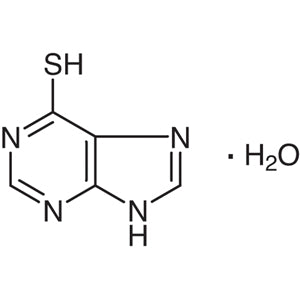
6-MercaptopurineMonohydrate TCI M0063
Regular price From Rp 477.750,00Regular price -
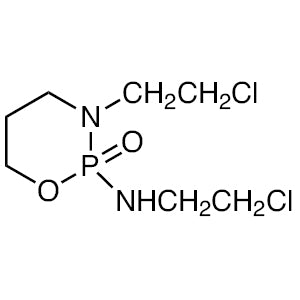
Ifosfamide TCI I0713
Regular price Rp 4.531.800,00Regular price -
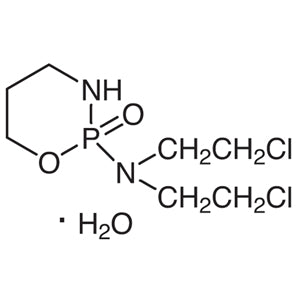
CyclophosphamideMonohydrate TCI C2236
Regular price From Rp 1.193.850,00Regular price -
Imatinib TCI I0906
Regular price From Rp 1.326.150,00Regular price -
Vandetanib TCI V0199
Regular price From Rp 2.121.000,00Regular price -
VincristineSulfate TCI V0129
Regular price Rp 4.584.300,00Regular price