4-(1-Pyrazolyl)benzonitrile is a chemical compound widely used as a building block in the synthesis of heterocyclic compounds. This compound plays a crucial role in organic chemistry laboratories, where it serves as a versatile intermediate for creating complex molecular structures. Its unique combination of a pyrazole ring and a benzonitrile group makes it an essential component in the development of various chemical products. Due to its structural versatility, it is frequently utilized in research aimed at producing compounds with specific biological or industrial applications.
The reactivity of 4-(1-Pyrazolyl)benzonitrile, particularly at the nitrile and pyrazole groups, makes it a preferred choice for chemical reactions requiring substitution or structural modification. Its ability to interact with a wide range of reagents, including acids, bases, and alkali metals, enhances its utility in synthetic pathways. This chemical’s stability and flexibility allow it to be incorporated into numerous reaction types, such as substitution, condensation, and catalytic processes, making it a valuable tool in laboratory settings.
In Indonesian laboratories, 4-(1-Pyrazolyl)benzonitrile is commonly used in organic chemistry research, especially in pharmaceutical and industrial chemical development. Its role in creating compounds with targeted biological activities supports advancements in drug discovery, pesticide formulation, and other chemical applications. Researchers rely on its predictable chemical behavior to achieve consistent results in their experiments.
TCI brochures (PDF)
- Ligands 2025-12-01 · p. 11
Related TCI products
- TCI P2449 68104-63-2 4-(1-Piperazinyl)benzonitrile
- TCI P2448 111373-03-6 2-(1-Piperazinyl)benzonitrile
- TCI P2428 10282-30-1 4-(1-Pyrrolidinyl)benzonitrile
- TCI M3412 1200536-22-6 4-Methoxy-2-(1H-pyrazol-1-yl)benzonitrile
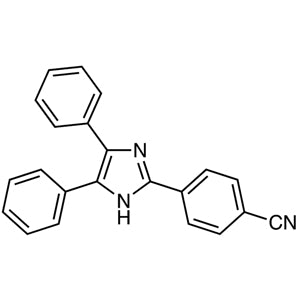
- TCI D4655 29898-72-4 4-(4,5-Diphenyl-1H-imidazol-2-yl)benzonitrile
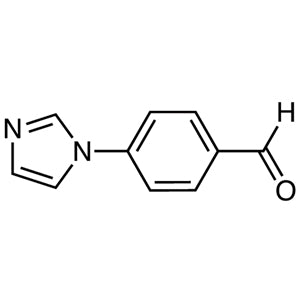
- TCI I0818 10040-98-9 4-(1-Imidazolyl)benzaldehyde
- Organic synthesis applications benefit from its reactivity and structural versatility, enabling the creation of complex heterocyclic compounds.
- Pharmaceutical research utilizes this compound to develop compounds with specific biological activities, such as potential drug candidates.
- Industrial chemical production incorporates it as a building block for the synthesis of various functional materials and intermediates.
- Analytical chemistry uses it as a reference standard for identifying and quantifying similar compounds in complex mixtures.
- Environmental studies employ it in the development of compounds for pollution control and remediation efforts.
| Brand | TCI |
|---|---|
| CAS number | 25699-83-6 |
| Molecular formula | — |
| Purity | — |
| Category | Chemistry > Building Blocks > Heterocyclic Building Blocks |
| Pack sizes | Available in various quantities as per supplier specifications |
| Physical form | Solid |
| Storage | Store in a cool, dry place away from moisture and direct sunlight |
4-(1-Pyrazolyl)benzonitrile should be stored in a cool, dry environment to maintain its chemical integrity. It is recommended to keep it in a sealed container to prevent exposure to moisture and air. Due to its reactivity, it should be handled with care, using appropriate personal protective equipment such as gloves and safety goggles. Avoid contact with strong acids or bases to prevent unwanted chemical reactions. The compound should be stored in a well-ventilated area to ensure safe handling. Proper storage conditions help preserve its effectiveness and ensure safe use in laboratory settings.
—
Produk Terkait
-
4-(1-Piperazinyl)benzonitrile TCI P2449
Regular price From Rp 2.597.700,00Regular price -
2-(1-Piperazinyl)benzonitrile TCI P2448
Regular price Rp 2.068.500,00Regular price -
4-(1-Pyrrolidinyl)benzonitrile TCI P2428
Regular price From Rp 1.220.100,00Regular price -
4-Methoxy-2-(1H-pyrazol-1-yl)benzonitrile TCI M3412
Regular price Rp 5.194.350,00Regular price -
4-(4,5-Diphenyl-1H-imidazol-2-yl)benzonitrile TCI D4655
Regular price Rp 3.710.700,00Regular price -
4-(1-Imidazolyl)benzaldehyde TCI I0818
Regular price From Rp 795.900,00Regular price -
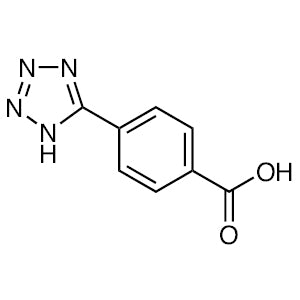
4-(1H-Tetrazol-5-yl)benzoicAcid TCI T3917
Regular price From Rp 2.016.000,00Regular price -
5-(p-Tolyl)-1H-tetrazole TCI T2486
Regular price From Rp 1.538.250,00Regular price