Poly(pentafluorostyrene) from TCI is a polymer made by polymerising the monomer 2,3,4,5,6-pentafluorostyrene. In each repeating unit, every hydrogen atom on the aromatic ring has been replaced by fluorine. The material belongs to the polymer and macromolecule reagents used in materials science. Researchers study it widely as a functional platform polymer because the fluorine atom in the para position of the ring can be substituted selectively. This lets them attach many different functional groups to an existing polymer chain, so they do not need to synthesise a new monomer for each variant.
Researchers choose this polymer for the typical properties of fluorinated polymers. It has low surface energy and is hydrophobic, so surfaces coated with it tend to repel water. Fluorine-based polymers also generally have a relatively low dielectric constant, which makes them of interest in electronic materials research. Its most widely used feature is nucleophilic aromatic substitution at the para-fluorine, known as the para-fluoro–thiol reaction. This reaction runs efficiently with thiols under relatively mild conditions, which makes the polymer an important tool in post-polymerisation modification chemistry.
In Indonesian laboratories, Poly(pentafluorostyrene) is mainly used in university research groups and institutes working on polymer chemistry, surface science and functional materials. It is a practical starting material for postgraduate projects on polymer modification, hydrophobic coatings and the development of new functional macromolecules. Because one batch of the polymer can be modified into several functional derivatives, research teams can run comparative studies efficiently. They can also reduce the number of separate monomer syntheses needed for each project.
Advantages (TCI brochure)
- High heat resistance
- High chemical resistance
- Capable of post-modification by aromatic nucleophilic substitution reaction
TCI brochures (PDF)
- Highly Durable Polymer Capable of Post-Modification Poly(pentafluorostylene) 2026-09-17 · p. 1
- Fluorous Chemistry 2025-01-21 · p. 11
- Biomaterials Research Reagents 2025-02-19 · p. 5
Related TCI products
- TCI T1730 25440-14-6 5,10,15,20-Tetrakis(pentafluorophenyl)porphyrin
- TCI B3318 86061-04-3 5-tert-Butyl 1-Pentafluorophenyl N-[(9H-Fluoren-9-ylmethoxy)carbonyl]-L-glutamate
- TCI P2289 13642-97-2 Pentafluorophenyl Methacrylate (stabilized with MEHQ)
- TCI P2231 244633-31-6 Pentafluorophenyl 4-Nitrobenzenesulfonate
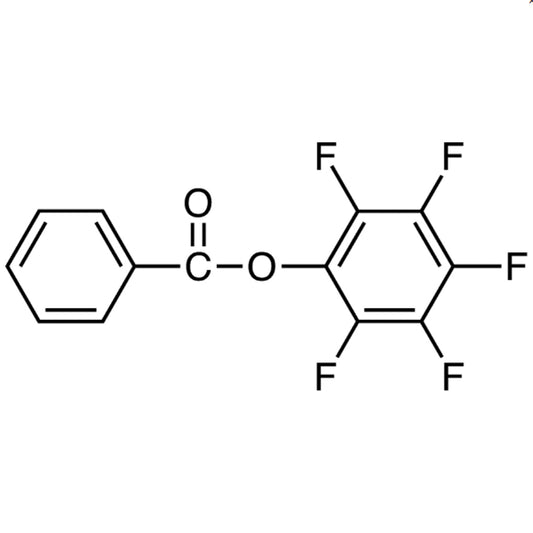
- TCI P2229 1548-84-1 Pentafluorophenyl Benzoate
- TCI P2192 19220-93-0 Pentafluorophenyl Acetate
- Post-polymerisation modification: the selectively substitutable para-fluorine allows researchers to attach diverse functional groups onto the finished polymer chain without synthesising new monomers.
- Para-fluoro–thiol click chemistry: the polymer reacts efficiently with thiols under relatively mild conditions, so it suits studies of efficient and selective polymer functionalisation reactions.
- Hydrophobic and low-surface-energy coatings: its fluorinated aromatic rings give water-repellent character, which makes it suitable for research on coated surfaces that must resist wetting.
- Electronic materials research: fluorine-based polymers generally show a relatively low dielectric constant, so this polymer is of interest when exploring candidate materials for electronic applications.
- Functional macromolecule libraries: one polymer backbone can be converted into many derivatives, which supports comparative studies of how different attached groups affect material properties.
From the TCI brochure
- Anion exchange membrane for redox flow battery
- Membrane electrode assembly for fuel cell
- Luminescent oxygen indicator
| Brand | TCI (product code P2900) |
|---|---|
| CAS number | 26838-55-1 |
| Molecular formula | — |
| Purity | — |
| Category | Materials Science > Polymer/Macromolecule Reagents > Polymers |
| Pack sizes | as listed for this catalogue item; please contact AMI Scientific for current availability |
| Physical form | polymer; refer to the product label and Certificate of Analysis for details |
| Storage | follow the conditions stated on the TCI product label and Safety Data Sheet |
Store Poly(pentafluorostyrene) in its original, tightly closed manufacturer's container. Keep it in a cool, dry and well-ventilated area, away from direct sunlight, heat sources and incompatible substances, and follow any specific storage conditions given on the TCI label. Reseal the container promptly after each use to keep moisture and contaminants out. Wear standard laboratory protective equipment when handling the polymer, including gloves, safety glasses and a lab coat. Avoid creating or inhaling dust, and work in a fume hood when dissolving or reacting the material. Read the Safety Data Sheet before use, and dispose of waste according to local regulations.
—
Produk Terkait
-
5,10,15,20-Tetrakis(pentafluorophenyl)porphyrin TCI T1730
Regular price Rp 2.252.250,00Regular priceRp 1.590.750,00Sale price Rp 2.252.250,00 -
5-tert-Butyl1-PentafluorophenylN-[(9H-Fluoren-9-ylmethoxy)carbonyl]-L-glutamate TCI B3318
Regular price From Rp 1.113.000,00Regular priceRp 793.800,00Sale price From Rp 1.113.000,00 -
PentafluorophenylMethacrylate(stabilizedwithMEHQ) TCI P2289
Regular price From Rp 2.227.050,00Regular priceRp 1.557.150,00Sale price From Rp 2.227.050,00 -
Pentafluorophenyl4-Nitrobenzenesulfonate TCI P2231
Regular price From Rp 848.400,00Regular priceRp 593.250,00Sale price From Rp 848.400,00 -
PentafluorophenylBenzoate TCI P2229
Regular price From Rp 1.378.650,00Regular priceRp 979.650,00Sale price From Rp 1.378.650,00 -
PentafluorophenylAcetate TCI P2192
Regular price From Rp 1.829.100,00Regular priceRp 1.278.900,00Sale price From Rp 1.829.100,00 -
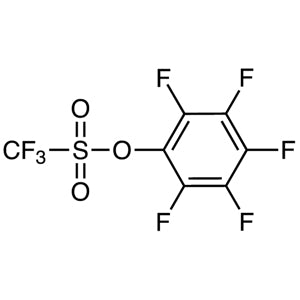
PentafluorophenylTrifluoromethanesulfonate TCI P2188
Regular price From Rp 795.900,00Regular priceRp 572.250,00Sale price From Rp 795.900,00 -
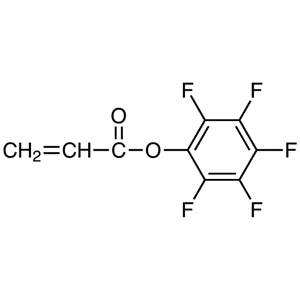
PentafluorophenylAcrylate(stabilizedwithMEHQ) TCI P2179
Regular price Rp 2.862.300,00Regular priceRp 2.001.300,00Sale price Rp 2.862.300,00