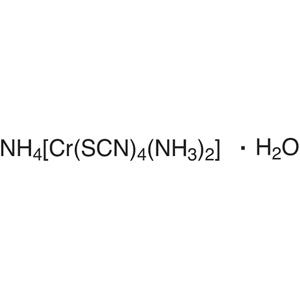
Reinecke Salt Monohydrate (TCI R0004, CAS 13573-17-6) is a chemical compound widely used in laboratory settings for its catalytic properties and versatility in chemical reactions. As a key reagent in catalysis and inorganic chemistry, it plays a crucial role in facilitating both reduction and oxidation processes. Its presence in transition metal-related reactions makes it an essential tool for researchers working in the field of inorganic chemistry. This compound is particularly valued for its ability to enhance reaction efficiency and control reaction pathways in various synthetic processes.
One of the main reasons for its popularity is its stable chemical structure and high solubility in water. These properties make it easy to handle and integrate into different experimental setups. The monohydrate form ensures that the compound remains chemically stable under normal laboratory conditions, allowing for consistent performance across multiple uses. Additionally, its solubility and stability contribute to its effectiveness as a catalyst, enabling it to be reused in certain applications without significant degradation.
In Indonesian laboratories, Reinecke Salt Monohydrate is commonly used in research and development projects focused on inorganic chemistry and catalytic processes. It is a preferred choice for scientists and researchers due to its reliability, ease of use, and compatibility with a wide range of chemical reactions. Its role in advancing chemical synthesis and analytical techniques makes it a valuable asset in both academic and industrial laboratory environments.
- Catalytic Reduction Reactions: Reinecke Salt Monohydrate is ideal for catalytic reduction processes due to its ability to facilitate electron transfer and stabilize reaction intermediates.
- Oxidation Reactions in Inorganic Chemistry: It serves as a reliable reagent for oxidation reactions, particularly in the synthesis of transition metal complexes and coordination compounds.
- Transition Metal Complex Formation: Its role in stabilizing and coordinating transition metals makes it essential in the preparation of various metal-based compounds.
- Analytical Chemistry Experiments: The compound is frequently used in analytical procedures to enhance detection and quantification of specific chemical species.
- Synthetic Organic Chemistry: It is employed in organic synthesis to promote selective reactions and improve reaction yields in complex molecular structures.
| Brand | TCI |
|---|---|
| CAS number | 13573-17-6 |
| Molecular formula | — |
| Purity | — |
| Category | Chemistry > Catalysis and Inorganic Chemistry > Transition Elements |
| Pack sizes | Available in various quantities as per standard laboratory requirements |
| Physical form | White crystalline solid |
| Storage | Store in a cool, dry place away from moisture and direct sunlight |
Reinecke Salt Monhydride should be stored in a cool, dry environment to maintain its chemical stability and prevent degradation. It is recommended to keep the compound in airtight containers to avoid exposure to moisture, which can affect its solubility and performance. Due to its high solubility in water, it is important to ensure that storage containers are properly sealed to prevent contamination. In laboratory settings, it is advisable to handle the compound with care, using appropriate personal protective equipment such as gloves and safety goggles. Regular monitoring of storage conditions will help ensure the compound remains effective for its intended applications.
—
Produk Terkait
-
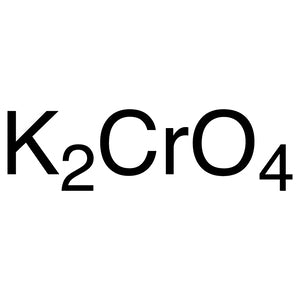
PotassiumChromate TCI P3073
Regular price From Rp 557.550,00Regular price -
Chromium(III)Oxide TCI C4007
Regular price Rp 689.850,00Regular price -
Tris(2,4-pentanedionato)chromium(III) TCI C0336
Regular price From Rp 795.900,00Regular price