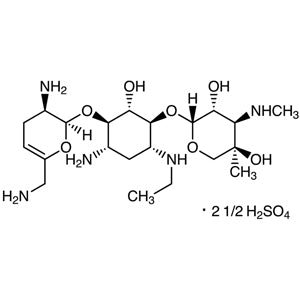
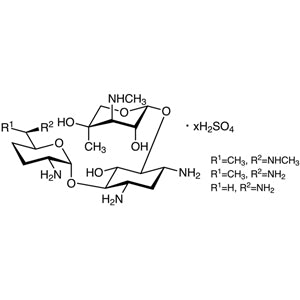
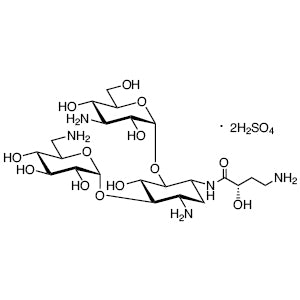
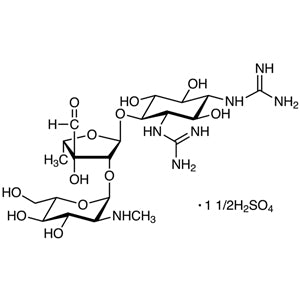
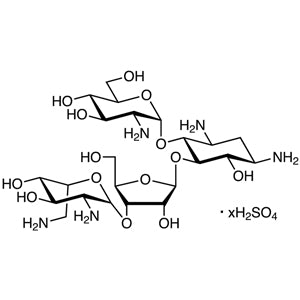
Ribostamycin Sulfate is a chemical compound widely used in chemical and biochemical experiments, particularly in the study of glycoscience and molecular interactions. It serves as an essential reagent in laboratory settings, enabling researchers to investigate enzyme inhibition and the regulation of specific biological processes. This compound plays a crucial role in testing the effectiveness of various substances in chemical reactions or biological processes, making it a valuable tool for scientific inquiry. Its presence in Indonesian laboratories supports a wide range of research activities, contributing to advancements in biochemistry, pharmacology, and molecular studies.
Ribostamycin Sulfate is preferred due to its chemical stability and solubility in certain organic solvents, which simplifies its handling and application in experimental procedures. These properties make it suitable for precise and consistent results in research applications. Its ability to react effectively with various substrates further enhances its versatility in complex scientific investigations. The compound's reliability and performance in laboratory conditions ensure that it remains a popular choice among researchers seeking accurate and reproducible outcomes.
In Indonesian laboratories, Ribostamycin Sulfate is commonly used in biochemical, pharmacological, and molecular studies. It is frequently found in experiments involving the testing of biological activity or the effects of compounds on cellular processes. Its application is essential for understanding molecular mechanisms and developing new therapeutic approaches. The compound's role in these research areas highlights its importance in advancing scientific knowledge and innovation.
TCI brochures (PDF)
- Antimicrobials and Antitumor Agents for Research and Experimental Use 2025-04-24 · p. 4
- Pharmaceutical Ingredients for Research and Experimental Use 2026-03-09 · p. 4
- Biochemical Research: Ribostamycin Sulfate is used to study enzyme inhibition and molecular interactions, aiding in the understanding of biological processes.
- Pharmacological Studies: It supports research into drug mechanisms and therapeutic applications, helping to evaluate compound efficacy.
- Molecular Biology Experiments: The compound is utilized in experiments that require precise chemical reactions and molecular interactions.
- Enzyme Regulation Studies: It assists in investigating how compounds affect enzyme activity and biological pathways.
- Drug Development Projects: Ribostamycin Sulfate contributes to the screening of potential therapeutic agents in early-stage research.
| Brand | TCI |
|---|---|
| CAS number | 53797-35-6 |
| Molecular formula | — |
| Purity | — |
| Category | Chemistry > Chemical Biology > Glycoscience |
| Pack sizes | Available in various quantities as per standard laboratory supply |
| Physical form | Powder |
| Storage | Store in a cool, dry place away from direct light |
Ribostamycin Sulfate should be stored in a cool, dry environment, away from direct sunlight and moisture. It is recommended to use airtight containers to prevent exposure to air and humidity, which can affect its stability. Proper labeling of containers is essential for safe handling and identification. When working with the compound, laboratory personnel should wear appropriate personal protective equipment, such as gloves and safety goggles, to ensure safety. The compound should be handled in a well-ventilated area to minimize inhalation risks. Regular monitoring of storage conditions ensures the compound remains effective for experimental use.
—
Product Categories
- GlycoscienceApplications Using Glyco-materialsGlyco-functional Analysis [Applications Using Glyco-materials]
- GlycoscienceTrisaccharides [Glycoscience]
- Biochemicals and ReagentsAntibioticsAntibiotics (Chemical Structure Class)
- Biochemicals and ReagentsPharmaceutical Research Reagents (for Experimental Use)Antimicrobial Ingredients (for Research and Experimental Use)
- MicrobiologyAntibioticsAntibiotics (Chemical Structure Class)
- Pharmaceutical Development and Drug Discovery ResearchPharmaceutical Research Reagents (for Experimental Use)Antimicrobial Ingredients (for Research and Experimental Use)
- Pharmaceutical Development and Drug Discovery ResearchAntibioticsAntibiotics (Chemical Structure Class)
Produk Terkait
-
BleomycinSulfate(mixture) TCI B3972
Regular price From Rp 4.345.950,00Regular priceRp 3.054.450,00Sale price From Rp 4.345.950,00 -
NetilmicinSulfate TCI N1108
Regular price From Rp 3.419.850,00Regular priceRp 2.406.600,00Sale price From Rp 3.419.850,00 -
GentamicinSulfate TCI G0383
Regular price From Rp 1.988.700,00Regular priceRp 1.405.950,00Sale price From Rp 1.988.700,00 -
FradiomycinSulfate TCI F0649
Regular price Rp 2.041.200,00Regular priceRp 1.442.700,00Sale price Rp 2.041.200,00 -
AmikacinSulfate TCI A2281
Regular price From Rp 1.483.650,00Regular priceRp 1.053.150,00Sale price From Rp 1.483.650,00 -
StreptomycinSulfate TCI S0585
Regular price From Rp 822.150,00Regular priceRp 590.100,00Sale price From Rp 822.150,00 -
ParomomycinSulfate TCI P2092
Regular price From Rp 1.087.800,00Regular priceRp 775.950,00Sale price From Rp 1.087.800,00 -
ChondroitinSulfateSodiumSalt TCI C0335
Regular price From Rp 2.121.000,00Regular priceRp 1.498.350,00Sale price From Rp 2.121.000,00