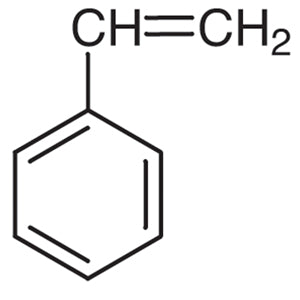
Sodium p-Styrenesulfonate Hydrate (NaSS) is a chemical compound widely used in laboratory settings for polymer synthesis and chemical reactions. As a monomer, it plays a crucial role in the formation of polymers with specific properties, such as mechanical strength and thermal stability. Its versatility makes it a valuable reagent in materials science, particularly in polymerization processes and surface modification techniques. NaSS is commonly used in research and development to create new materials with enhanced performance characteristics.
The chemical properties of NaSS make it a preferred choice for laboratory applications. It is highly soluble in water, which simplifies mixing and reaction processes. Its stable chemical structure ensures consistent performance in various experimental conditions. Additionally, its ionic nature allows for interactions with other chemical substances, broadening its applicability. These features make NaSS an ideal reagent for laboratories requiring reliable and predictable chemical behavior.
In Indonesian laboratories, Sodium p-Styrenesulfonate Hydrate is frequently used in material and polymer research. It is a common component in experiments related to polymer synthesis, surface modification, and chemical functionalization. Many research institutions and universities rely on NaSS for its effectiveness and ease of use, making it a staple in the chemical supply chain of Indonesian scientific communities.
TCI brochures (PDF)
- Biomaterials Research Reagents 2025-02-19 · p. 14
- Monomers 2025-05-28 · p. 15
Related TCI products
- TCI V0059 1075-49-6 4-Vinylbenzoic Acid (stabilized with BHT)
- TCI V0028 25013-15-4 Vinyltoluene Monomer (m- and p- mixture) (stabilized with TBC)
- TCI B1877 1746-23-2 4-tert-Butylstyrene (stabilized with TBC)
- TCI B1443 95418-58-9 4-tert-Butoxystyrene (stabilized with TBC)
- TCI A1551 2628-16-2 4-Vinylphenyl Acetate (stabilized with TBC)
- TCI A1550 63600-35-1 2-Vinylphenyl Acetate (stabilized with Phenothiazine)
- Polymer synthesis and modification experiments benefit from NaSS due to its role as a monomer in creating polymers with specific mechanical and thermal properties.
- Surface modification studies utilize NaSS to enhance the reactivity and functional properties of materials, making it essential for advanced material research.
- Chemical functionalization processes often incorporate NaSS to introduce sulfonic acid groups, improving the reactivity and stability of polymer structures.
- Analytical chemistry applications use NaSS as a reagent in various chemical reactions, providing a reliable and stable compound for experimental consistency.
- Industrial material development relies on NaSS for its ability to contribute to the synthesis of polymers with tailored properties for specific applications.
| Brand | TCI |
|---|---|
| CAS number | 123333-94-8 |
| Molecular formula | — |
| Purity | — |
| Category | Materials Science > Polymer/Macromolecule Reagents > Monomers |
| Pack sizes | Available in various quantities as per standard laboratory supply |
| Physical form | Hydrate form, typically solid |
| Storage | Store in a cool, dry place away from moisture and direct sunlight |
Sodium p-Styrenesulfonate Hydrate should be stored in a cool, dry environment to maintain its chemical stability. It is recommended to keep it in a sealed container to prevent moisture absorption, which could affect its solubility and reactivity. The compound is non-hazardous under normal conditions but should be handled with care to avoid direct contact with skin or eyes. Proper ventilation is advised during handling to ensure a safe laboratory environment. Storage away from incompatible materials, such as strong oxidizers, is essential to prevent any potential chemical interactions. Regular inspection of storage conditions ensures the integrity of the material remains unaffected over time.
—
Product Categories
Produk Terkait
-
4-VinylbenzoicAcid(stabilizedwithBHT) TCI V0059
Regular price From Rp 822.150,00Regular priceRp 590.100,00Sale price From Rp 822.150,00 -
VinyltolueneMonomer(m-andp-mixture)(stabilizedwithTBC) TCI V0028
Regular price From Rp 452.550,00Regular priceRp 316.050,00Sale price From Rp 452.550,00 -
4-tert-Butylstyrene(stabilizedwithTBC) TCI B1877
Regular price From Rp 530.250,00Regular priceRp 370.650,00Sale price From Rp 530.250,00 -
4-tert-Butoxystyrene(stabilizedwithTBC) TCI B1443
Regular price From Rp 1.749.300,00Regular priceRp 1.223.250,00Sale price From Rp 1.749.300,00 -
4-VinylphenylAcetate(stabilizedwithTBC) TCI A1551
Regular price From Rp 1.060.500,00Regular priceRp 757.050,00Sale price From Rp 1.060.500,00 -
2-VinylphenylAcetate(stabilizedwithPhenothiazine) TCI A1550
Regular price Rp 7.764.750,00Regular priceRp 5.445.300,00Sale price Rp 7.764.750,00 -
2,4,6-Trimethylstyrene(stabilizedwithTBC) TCI T0493
Regular price From Rp 903.000,00Regular priceRp 631.050,00Sale price From Rp 903.000,00 -
Styrene(stabilizedwithTBC) TCI S0095
Regular price Rp 477.750,00Regular priceRp 333.900,00Sale price Rp 477.750,00