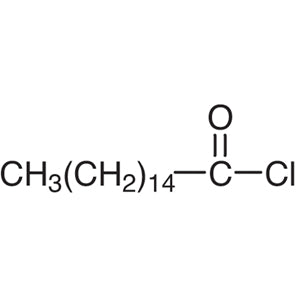
Stearoyl Chloride (TCI S0404), with CAS number 112-76-5, is a chemical compound widely used in laboratory settings for the synthesis of complex organic molecules. It serves as a key building block in chemical reactions, particularly in substitution and esterification processes. Its reactivity and versatility make it an essential reagent for organic chemists. This compound is commonly used in the preparation of esters and amides, which are fundamental in various chemical applications. Its ability to undergo chemical modifications makes it a valuable tool in synthetic chemistry.
Stearoyl Chloride is preferred due to its high reactivity and stability under controlled conditions. The presence of a chlorinated group at the end of the carbon chain allows it to react readily with bases, alcohols, and other functional groups. This reactivity enables it to participate in a wide range of chemical transformations, making it suitable for both research and industrial applications. Its stability ensures that it remains effective during synthesis processes, reducing the risk of degradation. These properties make it a reliable and efficient reagent in laboratory environments.
In Indonesian laboratories, Stearoyl Chloride is frequently used in organic chemistry research, particularly in pharmaceutical and material science fields. It plays a crucial role in the development of new drugs, polymers, and industrial chemicals. Its availability and consistent quality make it a preferred choice for researchers and chemists. The compound's ability to facilitate molecular modifications supports its widespread use in chemical synthesis and innovation.
TCI brochures (PDF)
- Lipids 2025-12-17 · p. 7
- Organic synthesis applications benefit from Stearoyl Chloride due to its reactivity and ability to form esters and amides, which are essential in drug development and polymer science.
- In pharmaceutical research, it is used to modify molecular structures, enabling the creation of new compounds with desired biological properties.
- Material science laboratories utilize it for the synthesis of polymers and other advanced materials, leveraging its reactivity for functional group incorporation.
- Industrial chemical production relies on Stearoyl Chloride for the creation of specialty chemicals, offering a reliable and efficient reagent for large-scale processes.
- It is also applied in academic research settings for teaching and experimental purposes, supporting the study of organic reaction mechanisms and functional group chemistry.
| Brand | TCI |
|---|---|
| CAS number | 112-76-5 |
| Molecular formula | — |
| Purity | — |
| Category | Chemistry > Building Blocks > Non-Heterocyclic Building Blocks |
| Pack sizes | Available in various quantities as per standard laboratory supply |
| Physical form | Liquid |
| Storage | Store in a cool, dry place away from moisture and direct sunlight |
Stearoyl Chloride should be stored in a cool, dry environment to maintain its chemical stability. It is recommended to keep it in a tightly sealed container to prevent exposure to moisture and air. Due to its reactivity, it should be handled in a well-ventilated area, ideally with appropriate personal protective equipment. Avoid contact with incompatible substances such as strong bases or reactive metals. Proper labeling and storage conditions ensure safe handling and long-term usability in laboratory settings. Always follow standard safety protocols when working with reactive chemical compounds.
—
Product Categories
- Biochemicals and ReagentsAlbumin Binding AgentsAlbumin Binding Modification Reagents
- Biochemicals and ReagentsBioconjugationAlbumin Binding Modification Reagents
- Biochemicals and ReagentsLipidsFatty Acyls
- Pharmaceutical Development and Drug Discovery ResearchAlbumin Binding AgentsAlbumin Binding Modification Reagents
- Pharmaceutical Development and Drug Discovery ResearchBioconjugationAlbumin Binding Modification Reagents
Produk Terkait
-
UndecanoylChloride TCI U0026
Regular price From Rp 1.590.750,00Regular priceRp 1.127.700,00Sale price From Rp 1.590.750,00 -
MyristoylChloride TCI T0086
Regular price From Rp 1.272.600,00Regular priceRp 905.100,00Sale price From Rp 1.272.600,00 -
PalmitoylChloride TCI P0009
Regular price From Rp 530.250,00Regular priceRp 386.400,00Sale price From Rp 530.250,00 -
LauroylChloride TCI D0972
Regular price From Rp 557.550,00Regular priceRp 405.300,00Sale price From Rp 557.550,00 -
DecanoylChloride TCI D0027
Regular price From Rp 822.150,00Regular priceRp 590.100,00Sale price From Rp 822.150,00 -
VinylPalmitate(stabilizedwithMEHQ) TCI P0848
Regular price From Rp 1.724.100,00Regular priceRp 1.205.400,00Sale price From Rp 1.724.100,00 -
VinylLaurate(stabilizedwithMEHQ) TCI L0090
Regular price From Rp 610.050,00Regular priceRp 442.050,00Sale price From Rp 610.050,00 -
AdipoylChloride TCI A0169
Regular price From Rp 1.272.600,00Regular priceRp 905.100,00Sale price From Rp 1.272.600,00