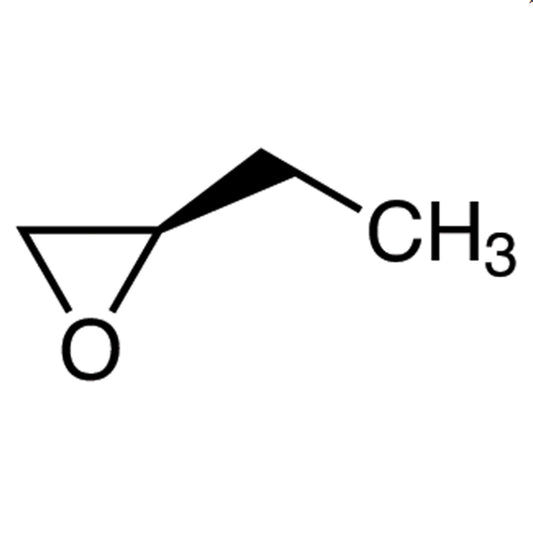
(S)-Styrene Oxide is a chiral building block widely used in asymmetric synthesis to construct molecules with specific biological activities. This compound plays a crucial role in the development of pharmaceuticals, organic chemicals, and industrial products by enabling the creation of complex, stereochemically defined structures. Its importance lies in its ability to participate in enantioselective reactions, allowing chemists to produce desired enantiomers with high efficiency. In the laboratory, it serves as a versatile reagent for the synthesis of various functionalized compounds, particularly in the field of organic chemistry.
The compound exhibits chemical stability under controlled conditions but is sensitive to moisture and UV light, which necessitates careful handling and storage. Its chiral nature makes it an ideal choice for asymmetric reactions where precise control over the final molecular structure is essential. The presence of a specific enantiomer enhances its value in research, as it allows for the synthesis of compounds with defined stereochemistry. This property is especially important in pharmaceutical research, where the biological activity of a compound can be highly dependent on its stereochemical configuration.
In Indonesian laboratories, (S)-Styrene Oxide is commonly used in organic chemistry research, particularly in academic institutions and research centers. It is frequently employed in projects focused on the synthesis of biologically active compounds, including drug development and the creation of specialty chemicals. Its availability and reliability make it a preferred material for researchers working on chiral molecule synthesis and related applications.
TCI brochures (PDF)
- Chiral Building Blocks 2025-04-14 · p. 12
- Asymmetric Synthesis: (S)-Styrene Oxide is ideal for enantioselective reactions due to its chiral structure, enabling the production of specific enantiomers.
- Pharmaceutical Research: It is used to develop drugs with defined stereochemistry, enhancing the efficacy and safety of pharmaceutical compounds.
- Organic Chemistry Studies: Its role in constructing complex molecular structures makes it a key reagent in synthetic organic chemistry experiments.
- Industrial Chemical Production: It contributes to the synthesis of specialty chemicals used in various industrial applications.
- Academic Research: Widely utilized in educational and research settings for teaching and exploring asymmetric synthesis techniques.
| Brand | TCI |
|---|---|
| CAS number | 20780-54-5 |
| Molecular formula | — |
| Purity | — |
| Category | Chemistry > Asymmetric Synthesis > Chiral Building Blocks |
| Pack sizes | Available in various quantities as per standard laboratory supply |
| Physical form | Liquid |
| Storage | Store in a cool, dry place away from light and moisture |
(S)-Styrene Oxide should be stored in a cool, dry environment, away from direct sunlight and sources of moisture. It is recommended to use sealed containers made of materials that are chemically inert, such as glass or high-density polyethylene, to prevent contamination and degradation. Due to its sensitivity to UV light and humidity, it is essential to maintain a controlled storage environment with low temperature and humidity levels. In laboratory settings, proper ventilation should be ensured, and personal protective equipment, such as gloves and goggles, should be worn during handling to minimize exposure. Regular monitoring of storage conditions is necessary to ensure the compound remains stable and effective for use in research applications.
—
Produk Terkait
-
(R)-StyreneOxide TCI S0516
Regular price From Rp 2.386.650,00Regular price -
StyreneOxide TCI E0013
Regular price From Rp 477.750,00Regular price -
(S)-(-)-ButyleneOxide TCI B3833
Regular price From Rp 2.916.900,00Regular price -
(R)-(+)-ButyleneOxide TCI B3832
Regular price From Rp 2.889.600,00Regular price -
1,2-ButyleneOxide TCI B0719
Regular price From Rp 477.750,00Regular price -
(R)-(+)-PropyleneOxide TCI P1396
Regular price From Rp 1.220.100,00Regular price -
PropyleneOxide TCI E0016
Regular price From Rp 452.550,00Regular price -
(S)-2-Methyloxirane TCI P3117
Regular price From Rp 452.550,00Regular price