TCI T0061 Chloranil is a chlorinated quinone, chemically 2,3,5,6-tetrachloro-1,4-benzoquinone. It is known in organic synthesis as an oxidant and an electron acceptor. In the laboratory, chloranil is used mainly for dehydrogenation reactions, for example converting partially hydrogenated cyclic compounds into aromatic compounds. It is also used in materials and analytical chemistry because it forms coloured charge-transfer complexes with electron donors. This makes it a classic reagent that is still widely used in research and teaching laboratories.
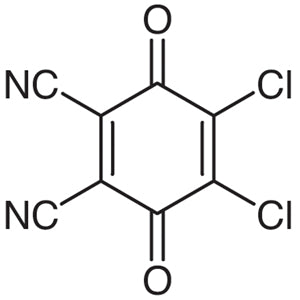
Chemists choose chloranil because its four electron-withdrawing chlorine atoms make it a strong electron acceptor. Its oxidising power is still milder than that of more reactive quinones such as DDQ. This balance gives useful selectivity: chloranil is strong enough to aromatise many substrates but is less likely to damage sensitive functional groups elsewhere in the molecule. Its reduced by-product, tetrachlorohydroquinone, is usually easy to separate from the reaction mixture. Its ability to form charge-transfer complexes is also used in spectrophotometric methods for determining electron-donor compounds such as amines.
In Indonesia, chloranil is useful for organic synthesis laboratories, materials chemistry groups and analytical laboratories at universities, research institutes and industry. Synthesis teams use it to aromatise intermediates during multistep routes, and analytical chemists use it in colorimetric methods built on charge-transfer complex formation. Teaching laboratories also use it to demonstrate quinone-based oxidation and donor–acceptor chemistry. Because it comes from TCI, users get a reagent from an established brand, which supports consistent results from one batch to the next.
TCI brochures (PDF)
- Building Block for Stable Radical Materials 2025-11-27 · p. 2
- Molecular Conductors 2025-11-13 · p. 3
- Oxidizing Agents 2025-06-11 · p. 7
- Agrochemical Ingredients for Research and Experimental Use 2026-01-08 · p. 4
- Plant Research Reagents 2026-02-24 · p. 11
Related TCI products
- TCI C1770 118-75-2 Chloranil (ca. 2% in N,N-Dimethylformamide) [for Detection of Primary and Secondary Amines]
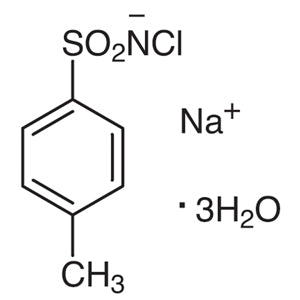
- TCI C0076 7080-50-4 Chloramine T Trihydrate
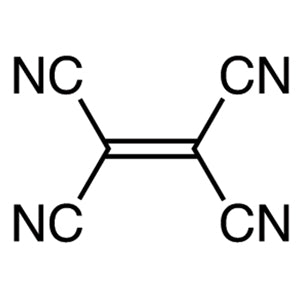
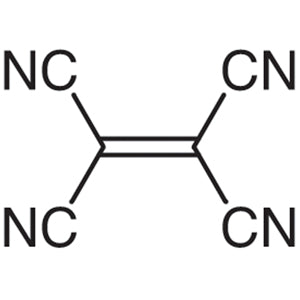
- TCI T3264 670-54-2 Tetracyanoethylene (purified by sublimation)
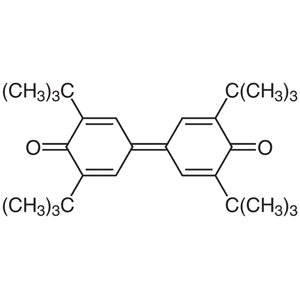
- TCI T1503 2455-14-3 3,3',5,5'-Tetra-tert-butyl-4,4'-diphenoquinone
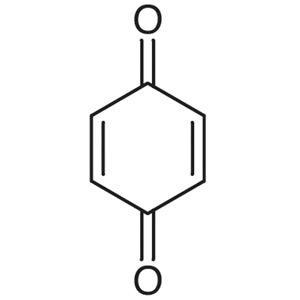
- TCI B0089 106-51-4 1,4-Benzoquinone
- TCI T0077 670-54-2 Tetracyanoethylene
- Dehydrogenation and aromatisation: chloranil removes hydrogen from partially hydrogenated cyclic compounds and converts them into aromatic systems under relatively controlled oxidising conditions.
- Selective oxidation in complex molecules: its oxidising power is milder than DDQ, so it can aromatise many substrates while tending to leave sensitive functional groups untouched.
- Spectrophotometric analysis of electron donors: chloranil forms coloured charge-transfer complexes with donors such as amines, which allows simple colorimetric determination with a spectrophotometer.
- Materials chemistry research: as a strong electron acceptor, chloranil is used to study donor–acceptor interactions and charge-transfer complexes relevant to functional organic materials.
- Synthetic workflows that need straightforward work-up: the reduced product, tetrachlorohydroquinone, is usually easy to separate, which makes purification simpler after the oxidation step.
From the TCI brochure
- Reagent in step 2 (p-chloranil, THF) of the example synthesis of stable radical materials
| Brand | TCI (product code T0061) |
|---|---|
| CAS number | 118-75-2 |
| Molecular formula | — |
| Purity | — |
| Category | Chemistry > Synthetic Reagents > Oxidation |
| Pack sizes | available in standard TCI pack sizes; please ask for the options currently offered |
| Physical form | — |
| Storage | keep tightly closed in a cool, dry place; follow the TCI label and Safety Data Sheet |
- Chemical name: 2,3,5,6-Tetrachloro-1,4-benzoquinone (Chloranil)
Store chloranil in its original, tightly sealed container in a cool, dry, well-ventilated area, away from direct light, heat sources and moisture. Keep it apart from reducing agents and incompatible materials, as it is an oxidising reagent. Handle the material in a fume hood or a well-ventilated area, and avoid creating or breathing in dust. Wear suitable personal protective equipment, including nitrile gloves, safety glasses and a laboratory coat. Avoid contact with skin and eyes, and wash hands thoroughly after handling. Dispose of residues and contaminated materials as halogenated chemical waste under local regulations. Always check the TCI Safety Data Sheet for full hazard and first-aid information before use.
—
Product Categories
Produk Terkait
-
Chloranil(ca.2%inN,N-Dimethylformamide)[forDetectionofPrimaryandSecondaryAmines] TCI C1770
Regular price Rp 955.500,00Regular priceRp 683.550,00Sale price Rp 955.500,00 -
ChloramineTTrihydrate TCI C0076
Regular price From Rp 530.250,00Regular priceRp 386.400,00Sale price From Rp 530.250,00 -
Tetracyanoethylene(purifiedbysublimation) TCI T3264
Regular price From Rp 1.934.100,00Regular priceRp 1.368.150,00Sale price From Rp 1.934.100,00 -
3,3',5,5'-Tetra-tert-butyl-4,4'-diphenoquinone TCI T1503
Regular price Rp 2.306.850,00Regular priceRp 1.628.550,00Sale price Rp 2.306.850,00 -
1,4-Benzoquinone TCI B0089
Regular price From Rp 822.150,00Regular priceRp 590.100,00Sale price From Rp 822.150,00 -
Tetracyanoethylene TCI T0077
Regular price From Rp 1.483.650,00Regular priceRp 1.053.150,00Sale price From Rp 1.483.650,00 -
2,3-Dichloro-5,6-dicyano-1,4-benzoquinone TCI D1070
Regular price From Rp 900.900,00Regular priceRp 645.750,00Sale price From Rp 900.900,00 -
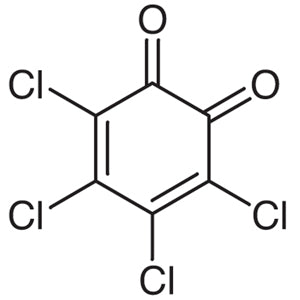
o-Chloranil TCI T0970
Regular price From Rp 3.021.900,00Regular priceRp 2.128.350,00Sale price From Rp 3.021.900,00