1,4-Benzoquinone is a chemical compound widely used in various synthetic chemical reactions. As an oxidizing agent, it plays a crucial role in the formation of aromatic and heterocyclic compounds. In the laboratory, this compound is frequently used to oxidize organic substances such as phenols, alcohols, and other compounds requiring oxidative reactions. Its stability and controlled reactivity make it a preferred choice for many chemical experiments. The compound's aromatic structure, with two adjacent carbonyl groups, enables complex chemical reactions. Its consistent chemical properties and ability to participate in various reaction mechanisms such as oxidation, reduction, and substitution make it highly sought after.
Due to its stable nature and predictable reactivity, 1,4-Benzoquinone is a reliable reagent for both research and educational purposes. It maintains its chemical integrity under a wide range of laboratory conditions, making it suitable for long-term use. Its resistance to degradation ensures consistent performance in repeated experiments. The compound's versatility allows it to be used in a variety of synthetic pathways, contributing to the development of pharmaceuticals, industrial chemicals, and other specialty compounds. Its ability to participate in multiple reaction mechanisms enhances its utility in diverse chemical applications.
In Indonesian laboratories, 1,4-Benzoquinone is commonly used in chemical research, including the synthesis of pharmaceutical compounds, industrial chemicals, and raw materials for synthetic reactions. It is also frequently found in educational experiments at the university level, where it serves as a key reagent for teaching oxidation processes and organic chemistry fundamentals. Its widespread use in both academic and industrial settings highlights its importance in the chemical research landscape of Indonesia.
TCI brochures (PDF)
- Molecular Conductors 2025-11-13 · p. 3
- Oxidizing Agents 2025-06-11 · p. 7
- C-H Bond Activation Reaction 2025-06-20 · p. 9
- Oxidation Reactions: 1,4-Benzoquinone is ideal for oxidation processes due to its ability to oxidize organic compounds like phenols and alcohols effectively.
- Pharmaceutical Synthesis: It is widely used in the production of pharmaceutical compounds because of its role in forming aromatic and heterocyclic structures.
- Industrial Chemical Production: The compound is a key reagent in the manufacturing of industrial chemicals due to its stability and reactivity in synthetic pathways.
- Educational Research: It is commonly used in university-level experiments to demonstrate oxidation mechanisms and organic chemistry principles.
- Organic Synthesis: Its ability to participate in various reaction mechanisms makes it a valuable tool in the development of new organic compounds.
From the TCI brochure
- Reaction promoter in Pd-catalyzed coupling of 7,8-benzoquinoline with arenes
- Oxidant in allylic C-H oxidation with White catalyst
| Brand | TCI |
|---|---|
| CAS number | 106-51-4 |
| Molecular formula | — |
| Purity | — |
| Category | Chemistry > Synthetic Reagents > Oxidation [Synthetic Reagents] |
| Pack sizes | Available in various quantities as per standard laboratory reagent packaging |
| Physical form | Solid, typically in crystalline form |
| Storage | Store in a cool, dry place away from direct sunlight and incompatible materials |
Data from the TCI brochure
| Jumlah pada reaksi | 0.5 eq. dan 2 eq. (0.5 eq. pada kopling Pd(OAc)2; 2 eq. pada oksidasi alilik B3292 10 mol%) |
|---|
Source: TCI brochure R5107 (2025-06-20)
1,4-Benzoquinone should be stored in a cool, dry place away from direct sunlight and sources of heat. It is recommended to keep it in a sealed container to prevent exposure to moisture and air. The compound is generally stable under normal laboratory conditions but should be handled with care to avoid contact with incompatible substances. It is important to ensure proper ventilation when working with this material to minimize inhalation risks. Appropriate personal protective equipment, such as gloves and safety goggles, should be worn during handling. Due to its reactivity, it should be stored separately from reducing agents and other reactive chemicals to maintain safety in the laboratory environment.
—
Product Categories
Produk Terkait
-
2,6-Dimethyl-1,4-benzoquinone TCI D2234
Regular price From Rp 1.220.100,00Regular priceRp 868.350,00Sale price From Rp 1.220.100,00 -
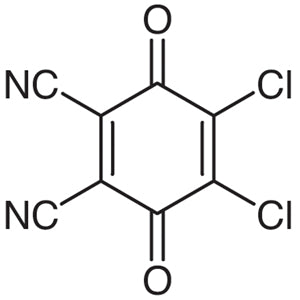
2,3-Dichloro-5,6-dicyano-1,4-benzoquinone TCI D1070
Regular price From Rp 900.900,00Regular priceRp 645.750,00Sale price From Rp 900.900,00 -
2-Bromo-1,4-benzoquinone TCI B1601
Regular price From Rp 4.743.900,00Regular priceRp 3.332.700,00Sale price From Rp 4.743.900,00 -
1,4-Benzoquinone TCI B0887
Regular price From Rp 557.550,00Regular priceRp 405.300,00Sale price From Rp 557.550,00 -
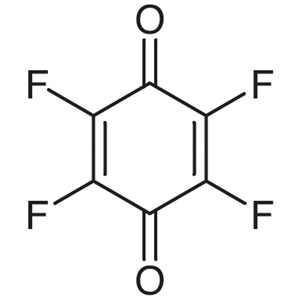
Tetrafluoro-1,4-benzoquinone TCI T0790
Regular price From Rp 1.458.450,00Regular priceRp 1.035.300,00Sale price From Rp 1.458.450,00 -
Methoxybenzoquinone TCI M1045
Regular price From Rp 3.683.400,00Regular priceRp 2.591.400,00Sale price From Rp 3.683.400,00 -
2,5-Dimethoxy-1,4-benzoquinone TCI D2250
Regular price From Rp 3.975.300,00Regular priceRp 2.795.100,00Sale price From Rp 3.975.300,00 -
2,5-Dibromo-1,4-benzoquinone TCI D2249
Regular price From Rp 4.001.550,00Regular priceRp 2.814.000,00Sale price From Rp 4.001.550,00