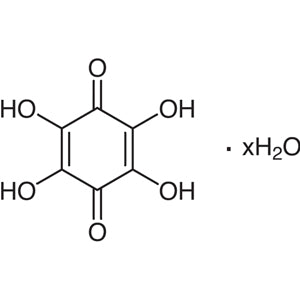
2,6-Dimethyl-1,4-benzoquinone is a chemical compound widely used in laboratory settings for its versatility in organic synthesis. As a building block in chemical reactions, it plays a crucial role in the development of complex organic molecules. Its aromatic structure, featuring two methyl groups at positions 2 and 6, along with two keto groups at positions 1 and 4, makes it a valuable intermediate in various synthetic pathways. This compound is particularly useful in oxidation and reduction reactions due to its stable yet reactive nature. It is commonly found in both academic and industrial research environments, where its chemical properties support a wide range of experimental applications.
The compound’s chemical properties make it a preferred choice for laboratory use. It is non-colored, solid in form, and soluble in organic solvents, which simplifies its handling and integration into chemical processes. Its relatively high melting and boiling points allow for efficient thermal processing in laboratory settings. These physical characteristics contribute to its reliability in synthetic procedures, enabling consistent results. The compound’s stability under controlled conditions ensures that it remains effective for multiple applications without degrading prematurely.
In Indonesian laboratories, 2,6-Dimethyl-1,4-benzoquinone is frequently used in organic chemistry research and pharmaceutical development. Its role in synthesizing compounds with pharmaceutical and industrial applications makes it an essential material for researchers. Many institutions and laboratories in Indonesia rely on this compound for its predictable performance and compatibility with various chemical processes.
Advantages (TCI brochure)
- Tertiary alcohols with high steric hindrance can react with stereoinversion
- Applicable to 1-adamantanol
TCI brochures (PDF)
- Condensing Agents 2025-11-18 · p. 3
- C-H Bond Activation Reaction 2025-06-20 · p. 10
- Organic synthesis is a key application where 2,6-Dimethyl-1,4-benzoquinone is used for its ability to participate in oxidation and reduction reactions, making it ideal for creating complex organic molecules.
- Pharmaceutical research benefits from this compound due to its role in the synthesis of various drug compounds, supporting the development of new therapeutic agents.
- Industrial chemical processes often incorporate this material because of its stability and reactivity, allowing it to be used in the production of specialty chemicals and intermediates.
- Analytical chemistry laboratories use it as a reference standard for identifying and quantifying compounds in various samples through spectroscopic and chromatographic methods.
- Polymer science research employs this compound in the development of new materials, leveraging its chemical structure to create polymers with specific functional properties.
From the TCI brochure
- Mukaiyama redox condensation
| Brand | TCI |
|---|---|
| CAS number | 527-61-7 |
| Molecular formula | — |
| Purity | — |
| Category | Chemistry > Building Blocks > Non-Heterocyclic Building Blocks |
| Pack sizes | Available in various quantities as per standard laboratory requirements |
| Physical form | Solid |
| Storage | Store in a cool, dry place away from direct sunlight and incompatible materials |
Data from the TCI brochure
| Yield (inversi) | 94% (R'OH 1.1 eq, Ph2PNMe2, ClCH2CH2Cl, 100 °C) |
|---|---|
| Yield | 83% (1-adamantanol, kondisi tidak jelas pada brosur) |
Source: TCI brochure R5113 (2025-11-18)
This compound should be stored in a cool, dry environment to maintain its chemical integrity. It is recommended to use airtight containers to prevent exposure to moisture and air, which could affect its stability. Due to its chemical nature, it should be kept away from strong oxidizing or reducing agents to avoid unwanted reactions. Proper labeling of storage containers is essential for safety and identification. In laboratory settings, personal protective equipment such as gloves and goggles should be worn when handling this material to ensure safe usage. Regular inspection of storage conditions is advised to ensure optimal preservation of the compound.
—
Product Categories
Produk Terkait
-
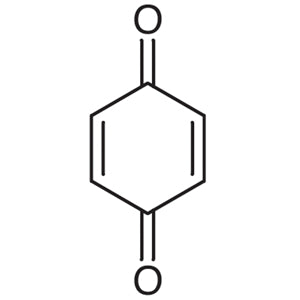
1,4-Benzoquinone TCI B0089
Regular price From Rp 769.650,00Regular price -
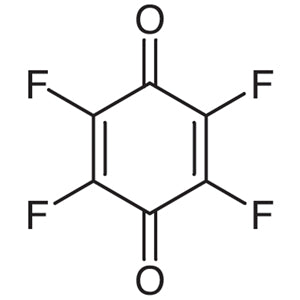
Tetrafluoro-1,4-benzoquinone TCI T0790
Regular price From Rp 1.405.950,00Regular price -
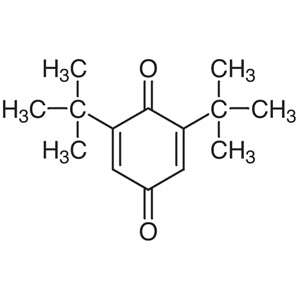
2,6-Di-tert-butyl-1,4-benzoquinone TCI D2256
Regular price From Rp 2.306.850,00Regular price -
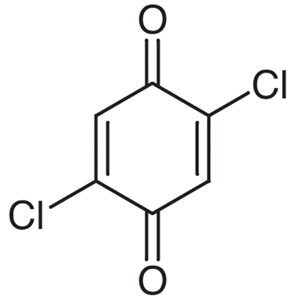
2,5-Dichloro-1,4-benzoquinone TCI D0343
Regular price From Rp 848.400,00Regular price -
2-tert-Butyl-1,4-benzoquinone TCI B1984
Regular price Rp 1.115.100,00Regular price -
2-Bromo-1,4-benzoquinone TCI B1601
Regular price From Rp 4.691.400,00Regular price -
1,4-Benzoquinone TCI B0887
Regular price From Rp 505.050,00Regular price -
Tetrahydroxy-1,4-benzoquinoneHydrate TCI T1090
Regular price Rp 1.565.550,00Regular price