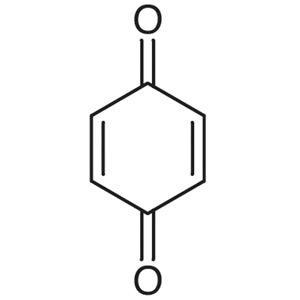
1,4-Benzoquinone is a chemical compound widely used in various synthetic chemical reactions. It is a key reagent in organic chemistry, particularly in oxidation and reduction processes. This compound has an aromatic structure with two carbonyl groups positioned at the 1 and 4 positions, making it highly reactive. In laboratory settings, it plays a crucial role in the synthesis of aromatic and heterocyclic compounds, contributing to the development of pharmaceuticals and industrial chemicals. Its versatility and reactivity make it an essential component in many synthetic pathways.
The compound is known for its strong oxidizing properties, which are vital in a range of chemical transformations. It is soluble in organic solvents such as ethyl acetate and ethanol, allowing for easy integration into reaction mixtures. Its ability to interact with various organic compounds enhances its utility in complex chemical reactions. Additionally, its stability under normal conditions ensures reliable performance and long-term usability in laboratory environments. These characteristics make it a preferred choice for researchers working in synthetic chemistry.
In Indonesian laboratories, 1,4-benzoquinone is commonly used in organic chemistry research, especially in pharmaceutical and material science applications. Its availability and consistent quality make it a reliable reagent for academic and industrial research. Researchers in Indonesia rely on this compound for its predictable behavior and effectiveness in chemical synthesis, supporting advancements in both academic and applied sciences.
TCI brochures (PDF)
- Oxidizing Agents 2025-06-11 · p. 7
- Condensing Agents 2025-11-18 · p. 9
Related TCI products
- Organic synthesis applications benefit from 1,4-benzoquinone's oxidizing properties, making it ideal for oxidation reactions in compound development.
- Pharmaceutical research utilizes this compound for the synthesis of aromatic and heterocyclic structures essential in drug development.
- Material science applications leverage its reactivity to create new organic compounds with specific functional properties.
- Industrial chemical processes incorporate this reagent for the production of various chemical intermediates and derivatives.
- Analytical chemistry uses 1,4-benzoquinone as a standard for testing reactivity and purity in chemical analysis protocols.
| Brand | TCI |
|---|---|
| CAS number | 106-51-4 |
| Molecular formula | — |
| Purity | — |
| Category | Chemistry > Synthetic Reagents > Coupling [Synthetic Reagents] |
| Pack sizes | Available in various quantities as per standard laboratory requirements |
| Physical form | Solid |
| Storage | Store in a cool, dry place away from light and incompatible substances |
1,4-Benzoquinone should be stored in a cool, dry place, away from light and sources of heat. It is recommended to keep it in a tightly sealed container to prevent exposure to moisture and air. Due to its oxidizing nature, it should be stored separately from reducing agents and flammable materials. The container should be made of a material that is chemically inert, such as glass or high-density polyethylene. Always ensure proper ventilation when handling this compound to minimize inhalation risks. Regular inspection of storage conditions is advised to maintain the compound's stability and effectiveness in laboratory use.
—
Produk Terkait
-
1,4-Benzoquinone TCI B0089
Regular price From Rp 822.150,00Regular priceRp 590.100,00Sale price From Rp 822.150,00 -
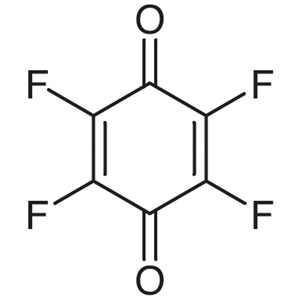
Tetrafluoro-1,4-benzoquinone TCI T0790
Regular price From Rp 1.458.450,00Regular priceRp 1.035.300,00Sale price From Rp 1.458.450,00 -
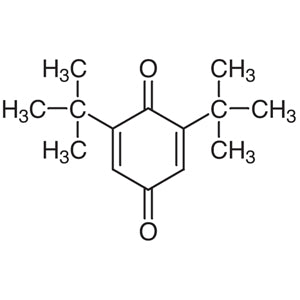
2,6-Di-tert-butyl-1,4-benzoquinone TCI D2256
Regular price From Rp 2.359.350,00Regular priceRp 1.665.300,00Sale price From Rp 2.359.350,00 -
2,6-Dimethyl-1,4-benzoquinone TCI D2234
Regular price From Rp 1.220.100,00Regular priceRp 868.350,00Sale price From Rp 1.220.100,00 -
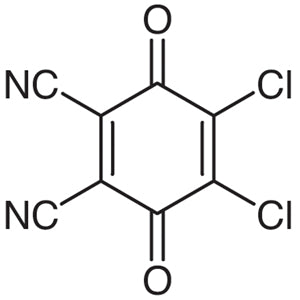
2,3-Dichloro-5,6-dicyano-1,4-benzoquinone TCI D1070
Regular price From Rp 900.900,00Regular priceRp 645.750,00Sale price From Rp 900.900,00 -
2-tert-Butyl-1,4-benzoquinone TCI B1984
Regular price Rp 1.167.600,00Regular priceRp 831.600,00Sale price Rp 1.167.600,00 -
N,N,N',N'-Tetrakis(4-dibutylaminophenyl)-1,4-benzoquinoneDiiminiumBis(hexafluoroantimonate) TCI T3072
Regular price From Rp 3.127.950,00Regular priceRp 2.202.900,00Sale price From Rp 3.127.950,00 -
2-Bromo-1,4-benzoquinone TCI B1601
Regular price From Rp 4.743.900,00Regular priceRp 3.332.700,00Sale price From Rp 4.743.900,00