2,3-Dichloro-5,6-dicyano-1,4-benzoquinone (DCDCQ) is a chemical compound widely used in laboratory settings for its catalytic and photocatalytic properties. As a key reagent in chemical reactions, DCDCQ plays a vital role in accelerating and controlling oxidation and reduction processes. Its unique molecular structure, featuring two chlorine atoms and two cyanide groups attached to a benzoquinone ring, makes it highly reactive and versatile. This compound is particularly valuable in research involving light-sensitive reactions, where it can act as a photosensitizer to initiate chemical transformations under UV exposure.
The chemical properties of DCDCQ, including its ability to interact with various substrates and generate free radicals, make it a preferred choice for advanced chemical applications. Its molecular structure contains multiple electron-active groups, enabling it to participate in a wide range of chemical interactions. Additionally, DCDCQ exhibits stability under controlled conditions, which allows for consistent performance in laboratory experiments. These characteristics make it an essential tool for researchers working in catalysis and photoreactive systems.
In Indonesian laboratories, DCDCQ is commonly used in academic and industrial research settings. It supports studies in photocatalytic processes, environmental remediation, and organic synthesis. Due to its reactivity and sensitivity to light and moisture, it is often employed in controlled environments where precise chemical reactions are required. Its role in advancing chemical research in Indonesia underscores its importance as a reliable and effective reagent.
TCI brochures (PDF)
- Visible Light Photoredox Catalysts 2026-04-28 · p. 3
- Organic Photoreaction Reagents 2025-02-13 · p. 7
- Oxidizing Agents 2025-06-11 · p. 8
- Reagents for Glyco Chemistry & Biology 5th Edition · p. 136
- Photocatalytic degradation of pollutants in environmental chemistry research due to its ability to absorb light and generate reactive species.
- Oxidation reactions in organic synthesis where DCDCQ acts as a catalyst to facilitate electron transfer processes.
- Development of new materials in inorganic chemistry by leveraging its structural properties for functional group modification.
- Controlled chemical reactions in analytical chemistry for the synthesis of complex compounds under specific conditions.
- Photoredox catalysis in green chemistry applications to reduce energy consumption and improve reaction efficiency.
| Brand | TCI |
|---|---|
| CAS number | 84-58-2 |
| Molecular formula | — |
| Purity | — |
| Category | Chemistry > Catalysis and Inorganic Chemistry > Photocatalysts [Catalysis] |
| Pack sizes | Available in various quantities as per standard laboratory supply practices |
| Physical form | Solid powder |
| Storage | Store in a cool, dry place away from light and moisture |
DCDCQ should be stored in a cool, dry environment, away from direct sunlight and moisture to maintain its chemical stability. It is recommended to use airtight containers made of materials that do not react with the compound, such as glass or high-density polyethylene. Due to its sensitivity to UV light, it is advisable to keep the material in a dark, sealed container when not in use. Laboratory personnel should handle DCDCQ with care, using appropriate personal protective equipment to avoid exposure. Proper ventilation is essential during handling to minimize inhalation risks. Regular monitoring of storage conditions ensures the compound remains effective for its intended applications.
—
Product Categories
Produk Terkait
-
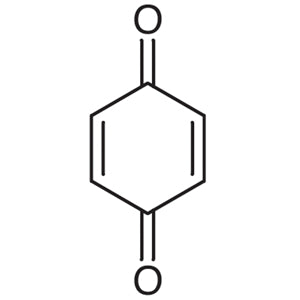
1,4-Benzoquinone TCI B0089
Regular price From Rp 769.650,00Regular price -
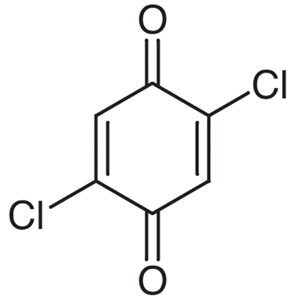
2,5-Dichloro-1,4-benzoquinone TCI D0343
Regular price From Rp 848.400,00Regular price -
2-Bromo-1,4-benzoquinone TCI B1601
Regular price From Rp 4.691.400,00Regular price -
1,4-Benzoquinone TCI B0887
Regular price From Rp 505.050,00Regular price -
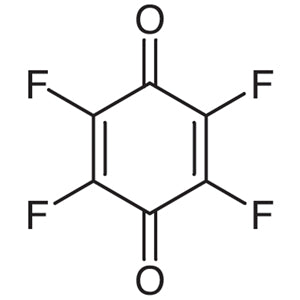
Tetrafluoro-1,4-benzoquinone TCI T0790
Regular price From Rp 1.405.950,00Regular price -
Methoxybenzoquinone TCI M1045
Regular price From Rp 3.630.900,00Regular price -
2,5-Dimethoxy-1,4-benzoquinone TCI D2250
Regular price From Rp 3.922.800,00Regular price -
2,5-Dibromo-1,4-benzoquinone TCI D2249
Regular price From Rp 3.949.050,00Regular price