TCI T1090 is Tetrahydroxy-1,4-benzoquinone Hydrate (CAS 123334-16-7), a quinone compound that carries four hydroxyl groups on its ring and is supplied in hydrate form. Quinones are well known as redox-active molecules, meaning they can accept and release electrons reversibly. In the laboratory, this compound is used as a non-heterocyclic building block and as a research material for studies in redox systems, coordination chemistry, and functional materials. It is supplied under the TCI brand and listed in the Building Blocks category.
The properties that make this material a preferred choice come from the combination of the quinone carbonyl groups and four hydroxyl groups, which can act as metal-binding sites. This structure allows the compound to form complexes with many metal ions and to serve as a bridging ligand in coordination materials. Its redox behavior is also attractive to energy-storage researchers, who study organic molecules as electrode materials. Because the product is a hydrate, amounts of substance should be calculated according to the information on the manufacturer's label.
In Indonesia, Tetrahydroxy-1,4-benzoquinone Hydrate is relevant to electrochemistry, materials chemistry, and coordination chemistry laboratories, including groups investigating organic-based batteries. The 5 g pack suits small-scale research work, where a modest quantity is enough for exploratory synthesis, ligand studies, and electrode material screening. Researchers can contact AMI Scientific to discuss their requirements before ordering.
Related TCI products
- TCI T0122 1887-02-1 Tetrahydroxy-1,4-benzoquinone Disodium Salt
- TCI B1984 3602-55-9 2-tert-Butyl-1,4-benzoquinone
- TCI T0672 527-17-3 Tetramethyl-1,4-benzoquinone
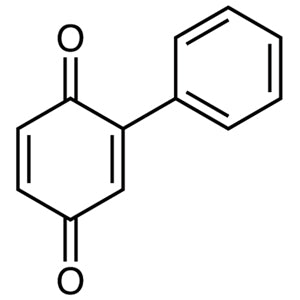
- TCI P2674 363-03-1 2-Phenyl-1,4-benzoquinone
- TCI D2706 530-55-2 2,6-Dimethoxy-1,4-benzoquinone
- TCI D2430 3383-21-9 3,5-Di-tert-butyl-1,2-benzoquinone
- Redox chemistry studies: the quinone core can accept and release electrons reversibly, so this compound suits researchers who investigate electron-transfer behavior in organic molecules.
- Coordination chemistry: the four hydroxyl groups and the carbonyl groups can bind metal ions, which makes the compound a useful ligand for preparing metal complexes in research laboratories.
- Functional material research: its ability to act as a bridging ligand between metal centers supports the design and investigation of coordination-based functional materials.
- Organic electrode material research: energy-storage researchers study redox-active organic molecules as electrode materials, and this quinone is a relevant candidate for such small-scale screening work.
- Non-heterocyclic building block use: as a building block in the TCI range, it serves synthetic chemists who need a hydroxylated quinone as a starting structure for further work.
| Brand | TCI (product code T1090) |
|---|---|
| CAS number | 123334-16-7 |
| Molecular formula | — |
| Purity | — |
| Category | Chemistry > Building Blocks > Non-Heterocyclic Building Blocks |
| Pack sizes | 5 g |
| Physical form | — |
| Storage | store according to the manufacturer's label and safety data sheet; the material is supplied as a hydrate |
- Product name: Tetrahydroxy-1,4-benzoquinone Hydrate
Store the product in its original, tightly closed container, following the storage conditions printed on the manufacturer's label and in the safety data sheet. Keep it in a clean, dry, well-organized chemical storage area, away from incompatible materials and direct heat. Because the compound is a hydrate, avoid leaving the container open longer than necessary, and base any quantity calculations on the label information. As a general laboratory precaution, wear a lab coat, gloves, and eye protection, handle the material in a well-ventilated area or fume hood, and avoid generating dust. Consult the safety data sheet before use and follow your institution's chemical handling and waste disposal procedures.
—
Produk Terkait
-
Tetrahydroxy-1,4-benzoquinoneDisodiumSalt TCI T0122
Regular price From Rp 1.167.600,00Regular priceRp 831.600,00Sale price From Rp 1.167.600,00 -
2-tert-Butyl-1,4-benzoquinone TCI B1984
Regular price Rp 1.167.600,00Regular priceRp 831.600,00Sale price Rp 1.167.600,00 -
Tetramethyl-1,4-benzoquinone TCI T0672
Regular price From Rp 1.538.250,00Regular priceRp 1.090.950,00Sale price From Rp 1.538.250,00 -
2-Phenyl-1,4-benzoquinone TCI P2674
Regular price From Rp 689.850,00Regular priceRp 497.700,00Sale price From Rp 689.850,00 -
2,6-Dimethoxy-1,4-benzoquinone TCI D2706
Regular price Rp 2.332.050,00Regular priceRp 1.646.400,00Sale price Rp 2.332.050,00 -
3,5-Di-tert-butyl-1,2-benzoquinone TCI D2430
Regular price From Rp 3.551.100,00Regular priceRp 2.499.000,00Sale price From Rp 3.551.100,00 -
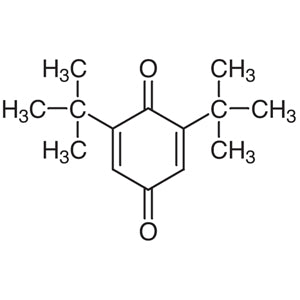
2,6-Di-tert-butyl-1,4-benzoquinone TCI D2256
Regular price From Rp 2.359.350,00Regular priceRp 1.665.300,00Sale price From Rp 2.359.350,00 -
2,6-Dimethyl-1,4-benzoquinone TCI D2234
Regular price From Rp 1.220.100,00Regular priceRp 868.350,00Sale price From Rp 1.220.100,00