Tetramethyl-1,4-benzoquinone is a chemical compound widely used in laboratory settings for its versatility in organic synthesis. As a non-heterocyclic building block, it serves as a key reagent in the creation of complex organic molecules. Its aromatic structure, with methyl groups replacing hydrogen atoms at positions 1 and 4, makes it a valuable intermediate in various chemical reactions. This compound is particularly favored for its stability and controlled reactivity, allowing chemists to manipulate its properties in a predictable manner. Its role in synthetic pathways is essential for the development of new compounds in both academic and industrial research.
The compound's chemical stability and controlled reactivity make it a preferred choice in synthetic chemistry. It exhibits resistance to oxidation and maintains its structural integrity under various reaction conditions. This stability ensures that it remains effective throughout the synthesis process, reducing the risk of unwanted side reactions. Its ability to react with amines, hydroxides, and reducing agents also makes it adaptable to a wide range of chemical transformations. These properties contribute to its reliability in both research and industrial applications, where consistency and reproducibility are critical.
In Indonesian laboratories, Tetramethyl-1,4-benzoquinone is commonly used in organic chemistry research, especially in the synthesis of aromatic compounds and oxidation reactions. Its availability and chemical properties make it a go-to reagent for chemists working on complex molecular structures. It is frequently employed in academic and applied research settings, supporting the development of new materials and pharmaceutical compounds. Its utility in these contexts highlights its importance in the chemical research landscape of Indonesia.
Related TCI products
- TCI B1984 3602-55-9 2-tert-Butyl-1,4-benzoquinone
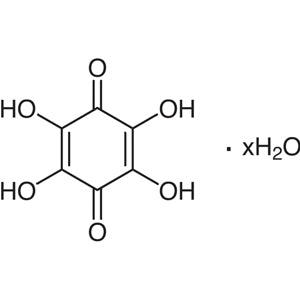
- TCI T1090 123334-16-7 Tetrahydroxy-1,4-benzoquinone Hydrate
- TCI T0122 1887-02-1 Tetrahydroxy-1,4-benzoquinone Disodium Salt
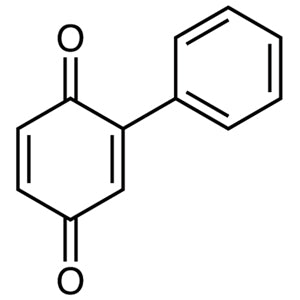
- TCI P2674 363-03-1 2-Phenyl-1,4-benzoquinone
- TCI D2706 530-55-2 2,6-Dimethoxy-1,4-benzoquinone
- TCI D2430 3383-21-9 3,5-Di-tert-butyl-1,2-benzoquinone
- Organic synthesis reactions benefit from Tetramethyl-1,4-benzoquinone due to its stable structure and controlled reactivity, allowing for precise chemical transformations.
- Oxidation processes in the laboratory utilize this compound because of its ability to participate in redox reactions, making it suitable for oxidizing various organic substrates.
- Aromatic compound synthesis relies on Tetramethyl-1,4-benzoquinone as a building block, enabling the creation of complex aromatic structures through substitution and functionalization.
- Research in pharmaceutical chemistry often incorporates this compound as a precursor for developing new drug molecules, leveraging its chemical versatility.
- Industrial chemical processes use Tetramethyl-1,4-benzoquinone for large-scale synthesis of organic compounds, taking advantage of its stability and reactivity in controlled environments.
| Brand | TCI |
|---|---|
| CAS number | 527-17-3 |
| Molecular formula | — |
| Purity | — |
| Category | Chemistry > Building Blocks > Non-Heterocyclic Building Blocks |
| Pack sizes | Available in various quantities as per standard laboratory supply |
| Physical form | Solid |
| Storage | Store in a cool, dry place away from direct sunlight and moisture |
Tetramethyl-1,4-benzoquinone should be stored in a cool, dry environment to maintain its chemical stability. It is recommended to keep the compound in a sealed container to prevent exposure to moisture and air, which may affect its reactivity. Due to its potential to react with certain substances, it should be handled in a well-ventilated area, and appropriate personal protective equipment should be worn. The compound is generally stable under normal laboratory conditions, but care should be taken to avoid contact with incompatible materials. Proper labeling and storage practices ensure the safety and effectiveness of the compound in laboratory applications.
—
Produk Terkait
-
2-tert-Butyl-1,4-benzoquinone TCI B1984
Regular price Rp 1.167.600,00Regular priceRp 831.600,00Sale price Rp 1.167.600,00 -
Tetrahydroxy-1,4-benzoquinoneHydrate TCI T1090
Regular price Rp 1.618.050,00Regular priceRp 1.146.600,00Sale price Rp 1.618.050,00 -
Tetrahydroxy-1,4-benzoquinoneDisodiumSalt TCI T0122
Regular price From Rp 1.167.600,00Regular priceRp 831.600,00Sale price From Rp 1.167.600,00 -
2-Phenyl-1,4-benzoquinone TCI P2674
Regular price From Rp 689.850,00Regular priceRp 497.700,00Sale price From Rp 689.850,00 -
2,6-Dimethoxy-1,4-benzoquinone TCI D2706
Regular price Rp 2.332.050,00Regular priceRp 1.646.400,00Sale price Rp 2.332.050,00 -
3,5-Di-tert-butyl-1,2-benzoquinone TCI D2430
Regular price From Rp 3.551.100,00Regular priceRp 2.499.000,00Sale price From Rp 3.551.100,00 -
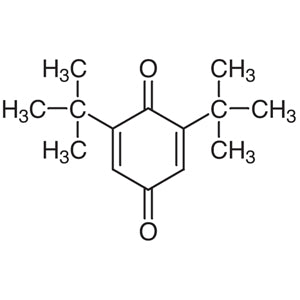
2,6-Di-tert-butyl-1,4-benzoquinone TCI D2256
Regular price From Rp 2.359.350,00Regular priceRp 1.665.300,00Sale price From Rp 2.359.350,00 -
2,6-Dimethyl-1,4-benzoquinone TCI D2234
Regular price From Rp 1.220.100,00Regular priceRp 868.350,00Sale price From Rp 1.220.100,00