Tetraphenylmethane is an aromatic hydrocarbon supplied by TCI. Its structure is a single central carbon atom bonded to four phenyl rings in a tetrahedral arrangement. It is classed as a non-heterocyclic building block and is widely valued in supramolecular chemistry and materials science. In the laboratory, tetraphenylmethane serves as a core for building star-shaped molecules, dendrimers and three-dimensional porous frameworks. Its well-defined tetrahedral geometry directs the growth of molecular networks in ways that flat, planar cores cannot easily achieve.
The main strengths of tetraphenylmethane are its rigid structure and high symmetry. The four phenyl rings point toward the corners of a tetrahedron, so derivatives functionalised at the para positions act as ideal four-directional nodes for covalent networks. The hydrocarbon skeleton is chemically and thermally stable, which means materials built from it tend to withstand harsh reaction conditions. For these reasons, the compound is the basis of several well-known porous aromatic frameworks recognised for their very high surface areas. Researchers choose it when they need a predictable, robust three-dimensional core.
In Indonesia, tetraphenylmethane is relevant to researchers working in materials chemistry, catalysis and gas storage technology who are developing porous polymers and related framework materials. University research groups, national research institutes and industrial R&D laboratories can use it as a starting point for synthesising functionalised tetrahedral monomers. It is also useful in teaching and research settings that explore molecular design, supramolecular assembly and the relationship between molecular geometry and the properties of bulk materials.
- Synthesis of porous aromatic frameworks: the rigid tetrahedral core gives three-dimensional networks with very high surface area and strong chemical and thermal stability.
- Construction of covalent organic networks: para-functionalised derivatives act as four-directional nodes, giving predictable connectivity when building extended covalent structures in research laboratories.
- Preparation of dendrimers and star-shaped molecules: the four phenyl arms give a symmetric starting point for growing branched architectures outward from one central carbon atom.
- Gas storage and separation research: frameworks built from this core can provide the large internal surface area needed to study gas uptake and selective adsorption.
- Supramolecular chemistry studies: its well-defined geometry and symmetry make it a useful model scaffold for exploring molecular packing, host–guest behaviour and directed self-assembly.
| Brand | TCI (product code T0169) |
|---|---|
| CAS number | 630-76-2 |
| Molecular formula | — |
| Purity | — |
| Category | Chemistry > Building Blocks > Non-Heterocyclic Building Blocks |
| Pack sizes | as listed on the product page; please contact AMI Scientific to check available options |
| Physical form | solid aromatic hydrocarbon |
| Storage | keep tightly closed in a cool, dry place; refer to the TCI label and SDS for specific conditions |
Store tetraphenylmethane in its original, tightly sealed container in a cool, dry and well-ventilated area, away from direct sunlight, heat sources and strong oxidising agents. Glass or other chemically compatible containers with secure closures are suitable if the material is transferred. Handle it in line with standard laboratory practice: wear safety glasses, gloves and a lab coat, avoid creating or breathing in dust, and work in a fume hood when weighing or handling larger amounts. Always check the supplier's Safety Data Sheet for full hazard, first aid and disposal information before use.
—
Produk Terkait
-
Triphenylmethane TCI T0515
Regular price From Rp 1.431.150,00Regular priceRp 1.000.650,00Sale price From Rp 1.431.150,00 -
Diphenylmethane TCI D0896
Regular price From Rp 584.850,00Regular priceRp 408.450,00Sale price From Rp 584.850,00 -
N-Phenylmethanesulfonamide TCI P1794
Regular price Rp 5.034.750,00Regular priceRp 3.536.400,00Sale price Rp 5.034.750,00 -
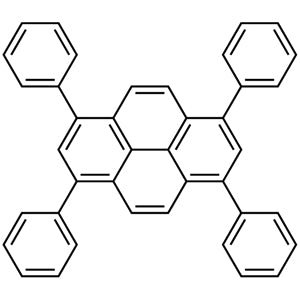
1,3,6,8-Tetraphenylpyrene TCI T3042
Regular price From Rp 2.837.100,00Regular priceRp 1.983.450,00Sale price From Rp 2.837.100,00 -
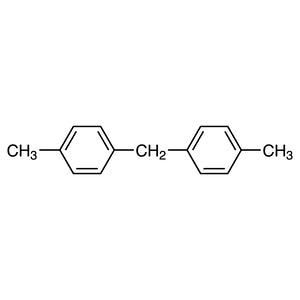
Di-p-tolylmethane TCI D1312
Regular price Rp 5.247.900,00Regular priceRp 3.669.750,00Sale price Rp 5.247.900,00 -
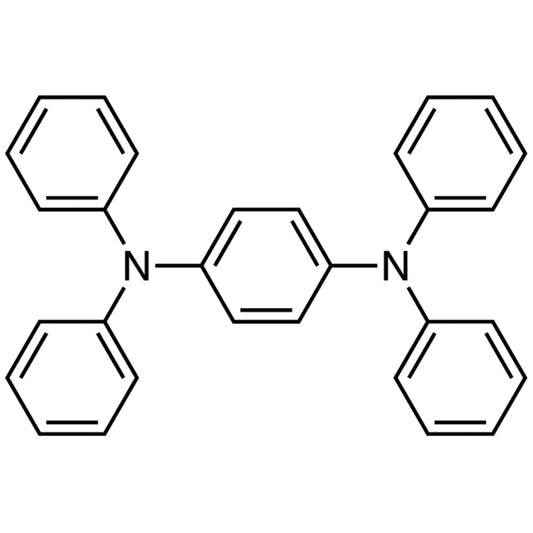
N,N,N',N'-Tetraphenyl-1,4-phenylenediamine TCI T3309
Regular price From Rp 1.035.300,00Regular priceRp 723.450,00Sale price From Rp 1.035.300,00 -
1,1,4,4-Tetraphenyl-1,3-butadiene TCI T0168
Regular price From Rp 1.035.300,00Regular priceRp 723.450,00Sale price From Rp 1.035.300,00 -
N,N'-Di(1-naphthyl)-N,N',9,9-tetraphenyl-9H-fluorene-2,7-diamine TCI D5443
Regular price From Rp 662.550,00Regular priceRp 478.800,00Sale price From Rp 662.550,00