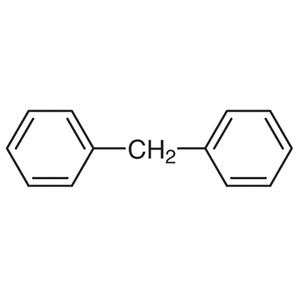
Diphenylmethane is a chemical compound widely used as a foundational material in various laboratory reactions. It serves as a key building block in organic chemistry, enabling the synthesis of complex molecules. Its molecular structure consists of two phenyl groups attached to a central carbon atom, making it a versatile intermediate in chemical synthesis. This compound is particularly valuable in research settings where controlled chemical reactions are required. Its stability and predictable reactivity make it an essential component in the development of new compounds and materials.
The properties of Diphenylmethane make it a preferred choice for laboratory use. It exhibits chemical stability, which minimizes unwanted side reactions during synthesis. Its controlled reactivity allows chemists to manipulate reactions with precision. Additionally, Diphenylmethane has a relatively high boiling and melting point, which ensures it remains stable under varying experimental conditions. These characteristics make it suitable for use in high-temperature reactions and long-term storage without significant degradation.
In Indonesian laboratories, Diphenylmethane is commonly used in scientific research and chemical product development. It is frequently found in chemistry, pharmaceutical, and industrial chemical production laboratories. Its availability and reliability make it a go-to material for researchers aiming to produce complex compounds. Its role in both academic and industrial settings underscores its importance in the chemical sciences.
- Organic synthesis: Diphenylmethane is widely used in organic synthesis due to its stable structure and predictable reactivity, allowing for the creation of complex molecules.
- Pharmaceutical research: It serves as a key building block in the development of new pharmaceutical compounds, enabling the synthesis of various drug-related molecules.
- Industrial chemical production: Its high thermal stability makes it suitable for use in industrial chemical processes that require controlled reaction conditions.
- Analytical chemistry: It is used as a standard reference material in analytical procedures to ensure accurate and reproducible results.
- Teaching laboratories: Diphenylmethane is commonly used in educational settings to demonstrate fundamental chemical reactions and synthesis techniques.
| Brand | TCI |
|---|---|
| CAS number | 101-81-5 |
| Molecular formula | — |
| Purity | — |
| Category | Chemistry > Building Blocks > Non-Heterocyclic Building Blocks |
| Pack sizes | Available in various quantities as per standard laboratory supply |
| Physical form | Solid |
| Storage | Store in a cool, dry place away from direct sunlight |
Diphenylmethane should be stored in a cool, dry environment to maintain its chemical stability. It is recommended to keep it in a sealed container to prevent exposure to moisture and air. Suitable containers include glass or metal vessels with airtight lids to ensure long-term preservation. Due to its chemical stability, it does not require refrigeration but should be protected from extreme temperatures. In laboratory settings, it is important to handle the compound with care, using appropriate personal protective equipment to ensure safety during use and storage. Proper labeling and storage conditions are essential to maintain its integrity and ensure safe handling in all experimental environments.
—
Produk Terkait
-
Triphenylmethane TCI T0515
Regular price From Rp 1.431.150,00Regular price -
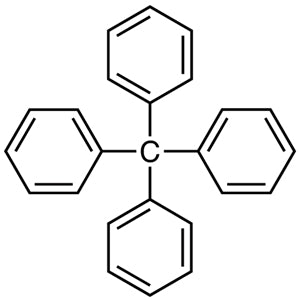
Tetraphenylmethane TCI T0169
Regular price From Rp 1.749.300,00Regular price -
N-Phenylmethanesulfonamide TCI P1794
Regular price Rp 4.982.250,00Regular price -
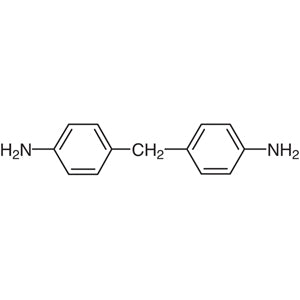
4,4'-Diaminodiphenylmethane TCI M0220
Regular price From Rp 530.250,00Regular price -
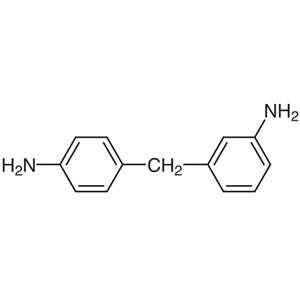
3,4'-Diaminodiphenylmethane TCI D1684
Regular price From Rp 1.220.100,00Regular price -
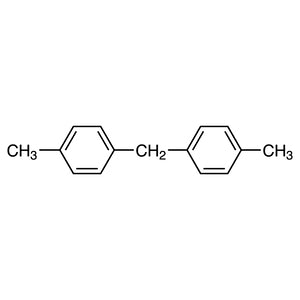
Di-p-tolylmethane TCI D1312
Regular price Rp 5.247.900,00Regular price -
4,4'-Bismaleimidodiphenylmethane TCI B1109
Regular price From Rp 875.700,00Regular price -
4,4'-Diamino-3,3'-dimethyldiphenylmethane TCI D2046
Regular price Rp 4.056.150,00Regular price