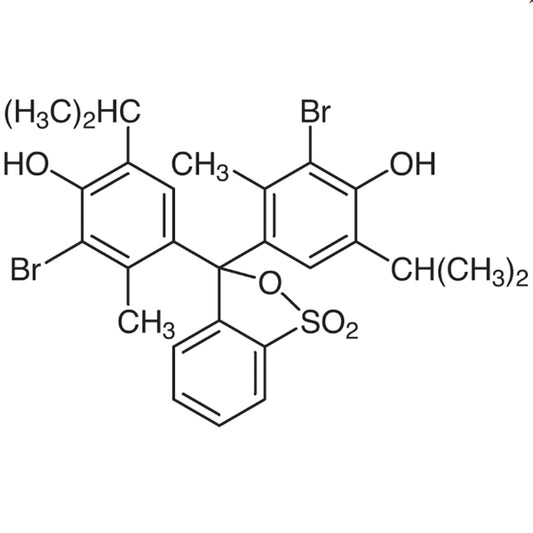
Thymol Blue is a chemical compound widely used as an indicator in various chemical reactions, particularly in titration processes. It plays a crucial role in analytical chemistry by providing visual signals that help determine the endpoint of a reaction. This reagent is essential for monitoring changes in hydrogen or hydroxide ion concentrations in solution, making it indispensable in both research and educational settings. Its ability to change color in response to pH variations allows for accurate and reliable results in laboratory analyses.
One of the key properties that make Thymol Blue a preferred choice is its stability under certain conditions. It exhibits a distinct color change, shifting from blue to violet or yellow depending on the pH of the solution. This clear and observable color transition makes it ideal for applications where visual detection is necessary. Additionally, its chemical stability ensures consistent performance over time, reducing the risk of false readings or experimental errors. These characteristics contribute to its reliability in both qualitative and quantitative analysis.
In Indonesian laboratories, Thymol Blue is commonly used in chemical research, educational institutions, and industrial settings. Its availability in the local market supports a wide range of experiments and analytical procedures. As a key component in titration, it enables scientists and students to perform accurate measurements and understand chemical behavior in different environments. Its versatility and reliability make it an essential tool for analytical and environmental chemistry applications.
TCI brochures (PDF)
- Titration Reagents and TLC Stains 2026-05-07 · p. 2
- Titrations in analytical chemistry benefit from Thymol Blue's ability to indicate pH changes, helping to identify the endpoint of acid-base reactions.
- Environmental testing uses Thymol Blue to assess water and soil pH levels, supporting ecological and pollution studies.
- Educational institutions incorporate Thymol Blue into chemistry experiments to teach students about pH indicators and titration techniques.
- Industrial quality control processes utilize Thymol Blue to monitor chemical reactions and ensure product consistency.
- Research laboratories rely on Thymol Blue for accurate colorimetric analysis in various chemical and biochemical studies.
| Brand | TCI |
|---|---|
| CAS number | 76-61-9 |
| Molecular formula | — |
| Purity | — |
| Category | Analytical Chemistry > Analytical Reagents > Titration Reagents |
| Pack sizes | Available in various quantities as per standard laboratory requirements |
| Physical form | Solid powder |
| Storage | Store in a cool, dry place away from direct sunlight and moisture |
Thymol Blue should be stored in a cool, dry environment to maintain its chemical stability and ensure accurate performance. It is recommended to keep the reagent in a tightly sealed container to prevent exposure to moisture and air, which could affect its properties. Suitable containers for storage include glass or polyethylene vessels that are resistant to chemical reactions. In laboratory settings, it is important to handle Thymol Blue with care, avoiding direct contact with skin or inhalation of vapors. Proper labeling and storage conditions help maintain the integrity of the reagent and ensure safe usage in all experimental procedures.
—
Produk Terkait
-
ThymolBlueSodiumSalt TCI S0049
Regular price Rp 557.550,00Regular priceRp 405.300,00Sale price Rp 557.550,00 -
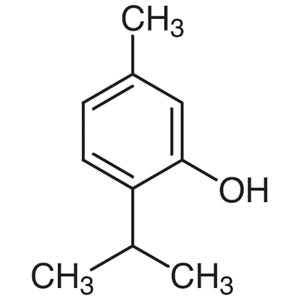
Thymol TCI M0410
Regular price From Rp 530.250,00Regular priceRp 386.400,00Sale price From Rp 530.250,00 -
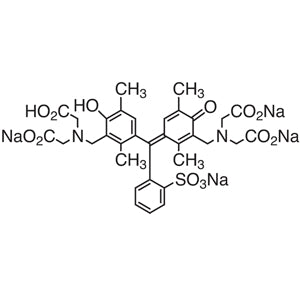
MethylxylenolBlue TCI X0052
Regular price Rp 2.359.350,00Regular priceRp 1.665.300,00Sale price Rp 2.359.350,00 -
p-XylenolBlue TCI X0016
Regular price From Rp 689.850,00Regular priceRp 497.700,00Sale price From Rp 689.850,00 -
BromoxylenolBlue TCI B0998
Regular price From Rp 2.121.000,00Regular priceRp 1.498.350,00Sale price From Rp 2.121.000,00 -
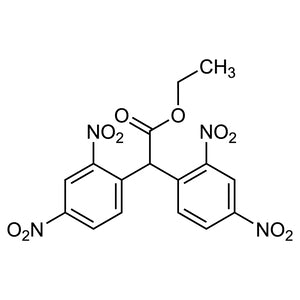
EthylBis(2,4-dinitrophenyl)acetate TCI B0817
Regular price Rp 1.510.950,00Regular priceRp 1.072.050,00Sale price Rp 1.510.950,00 -
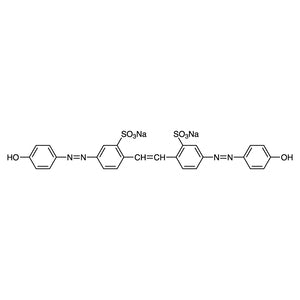
BrilliantYellow TCI B0783
Regular price Rp 4.320.750,00Regular priceRp 3.020.850,00Sale price Rp 4.320.750,00 -
BromothymolBlue TCI B0657
Regular price From Rp 530.250,00Regular priceRp 386.400,00Sale price From Rp 530.250,00