1-(o-Tolyl)biguanide is a chemical compound widely used in laboratory settings for its versatility in chemical synthesis and molecular modification. As a key building block in organic chemistry, it plays a crucial role in the development of complex molecules and functional groups. This compound is particularly valued for its ability to participate in various chemical reactions, making it an essential tool for researchers working in synthetic chemistry and pharmaceutical development. Its unique structure, featuring a biguanide group attached to an o-tolyl group, allows for a wide range of chemical transformations, contributing to its broad applicability in laboratory research.
The compound's chemical properties, including its stability under normal conditions and reactivity with organic reagents, make it a preferred choice for many synthetic applications. It exhibits good solubility in organic solvents, which simplifies handling and processing during chemical reactions. This solubility, combined with its reactivity, enables efficient participation in substitution, replacement, and bond formation reactions. These characteristics make it highly suitable for use in complex synthesis pathways and functional group modifications, supporting advanced research in organic and medicinal chemistry.
In Indonesian laboratories, 1-(o-Tolyl)biguanide is commonly used in scientific research, especially in the development of bioactive compounds. Its role in the synthesis of antimicrobial agents and other bioactive molecules makes it a valuable resource for both academic and industrial research. Its stability and reactivity ensure that it remains a reliable and effective component in the chemical toolkit of Indonesian researchers.
- Organic synthesis is a primary application where 1-(o-Tolyl)biguanide is used to construct complex molecules through substitution and functional group modifications.
- Bioactive compound development benefits from this compound's ability to participate in reactions that lead to the creation of antimicrobial agents and other pharmaceuticals.
- Molecular modification projects rely on its reactivity and structural versatility for creating new chemical entities with specific biological activities.
- Analytical chemistry applications utilize its solubility and reactivity for use in chromatographic and spectroscopic analyses.
- Research in pharmacology and medicinal chemistry often incorporates this compound to explore its potential in drug design and development.
| Brand | TCI |
|---|---|
| CAS number | 93-69-6 |
| Molecular formula | — |
| Purity | — |
| Category | Chemistry > Building Blocks > Non-Heterocyclic Building Blocks |
| Pack sizes | Available in various quantities as per supplier specifications |
| Physical form | Solid |
| Storage | Store in a cool, dry place away from direct sunlight |
This compound should be stored in a cool, dry environment to maintain its chemical integrity and prevent degradation. It is recommended to use airtight containers to minimize exposure to moisture and air, which can affect its stability. Due to its reactivity, it should be handled with care, using appropriate personal protective equipment such as gloves and safety goggles. It is important to ensure that it is stored separately from incompatible substances to avoid any potential chemical interactions. Proper labeling of storage containers is essential for safe handling and to prevent accidental exposure. Regular monitoring of storage conditions ensures the compound remains in optimal condition for use in laboratory applications.
—
Produk Terkait
-
3-Oxo-3-(p-tolyl)propanenitrile TCI T3700
Regular price Rp 1.326.150,00Regular priceRp 942.900,00Sale price Rp 1.326.150,00 -
5-Amino-1-(p-tolyl)pyrazole-4-carbonitrile TCI A3039
Regular price Rp 3.365.250,00Regular priceRp 2.368.800,00Sale price Rp 3.365.250,00 -
m-TolylIsocyanate TCI T0721
Regular price From Rp 1.776.600,00Regular priceRp 1.242.150,00Sale price From Rp 1.776.600,00 -
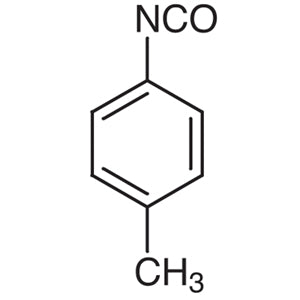
p-TolylIsocyanate TCI T0321
Regular price From Rp 2.254.350,00Regular priceRp 1.576.050,00Sale price From Rp 2.254.350,00 -
o-TolylIsocyanate TCI T0320
Regular price From Rp 795.900,00Regular priceRp 556.500,00Sale price From Rp 795.900,00 -
2-(p-Tolyl)acetaldehyde TCI T4311
Regular price From Rp 3.100.650,00Regular priceRp 2.168.250,00Sale price From Rp 3.100.650,00 -
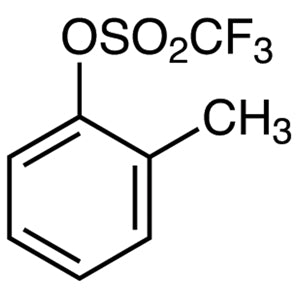
o-TolylTrifluoromethanesulfonate TCI T3357
Regular price From Rp 2.491.650,00Regular priceRp 1.741.950,00Sale price From Rp 2.491.650,00 -
1-(p-Tolyl)-1-cyclohexanecarboxylicAcid TCI T3097
Regular price From Rp 1.696.800,00Regular priceRp 1.202.250,00Sale price From Rp 1.696.800,00