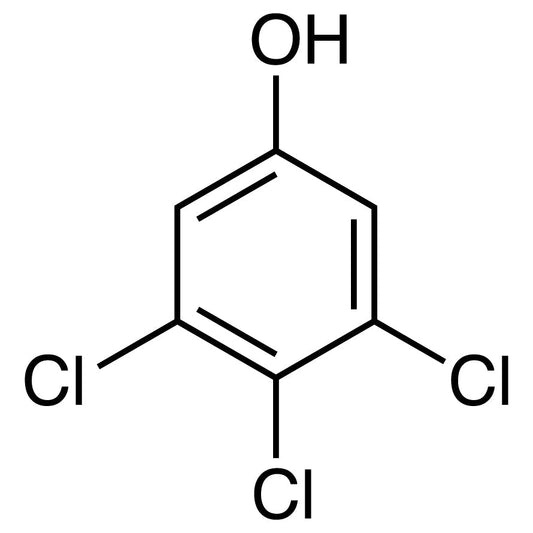
2,4,6-Trichlorophenol Sodium Salt is a chemical compound widely used in laboratory settings for various chemical experiments, particularly in the synthesis of organic compounds and chemical analysis. This compound features a phenolic structure with three chlorine atoms at positions 2, 4, and 6, along with a sodium group that enhances its stability under certain conditions. It serves as a versatile building block in chemical research, enabling the creation of compounds with specific biological or chemical properties. Due to its reactivity and stability in the sodium salt form, it is a valuable resource for chemists working on complex molecular structures.
The compound’s chemical properties make it a preferred choice in laboratory applications. Its sodium group contributes to its stability and reactivity, making it suitable for a range of chemical reactions. The solubility characteristics vary depending on the solvent used, which allows for flexibility in experimental setups. Additionally, the presence of the sodium group influences its reactivity, making it easier to incorporate into specific chemical processes. These properties ensure its reliability and effectiveness in both synthetic and analytical applications.
In Indonesian laboratories, 2,4,6-Trichlorophenol Sodium Salt is commonly used in organic chemistry research, especially in the synthesis of compounds with pharmacological activity. It is also employed in chemical analysis to identify or quantify specific substances. Its availability and chemical properties make it a reliable material for researchers in Indonesia, supporting both academic and industrial chemical studies.
- Organic synthesis is a key application where this compound serves as a building block for creating biologically active molecules.
- Chemical analysis benefits from its ability to participate in reactions that help identify or measure specific compounds.
- Pharmaceutical research utilizes this compound in the development of drugs with targeted biological effects.
- Environmental testing employs it in the detection and quantification of organic pollutants in various samples.
- Industrial chemistry uses it as a precursor in the production of specialty chemicals and intermediates.
| Brand | TCI |
|---|---|
| CAS number | 3784-03-0 |
| Molecular formula | — |
| Purity | — |
| Category | Chemistry > Building Blocks > Non-Heterocyclic Building Blocks |
| Pack sizes | 25g, 100g, 500g |
| Physical form | Solid |
| Storage | Store in a cool, dry place away from moisture and direct sunlight |
This compound should be stored in a cool, dry place, away from moisture and direct sunlight to maintain its chemical integrity. It is recommended to use airtight containers to prevent exposure to humidity, which can affect its stability. Due to its chemical reactivity, it should be handled with appropriate personal protective equipment, including gloves and safety goggles. In laboratory settings, it should be stored separately from incompatible substances to avoid potential chemical interactions. Proper labeling and storage conditions are essential to ensure safe handling and long-term usability.
—
Produk Terkait
-
3,4,5-Trichlorophenol TCI T1115
Regular price Rp 3.949.050,00Regular priceRp 2.761.500,00Sale price Rp 3.949.050,00 -
2,3,6-Trichlorophenol TCI T1114
Regular price From Rp 1.724.100,00Regular priceRp 1.205.400,00Sale price From Rp 1.724.100,00 -
2,4,5-TrichlorophenolSodiumSalt TCI T0391
Regular price Rp 1.035.300,00Regular priceRp 723.450,00Sale price Rp 1.035.300,00 -
2,4,6-Trichlorophenol TCI T0390
Regular price From Rp 689.850,00Regular priceRp 481.950,00Sale price From Rp 689.850,00 -
2,4,5-Trichlorophenol TCI T0389
Regular price From Rp 1.167.600,00Regular priceRp 815.850,00Sale price From Rp 1.167.600,00