Nalpha-Tosyl-L-arginine is a chemical compound widely used in laboratory experiments across chemical and biochemical fields. It plays a crucial role in peptide synthesis and chemical reactions involving arginine reactivity. This compound is particularly valuable for its ability to act as a substrate in enzymatic reactions, such as those catalyzed by peptidases. Its unique chemical structure, featuring a tosylsulfonyl group, contributes to its reactivity and specificity, making it an essential tool for researchers.
The compound’s reactivity and specificity make it a preferred choice in various laboratory settings. Its sensitivity to environmental conditions such as pH and temperature allows for precise control in chemical reactions, which is vital in biochemical and organic chemistry applications. The presence of the tosylsulfonyl group enhances its ability to participate in specific reactions, making it suitable for applications requiring high reactivity. Its chemical stability under controlled conditions ensures reliable results in experimental setups.
In Indonesian laboratories, Nalpha-Tosyl-L-arginine is commonly used in biochemical, pharmacological, and organic chemistry research. Its availability and consistent quality make it a go-to material for both academic and industrial research. Researchers and students rely on this compound for its role in accelerating peptide synthesis and supporting complex chemical reactions. Its versatility and reliability have made it a staple in many laboratory workflows.
TCI brochures (PDF)
- Amino Acids and Peptide Synthesis Reagents 2025-08-14 · p. 24
Related TCI products
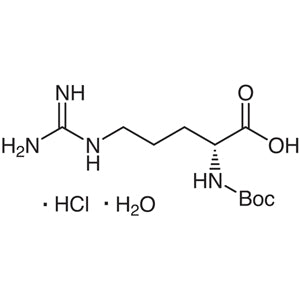
- TCI B2204 204070-00-8 Nalpha-(tert-Butoxycarbonyl)-D-arginine Hydrochloride Monohydrate
- TCI B1626 114622-81-0 Nalpha-(tert-Butoxycarbonyl)-L-arginine Hydrochloride Monohydrate
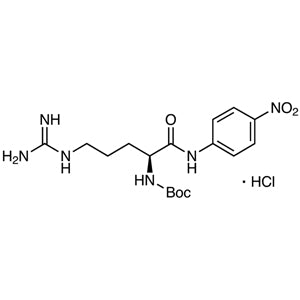
- TCI B1497 99306-64-6 Nalpha-(tert-Butoxycarbonyl)-L-arginine 4-Nitroanilide Hydrochloride
- TCI B0853 2645-08-1 Nalpha-Benzoyl-L-arginine Ethyl Ester Hydrochloride
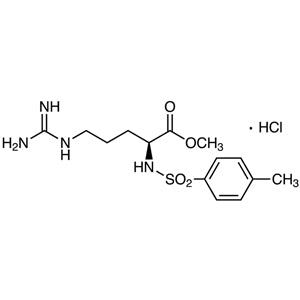
- TCI T0330 1784-03-8 Nalpha-Tosyl-L-arginine Methyl Ester Hydrochloride
- TCI D1040 1602-42-2 Nalpha-(2,4-Dinitrophenyl)-L-arginine
- Peptide Synthesis: This compound is used to accelerate the formation of peptide bonds in synthetic processes, providing a reactive substrate for amino acid coupling.
- Enzymatic Reactions: It serves as a substrate for peptidases, allowing researchers to study enzyme activity and specificity in controlled environments.
- Biochemical Research: Its reactivity makes it ideal for experiments involving protein degradation and enzyme inhibition studies.
- Organic Chemistry Experiments: The compound's structural features enable it to participate in various organic reactions, supporting synthetic pathways.
- Pharmacological Studies: It is used to investigate the effects of arginine derivatives on biological systems, aiding in drug development and mechanism studies.
| Brand | TCI |
|---|---|
| CAS number | 1159-15-5 |
| Molecular formula | — |
| Purity | — |
| Category | Chemistry > Chemical Biology > Peptide Chemistry |
| Pack sizes | Available in various quantities as per supplier specifications |
| Physical form | Solid powder |
| Storage | Store in a cool, dry place away from light and moisture |
Nalpha-Tosyl-L-arginine should be stored in a cool, dry environment, away from direct light and moisture to maintain its chemical integrity. It is recommended to use airtight containers to prevent exposure to humidity and contaminants. Due to its sensitivity to environmental factors, it should be handled in a controlled laboratory setting with proper ventilation. Researchers should wear appropriate personal protective equipment, such as gloves and safety goggles, when handling the compound. Avoid prolonged exposure to heat or direct sunlight to prevent degradation. Proper storage ensures the compound remains effective for its intended applications in biochemical and organic chemistry experiments.
—
Product Categories
Produk Terkait
-
Nalpha-(tert-Butoxycarbonyl)-D-arginineHydrochlorideMonohydrate TCI B2204
Regular price From Rp 848.400,00Regular priceRp 609.000,00Sale price From Rp 848.400,00 -
Nalpha-(tert-Butoxycarbonyl)-L-arginineHydrochlorideMonohydrate TCI B1626
Regular price From Rp 662.550,00Regular priceRp 478.800,00Sale price From Rp 662.550,00 -
Nalpha-(tert-Butoxycarbonyl)-L-arginine4-NitroanilideHydrochloride TCI B1497
Regular price Rp 530.250,00Regular priceRp 386.400,00Sale price Rp 530.250,00 -
Nalpha-Benzoyl-L-arginineEthylEsterHydrochloride TCI B0853
Regular price From Rp 1.590.750,00Regular priceRp 1.127.700,00Sale price From Rp 1.590.750,00 -
Nalpha-Tosyl-L-arginineMethylEsterHydrochloride TCI T0330
Regular price From Rp 530.250,00Regular priceRp 386.400,00Sale price From Rp 530.250,00 -
Nalpha-(2,4-Dinitrophenyl)-L-arginine TCI D1040
Regular price Rp 4.266.150,00Regular priceRp 2.998.800,00Sale price Rp 4.266.150,00 -
Nalpha-Carbobenzoxy-L-arginine TCI C0757
Regular price From Rp 557.550,00Regular priceRp 405.300,00Sale price From Rp 557.550,00 -
Nalpha,Nepsilon-Bis[(9H-fluoren-9-ylmethoxy)carbonyl]-L-lysine TCI B4931
Regular price From Rp 1.060.500,00Regular priceRp 757.050,00Sale price From Rp 1.060.500,00