

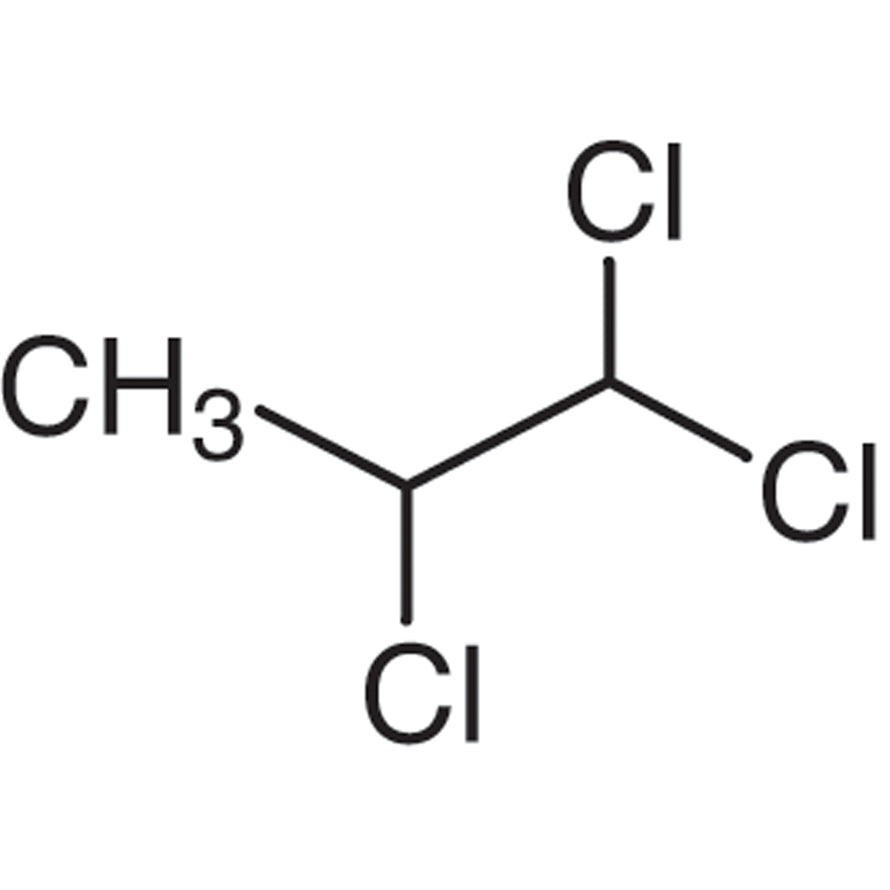
1,1,2-Trichloropropane is a chemical compound widely used as a foundational material in various laboratory reactions. It serves as a key reagent or auxiliary in the synthesis of more complex organic compounds, playing a vital role in organic chemistry research. Its simple molecular structure makes it an essential building block for chemists seeking to explore reaction pathways and functional group transformations. This compound is particularly valuable in environments where controlled reactivity and stability are required.
The compound's unique chemical properties make it a preferred choice for laboratory applications. It exhibits low polarity and good solubility in organic solvents, which enhances its versatility in different reaction conditions. Its ability to dissolve in both acidic and basic environments further broadens its utility. Additionally, its relatively high boiling point allows it to be used in reactions requiring elevated temperatures. The presence of chlorine atoms in its structure also contributes to its reactivity, enabling it to participate in substitution and addition reactions.
In Indonesian laboratories, 1,1,2-Trichloropropane is commonly used in organic chemistry research, especially in academic and research institutions. It is frequently employed in the development of new compounds and the study of chemical reactions. Its reliability and consistent performance make it a trusted material for both teaching and experimental purposes. Researchers in Indonesia rely on this compound for its predictable behavior and ease of handling in various experimental setups.
Related TCI products
- Organic synthesis experiments benefit from 1,1,2-Trichloropropane due to its reactivity and solubility in organic solvents, enabling efficient reaction pathways.
- It is ideal for substitution reactions because of its chlorine atoms, which can be replaced in controlled chemical environments.
- The compound is used in the preparation of halogenated derivatives, offering a stable starting material for further functional group modifications.
- Its high boiling point makes it suitable for reactions that require elevated temperatures, ensuring consistent reaction conditions.
- It supports research in polymer chemistry by serving as a precursor in the synthesis of chlorinated polymers and related materials.
| Brand | TCI |
|---|---|
| CAS number | 598-77-6 |
| Molecular formula | — |
| Purity | — |
| Category | Chemistry > Building Blocks > Non-Heterocyclic Building Blocks |
| Pack sizes | Available in various quantities as per standard laboratory supply options |
| Physical form | Liquid |
| Storage | Store in a cool, dry place away from direct sunlight and incompatible materials |
1,1,2-Trichloropropane should be stored in a cool, dry environment to maintain its chemical stability. It is recommended to keep the compound in a sealed container made of materials compatible with its chemical nature, such as glass or high-density polyethylene. The storage area should be well-ventilated to prevent the accumulation of vapors. Avoid exposure to heat, flames, or sources of ignition due to its flammable properties. Always ensure that the container is properly labeled and stored away from incompatible substances like strong oxidizers or acids. Regular inspections of storage conditions are advised to ensure safety and maintain the integrity of the compound.
—
Produk Terkait
-
1,2,3-Trichloropropane TCI T0395
Regular price Rp 505.050,00Regular priceRp 352.800,00Sale price Rp 505.050,00 -
1,1,1,3-Tetrachloropropane TCI T2426
Regular price Rp 1.856.400,00Regular priceRp 1.297.800,00Sale price Rp 1.856.400,00 -
1,1,2,3-Tetrachloropropane TCI T0707
Regular price Rp 6.836.550,00Regular priceRp 4.780.650,00Sale price Rp 6.836.550,00 -
1,1,1,2,3,3,3-Heptachloropropane TCI H0016
Regular price Rp 3.180.450,00Regular priceRp 2.223.900,00Sale price Rp 3.180.450,00 -
1,1,1,2,2,3,3-Heptachloropropane TCI H0015
Regular price Rp 5.169.150,00Regular priceRp 3.614.100,00Sale price Rp 5.169.150,00 -
2,2-Dimethyl-1,3-dichloropropane TCI D0870
Regular price From Rp 2.227.050,00Regular priceRp 1.557.150,00Sale price From Rp 2.227.050,00 -
2,2-Dichloropropane TCI D0400
Regular price Rp 3.100.650,00Regular priceRp 2.168.250,00Sale price Rp 3.100.650,00 -
1,3-Dichloropropane TCI D0399
Regular price From Rp 1.696.800,00Regular priceRp 1.186.500,00Sale price From Rp 1.696.800,00


