

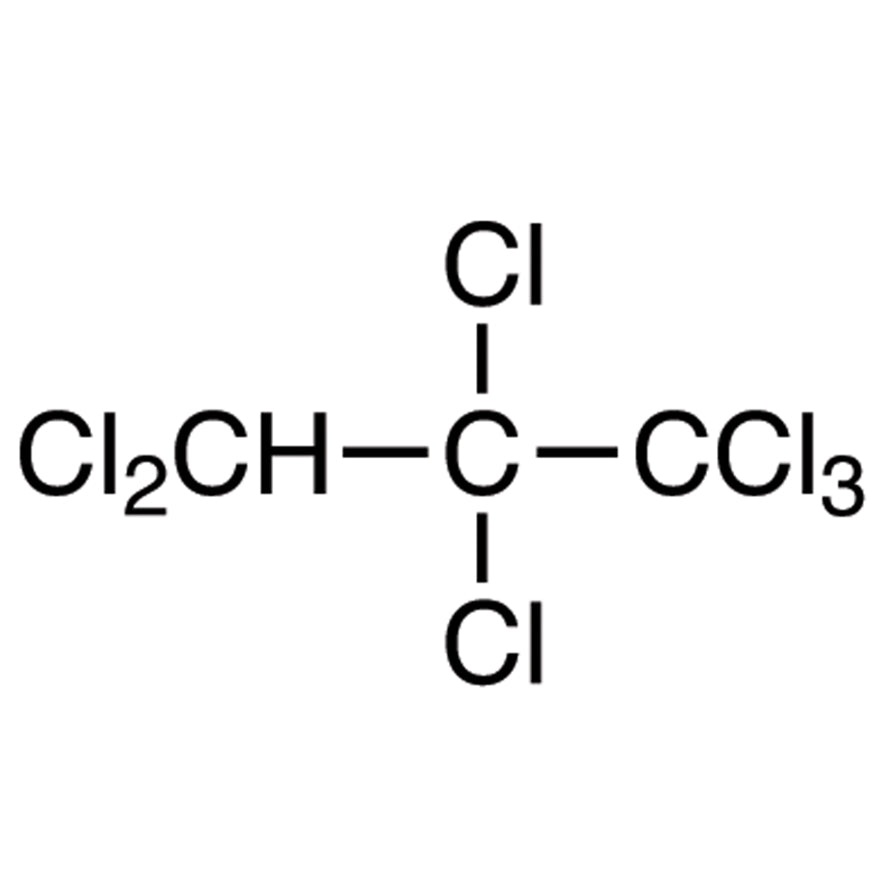
1,1,1,2,2,3,3-Heptachloropropane is a chemical compound widely used as a building block in various chemical reactions within laboratory settings. This compound serves as a key reagent in organic synthesis due to its unique molecular structure, which consists of carbon and chlorine atoms. Its high reactivity makes it an essential component in the development of new chemical compounds. In research and development environments, it is frequently utilized for its ability to participate in substitution and addition reactions, contributing to the creation of more complex organic molecules.
The compound's chemical properties, including its high stability and solubility in organic solvents, make it a preferred choice for laboratory applications. Its ability to remain stable under various reaction conditions allows for consistent results in chemical processes. Additionally, its high boiling point enables its use in reactions requiring elevated temperatures. These characteristics ensure that it remains a reliable and effective reagent in both analytical and synthetic chemistry.
In Indonesian laboratories, 1,1,1,2,2,3,3-Heptachloropropane is commonly used in organic synthesis and chemical research. Its availability through trusted suppliers like AMI Scientific ensures that researchers have access to high-quality materials for their experiments. The compound's versatility and reliability make it an essential tool in the chemical research landscape of Indonesia.
- Organic synthesis as a versatile building block for creating complex organic compounds through substitution and addition reactions.
- Analytical chemistry for use in spectroscopic and chromatographic analyses due to its distinct chemical properties and solubility.
- Research and development in pharmaceutical and industrial chemistry for the synthesis of intermediate compounds.
- Chemical process optimization in industrial settings requiring stable and reactive reagents for high-temperature applications.
- Teaching and educational purposes in university and research institutions for demonstrating chemical reactivity and molecular structure.
| Brand | TCI |
|---|---|
| CAS number | 594-89-8 |
| Molecular formula | — |
| Purity | — |
| Category | Chemistry > Building Blocks > Non-Heterocyclic Building Blocks |
| Pack sizes | Available in various quantities as per supplier specifications |
| Physical form | Liquid |
| Storage | Store in a cool, dry, and well-ventilated area away from light and incompatible substances |
This compound should be stored in a cool, dry, and well-ventilated area, away from direct sunlight and incompatible materials such as flammable substances or strong oxidizers. It is recommended to use sealed containers made of materials compatible with chlorinated hydrocarbons, such as glass or high-density polyethylene. Due to its reactivity, it should be handled with appropriate personal protective equipment, including gloves, goggles, and a lab coat. In laboratory settings, it should be kept in a designated chemical storage cabinet to ensure safety and prevent accidental exposure. Always ensure proper ventilation when working with this compound to minimize inhalation risks.
—
Produk Terkait
-
1,1,1,2,3,3,3-Heptachloropropane TCI H0016
Regular price Rp 3.180.450,00Regular priceRp 2.223.900,00Sale price Rp 3.180.450,00 -
1,1,2-Trichloropropane TCI T0686
Regular price Rp 2.757.300,00Regular priceRp 1.927.800,00Sale price Rp 2.757.300,00 -
1,2,3-Trichloropropane TCI T0395
Regular price Rp 505.050,00Regular priceRp 352.800,00Sale price Rp 505.050,00 -
2,2-Dimethyl-1,3-dichloropropane TCI D0870
Regular price From Rp 2.227.050,00Regular priceRp 1.557.150,00Sale price From Rp 2.227.050,00 -
2,2-Dichloropropane TCI D0400
Regular price Rp 3.100.650,00Regular priceRp 2.168.250,00Sale price Rp 3.100.650,00 -
1,3-Dichloropropane TCI D0399
Regular price From Rp 1.696.800,00Regular priceRp 1.186.500,00Sale price From Rp 1.696.800,00 -
1,2-Dichloropropane TCI D0398
Regular price From Rp 717.150,00Regular priceRp 500.850,00Sale price From Rp 717.150,00 -
2-Chloropropane TCI C0267
Regular price From Rp 505.050,00Regular priceRp 352.800,00Sale price From Rp 505.050,00


