

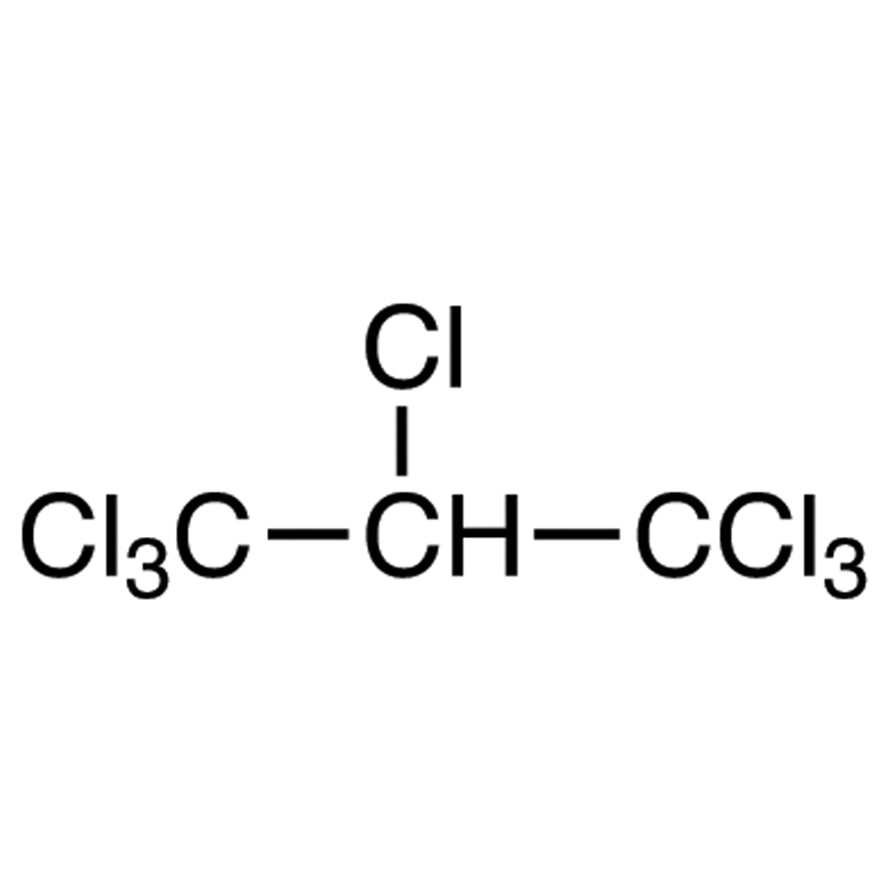
1,1,1,2,3,3,3-Heptachloropropane is a chemical compound widely used in synthetic applications within laboratory settings. As a non-heterocyclic building block, it serves as a foundational material for constructing more complex molecular structures. Its unique chemical structure enables it to participate in various synthetic reactions, making it a versatile tool for organic chemists. This compound is commonly employed in research aimed at developing new compounds or modifying existing ones through substitution and other chemical processes.
The compound's chemical stability under specific conditions, combined with its high chlorine content, makes it a preferred choice for synthetic chemists. Despite its stability, it requires careful handling due to its reactivity with other reagents. Its non-volatile nature simplifies storage and use, allowing for consistent performance in both small and large-scale laboratory operations. The straightforward molecular structure also facilitates further chemical processing and reactivity, enhancing its utility in diverse synthetic applications.
In Indonesian laboratories, 1,1,1,2,3,3,3-Heptachloropropane is frequently utilized in organic chemistry research, particularly in the synthesis of complex compounds. Its presence in industrial and academic research settings highlights its importance as a reliable building block for chemical innovation. The compound's availability and functional properties make it a valuable resource for scientists working on advanced chemical projects.
- Organic synthesis applications benefit from this compound’s ability to participate in substitution reactions, making it ideal for constructing complex molecular frameworks.
- It is frequently used in the development of new chemical compounds, where its reactivity and structural simplicity support efficient synthetic pathways.
- In research focused on chemical modification, the compound’s stability and reactivity allow for controlled transformations in laboratory settings.
- It supports the creation of specialized chemical intermediates, which are essential in the production of pharmaceuticals and specialty chemicals.
- Due to its non-volatile nature, it is well-suited for use in both small and large-scale laboratory operations, ensuring consistent results across different experimental conditions.
| Brand | TCI |
|---|---|
| CAS number | 3849-33-0 |
| Molecular formula | — |
| Purity | — |
| Category | Chemistry > Building Blocks > Non-Heterocyclic Building Blocks |
| Pack sizes | Available in various quantities as per standard laboratory supply options |
| Physical form | Liquid |
| Storage | Store in a cool, dry place away from direct sunlight and incompatible materials |
This compound should be stored in a cool, dry environment, away from direct sunlight and sources of heat. It is recommended to use sealed, airtight containers to prevent exposure to moisture and air. Due to its high chlorine content, it should be kept away from incompatible substances such as flammable materials or strong bases. Proper ventilation is essential when handling the compound to minimize inhalation risks. Laboratory personnel should wear appropriate personal protective equipment, including gloves and safety goggles, to ensure safe handling. Regular monitoring of storage conditions is advised to maintain the compound’s stability and effectiveness in research applications.
—
Produk Terkait
-
1,1,1,2,2,3,3-Heptachloropropane TCI H0015
Regular price Rp 5.169.150,00Regular priceRp 3.614.100,00Sale price Rp 5.169.150,00 -
1,1,2-Trichloropropane TCI T0686
Regular price Rp 2.757.300,00Regular priceRp 1.927.800,00Sale price Rp 2.757.300,00 -
1,2,3-Trichloropropane TCI T0395
Regular price Rp 505.050,00Regular priceRp 352.800,00Sale price Rp 505.050,00 -
2,2-Dimethyl-1,3-dichloropropane TCI D0870
Regular price From Rp 2.227.050,00Regular priceRp 1.557.150,00Sale price From Rp 2.227.050,00 -
2,2-Dichloropropane TCI D0400
Regular price Rp 3.100.650,00Regular priceRp 2.168.250,00Sale price Rp 3.100.650,00 -
1,3-Dichloropropane TCI D0399
Regular price From Rp 1.696.800,00Regular priceRp 1.186.500,00Sale price From Rp 1.696.800,00 -
1,2-Dichloropropane TCI D0398
Regular price From Rp 717.150,00Regular priceRp 500.850,00Sale price From Rp 717.150,00 -
2-Chloropropane TCI C0267
Regular price From Rp 505.050,00Regular priceRp 352.800,00Sale price From Rp 505.050,00


