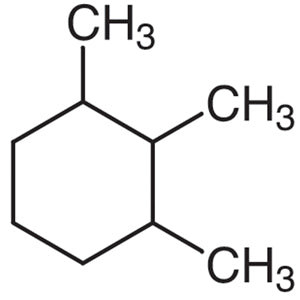
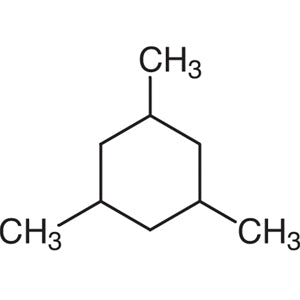
1,2,4-Trimethylcyclohexane (mixture of stereoisomers) is a versatile organic compound widely used in chemical laboratories for constructing complex molecular structures. This compound serves as a fundamental building block in various synthetic pathways, enabling the development of aromatic and heterocyclic compounds. Its role in chemical reactions is crucial, particularly in substitution, addition, and coupling reactions, where it provides a stable and reactive platform for further chemical transformations. Due to its chemical stability and controlled reactivity, it is a reliable choice for researchers aiming to achieve consistent results in their experiments.
The compound's non-polar nature and resistance to degradation make it an ideal candidate for applications requiring high chemical stability. These properties ensure that it remains chemically inert under a wide range of experimental conditions, reducing the risk of unwanted side reactions. Additionally, its low toxicity at standard usage levels enhances its safety profile, making it suitable for routine laboratory use. This combination of stability, reactivity, and safety contributes to its popularity among chemists working in both academic and industrial settings.
In Indonesian laboratories, 1,2,4-Trimethylcyclohexane is commonly used in organic chemistry research, particularly in universities and research institutions. Its availability and cost-effectiveness make it a preferred choice for small- to medium-scale experiments. Its applications span from basic synthetic chemistry to more advanced research projects, supporting the development of new compounds and materials. Its role in the Indonesian scientific community is significant, contributing to the advancement of chemical research and education.
- Synthesis of aromatic compounds: This compound is used as a starting material for the synthesis of aromatic compounds due to its stable structure and reactivity, allowing for controlled chemical modifications.
- Organic chemistry research: It is a key reagent in various organic reactions, supporting the development of new chemical compounds and materials in academic and industrial settings.
- Industrial chemical development: Its non-polar nature and chemical stability make it suitable for use in the development of industrial chemicals, where consistency and reliability are essential.
- Coupling reactions: The compound's ability to participate in coupling reactions makes it valuable for constructing complex molecular structures in synthetic chemistry.
- Teaching and training: It is frequently used in laboratory courses to demonstrate fundamental chemical reactions and principles to students and researchers.
| Brand | TCI |
|---|---|
| CAS number | 2234-75-5 |
| Molecular formula | — |
| Purity | — |
| Category | Chemistry > Building Blocks > Non-Heterocyclic Building Blocks |
| Pack sizes | Available in various sizes as per supplier specifications |
| Physical form | Liquid |
| Storage | Store in a cool, dry place away from direct sunlight |
This compound should be stored in a cool, dry place, away from direct sunlight and sources of heat. It is recommended to use airtight containers made of materials that are chemically inert to prevent any unwanted reactions. Due to its non-polar nature, it is important to ensure that the storage containers are sealed properly to avoid contamination. General laboratory precautions include handling with care to avoid spills and ensuring proper ventilation in the workspace. While it is considered non-toxic at standard usage levels, it is advisable to follow standard safety protocols when working with organic solvents. Proper labeling of containers is essential to ensure safe handling and prevent accidental exposure.
—
Produk Terkait
-
1,1,3-Trimethylcyclohexane TCI T0827
Regular price Rp 5.830.650,00Regular priceRp 4.077.150,00Sale price Rp 5.830.650,00 -
1,2,3-Trimethylcyclohexane TCI T0824
Regular price Rp 3.100.650,00Regular priceRp 2.168.250,00Sale price Rp 3.100.650,00 -
1,3,5-Trimethylcyclohexane TCI T0664
Regular price Rp 2.837.100,00Regular priceRp 1.983.450,00Sale price Rp 2.837.100,00 -
cis-1,4-Dimethylcyclohexane TCI D1715
Regular price From Rp 2.041.200,00Regular priceRp 1.426.950,00Sale price From Rp 2.041.200,00 -
cis-1,3-Dimethylcyclohexane TCI D1055
Regular price From Rp 1.193.850,00Regular priceRp 834.750,00Sale price From Rp 1.193.850,00 -
trans-1,3-Dimethylcyclohexane TCI D1054
Regular price Rp 3.949.050,00Regular priceRp 2.761.500,00Sale price Rp 3.949.050,00 -
1,4-Dimethylcyclohexane(cis-andtrans-mixture) TCI D0700
Regular price From Rp 1.298.850,00Regular priceRp 908.250,00Sale price From Rp 1.298.850,00 -
1,3-Dimethylcyclohexane(cis-andtrans-mixture) TCI D0699
Regular price From Rp 1.458.450,00Regular priceRp 1.019.550,00Sale price From Rp 1.458.450,00