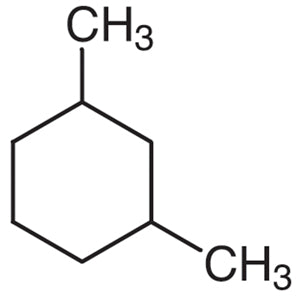
1,3-Dimethylcyclohexane (cis- and trans- mixture), also known as TCI D0699, is a chemical compound widely used in laboratory settings for its versatility in organic synthesis. This compound serves as a building block in the development of complex molecular structures, enabling chemists to explore various reaction pathways. Its presence in both cis and trans configurations provides structural diversity, which is essential for studying isomerism and its impact on chemical reactivity. As a key component in synthetic chemistry, it supports the creation of a wide range of organic compounds, making it an indispensable tool for researchers.
The compound’s stability and reactivity make it a preferred choice in laboratory applications. Its non-polar nature facilitates solubility in organic solvents, simplifying reaction conditions and purification processes. The molecular structure, with two methyl groups positioned at the 1 and 3 positions, allows for precise control over substitution patterns, which is crucial in synthetic planning. Additionally, its high purity and consistent physical form ensure reliable results in experiments, making it a trusted material for both academic and industrial research.
In Indonesian laboratories, 1,3-Dimethylcyclohexane is commonly used in organic chemistry research. It is a staple in academic institutions and research centers, where it supports the development of new compounds and the study of chemical reactions. Its availability and stability make it a practical choice for routine experiments, contributing to the advancement of chemical knowledge in the region.
Related TCI products
- TCI D1054 2207-03-6 trans-1,3-Dimethylcyclohexane
- TCI D0700 589-90-2 1,4-Dimethylcyclohexane (cis- and trans- mixture)
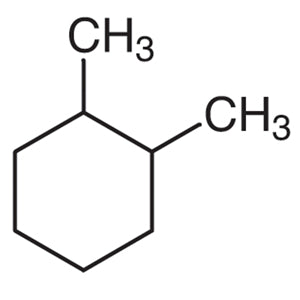
- TCI D0698 583-57-3 1,2-Dimethylcyclohexane (cis- and trans- mixture)
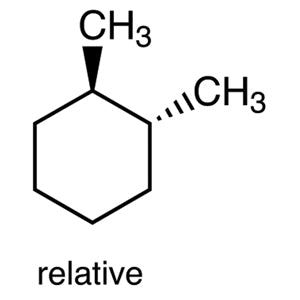
- TCI D0697 6876-23-9 trans-1,2-Dimethylcyclohexane
- TCI D0271 2207-04-7 trans-1,4-Dimethylcyclohexane
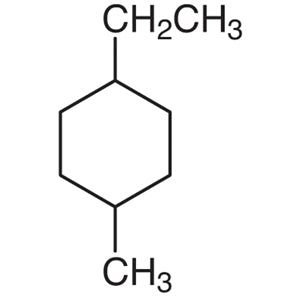
- TCI E0424 3728-56-1 1-Ethyl-4-methylcyclohexane (cis- and trans- mixture)
- Organic synthesis is a primary application for this compound, as its structural versatility enables the creation of complex molecules.
- Isomerism studies benefit from its cis- and trans- configurations, allowing researchers to investigate the effects of stereochemistry on reactivity.
- Pharmaceutical research utilizes it as a building block for the synthesis of various drug compounds.
- Industrial chemical production relies on its stability and solubility for the manufacture of specialty chemicals.
- Teaching laboratories use it to demonstrate fundamental concepts in organic chemistry, such as substitution and isomerization reactions.
| Brand | TCI |
|---|---|
| CAS number | 591-21-9 |
| Molecular formula | — |
| Purity | — |
| Category | Chemistry > Building Blocks > Non-Heterocyclic Building Blocks |
| Pack sizes | — |
| Physical form | Liquid |
| Storage | Store in a cool, dry place away from light |
This compound should be stored in a cool, dry place, away from direct light and sources of heat to maintain its stability. It is recommended to use airtight containers made of glass or polyethylene to prevent contamination and evaporation. Due to its non-polar nature, it is compatible with most organic solvents but should not be mixed with incompatible substances. In laboratory settings, it is essential to handle the compound with appropriate personal protective equipment, such as gloves and safety goggles, to ensure safe handling. Regular monitoring of storage conditions is advised to maintain the integrity of the material and ensure its suitability for experimental use.
—
Produk Terkait
-
trans-1,3-Dimethylcyclohexane TCI D1054
Regular price Rp 3.949.050,00Regular price -
1,4-Dimethylcyclohexane(cis-andtrans-mixture) TCI D0700
Regular price From Rp 1.298.850,00Regular price -
1,2-Dimethylcyclohexane(cis-andtrans-mixture) TCI D0698
Regular price From Rp 848.400,00Regular price -
trans-1,2-Dimethylcyclohexane TCI D0697
Regular price From Rp 1.220.100,00Regular price -
trans-1,4-Dimethylcyclohexane TCI D0271
Regular price From Rp 1.618.050,00Regular price -
1-Ethyl-4-methylcyclohexane(cis-andtrans-mixture) TCI E0424
Regular price Rp 1.856.400,00Regular price -
1,1,3-Trimethylcyclohexane TCI T0827
Regular price Rp 5.830.650,00Regular price -
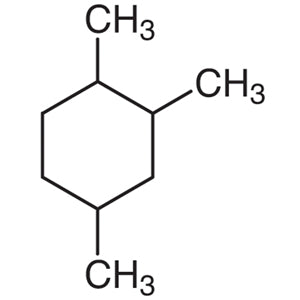
1,2,4-Trimethylcyclohexane(mixtureofstereoisomers) TCI T0825
Regular price From Rp 1.776.600,00Regular price