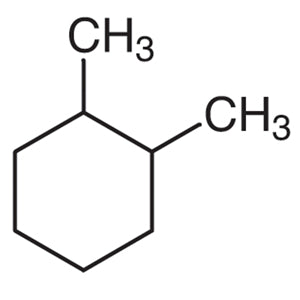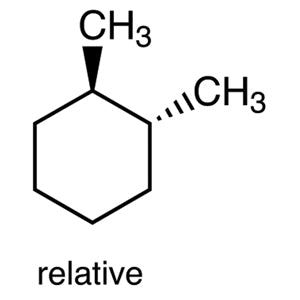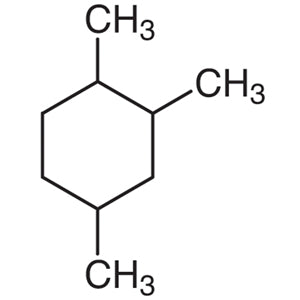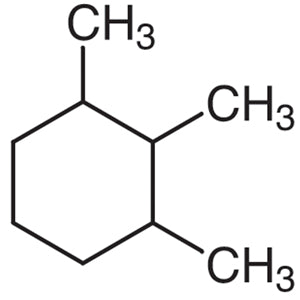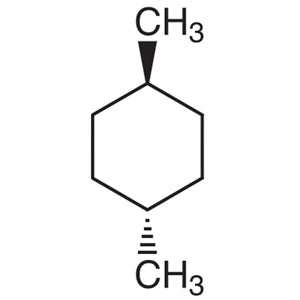
Trans-1,4-Dimethylcyclohexane is a chemical compound widely used as a building block in various laboratory applications. It serves as a foundational material in synthetic chemistry, particularly in the preparation of complex organic molecules. This compound is commonly employed in research settings where controlled chemical transformations are required. Its structural simplicity and predictable reactivity make it a valuable resource for chemists working on diverse synthetic pathways.
The compound’s unique trans configuration and non-polar nature contribute to its versatility in chemical reactions. It is stable under normal conditions and can be easily modified through various chemical reactions, making it a preferred choice for synthetic chemists. Its volatility and solubility in organic solvents such as ethyl acetate and hexane further enhance its utility in laboratory processes. These properties allow it to be used in a wide range of experimental setups where non-polar solvents are required.
In Indonesian laboratories, Trans-1,4-Dimethylcyclohexane is frequently used in scientific research, especially in the development of pharmaceuticals and industrial chemicals. Its chemical stability and ease of handling make it a reliable material for both academic and industrial research. It is commonly found in research facilities where organic synthesis and compound modification are key activities. Its non-corrosive nature also ensures safe handling under standard laboratory conditions.
- Synthetic Organic Chemistry: Trans-1,4-Dimethylcyclohexane is ideal for synthetic routes requiring non-polar intermediates due to its solubility in organic solvents and stable chemical properties.
- Pharmaceutical Research: The compound is used in the synthesis of aromatic compounds and drug molecules, as it provides a reliable starting point for complex molecular structures.
- Industrial Chemistry: It serves as a precursor for the production of various industrial chemicals, offering a cost-effective and stable alternative for chemical manufacturing.
- Analytical Chemistry: Its predictable reactivity and solubility make it suitable for use in analytical procedures where controlled chemical transformations are necessary.
- Educational Laboratories: It is commonly used in teaching labs to demonstrate organic synthesis techniques and chemical reactivity in a controlled environment.
| Brand | TCI |
|---|---|
| CAS number | 2207-04-7 |
| Molecular formula | — |
| Purity | — |
| Category | Chemistry > Building Blocks > Non-Heterocyclic Building Blocks |
| Pack sizes | Available in various sizes as per standard laboratory supply |
| Physical form | Liquid |
| Storage | Store in a cool, dry place away from direct sunlight |
Trans-1,4-Dimethylcyclohexane should be stored in a cool, dry location, away from direct sunlight and sources of heat. It is recommended to keep the compound in a tightly sealed container to prevent evaporation and contamination. Due to its volatility, it is important to ensure proper ventilation in the laboratory when handling this material. It is non-corrosive and generally safe to handle under normal laboratory conditions, but care should be taken to avoid inhalation of vapors. Always use appropriate personal protective equipment, such as gloves and safety goggles, when working with this compound to ensure safe laboratory practices.
—
Produk Terkait
-
trans-1,3-Dimethylcyclohexane TCI D1054
Regular price Rp 3.949.050,00Regular price -
1,4-Dimethylcyclohexane(cis-andtrans-mixture) TCI D0700
Regular price From Rp 1.298.850,00Regular price -
1,3-Dimethylcyclohexane(cis-andtrans-mixture) TCI D0699
Regular price From Rp 1.458.450,00Regular price -
1,2-Dimethylcyclohexane(cis-andtrans-mixture) TCI D0698
Regular price From Rp 848.400,00Regular price -
trans-1,2-Dimethylcyclohexane TCI D0697
Regular price From Rp 1.220.100,00Regular price -
1,1,3-Trimethylcyclohexane TCI T0827
Regular price Rp 5.830.650,00Regular price -
1,2,4-Trimethylcyclohexane(mixtureofstereoisomers) TCI T0825
Regular price From Rp 1.776.600,00Regular price -
1,2,3-Trimethylcyclohexane TCI T0824
Regular price Rp 3.100.650,00Regular price