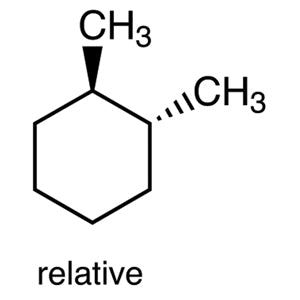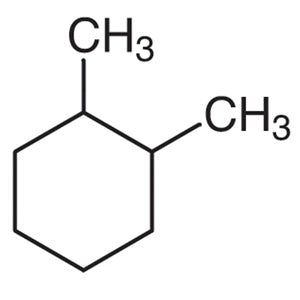
1,2-Dimethylcyclohexane (cis- and trans- mixture) is a chemical compound widely used in laboratory settings for the synthesis of complex molecules. This compound serves as a building block in organic chemistry, offering versatility in chemical reactions due to its structural characteristics. It is commonly utilized in research and development processes where controlled chemical transformations are required. Its presence in various chemical applications highlights its importance in both academic and industrial laboratories.
The compound is known for its non-polar nature and volatility, which make it highly soluble in organic solvents such as ethyl acetate and chloroform. These properties are essential for applications involving extraction, dissolution, and reaction processes that require non-polar solvents. Additionally, its stability under normal conditions ensures that it remains safe for handling and storage, reducing the risk of unwanted chemical reactions. Its inertness also contributes to its reliability in experimental setups.
In Indonesian laboratories, 1,2-Dimethylcyclohexane is frequently used in organic chemistry research, particularly in higher education institutions and research centers. Its role in the synthesis of aromatic and heterocyclic compounds makes it a valuable resource for chemists working on complex molecular structures. Its availability and chemical properties support its widespread use in both teaching and research environments.
Related TCI products
- TCI D1054 2207-03-6 trans-1,3-Dimethylcyclohexane
- TCI D0700 589-90-2 1,4-Dimethylcyclohexane (cis- and trans- mixture)
- TCI D0699 591-21-9 1,3-Dimethylcyclohexane (cis- and trans- mixture)
- TCI D0697 6876-23-9 trans-1,2-Dimethylcyclohexane
- TCI D0271 2207-04-7 trans-1,4-Dimethylcyclohexane
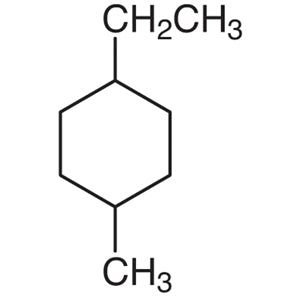
- TCI E0424 3728-56-1 1-Ethyl-4-methylcyclohexane (cis- and trans- mixture)
- Organic synthesis applications benefit from this compound's ability to participate in various chemical reactions, making it ideal for building complex molecular structures.
- It is commonly used in extraction processes due to its solubility in organic solvents, facilitating the isolation of desired compounds from reaction mixtures.
- The compound's non-polar nature makes it suitable for use in chromatography techniques, where separation of compounds based on polarity is required.
- It is often employed in the preparation of intermediate compounds for further chemical transformations, supporting the development of new synthetic pathways.
- Its stability and inertness make it a preferred choice for use in long-term storage and in experiments requiring minimal reactivity.
| Brand | TCI |
|---|---|
| CAS number | 583-57-3 |
| Molecular formula | — |
| Purity | — |
| Category | Chemistry > Building Blocks > Non-Heterocyclic Building Blocks |
| Pack sizes | Available in various quantities as per supplier specifications |
| Physical form | Liquid |
| Storage | Store in a cool, dry place away from direct sunlight and incompatible materials |
This compound should be stored in a cool, dry place, away from direct sunlight and sources of heat. It is recommended to use airtight containers made of materials that are chemically inert, such as glass or stainless steel, to prevent contamination and evaporation. Due to its volatility, it is important to ensure proper ventilation in the laboratory when handling this substance. Avoid contact with incompatible materials, such as strong oxidizing agents, to prevent any potential chemical reactions. Always follow standard laboratory safety procedures, including the use of personal protective equipment, to ensure safe handling and storage.
—
Produk Terkait
-
trans-1,3-Dimethylcyclohexane TCI D1054
Regular price Rp 3.949.050,00Regular price -
1,4-Dimethylcyclohexane(cis-andtrans-mixture) TCI D0700
Regular price From Rp 1.298.850,00Regular price -
1,3-Dimethylcyclohexane(cis-andtrans-mixture) TCI D0699
Regular price From Rp 1.458.450,00Regular price -
trans-1,2-Dimethylcyclohexane TCI D0697
Regular price From Rp 1.220.100,00Regular price -
trans-1,4-Dimethylcyclohexane TCI D0271
Regular price From Rp 1.618.050,00Regular price -
1-Ethyl-4-methylcyclohexane(cis-andtrans-mixture) TCI E0424
Regular price Rp 1.856.400,00Regular price -
1,1,3-Trimethylcyclohexane TCI T0827
Regular price Rp 5.830.650,00Regular price -
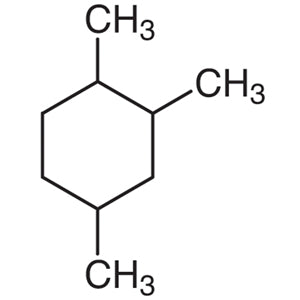
1,2,4-Trimethylcyclohexane(mixtureofstereoisomers) TCI T0825
Regular price From Rp 1.776.600,00Regular price