Tryptamine is a chemical compound classified under the heterocyclic category, featuring a basic structure containing a nitrogen atom within an aromatic ring. It plays a crucial role in laboratory settings, particularly in the synthesis of complex molecules within organic chemistry and pharmacology. Its structural similarity to compounds like serotonin and DMT makes it a valuable tool for researchers exploring psychoactive substances and their biological activities. Tryptamine is widely used in Indonesian laboratories for its versatility in creating compounds with specific biological functions.
Tryptamine is known for its chemical stability under controlled conditions, although it is highly sensitive to moisture and air exposure. It exists as a crystalline solid and dissolves easily in organic solvents such as ethyl acetate and ethanol. These physical properties make it a preferred choice for chemical synthesis, as it can be manipulated effectively in various experimental setups. Its reactivity also ensures that it can participate in a wide range of chemical reactions, enhancing its utility in research environments.
In Indonesian laboratories, Tryptamine is commonly used in chemical and pharmaceutical research. It is frequently employed in experiments related to the synthesis of psychoactive compounds, drug development, and the study of neurotransmitter-related mechanisms. Its presence in local research institutions highlights its importance in advancing scientific knowledge and innovation in the field of chemistry.
- Organic Synthesis: Tryptamine is widely used in the synthesis of complex organic molecules due to its structural versatility and reactivity, allowing for the creation of various derivatives with specific biological activities.
- Pharmaceutical Research: It serves as a building block in the development of new drugs, particularly those targeting neurotransmitter systems, due to its similarity to serotonin and other biologically active compounds.
- Psychoactive Compound Studies: Tryptamine is essential in research involving psychoactive substances, as its structure closely resembles compounds like DMT, enabling the study of their effects and mechanisms.
- Neuropharmacology Experiments: It is used to investigate the interactions between neurotransmitters and receptors, contributing to the understanding of neurological processes and potential therapeutic applications.
- Chemical Education: Tryptamine is also utilized in academic settings to teach fundamental concepts in organic chemistry and synthetic methods to students and researchers.
| Brand | TCI |
|---|---|
| CAS number | 61-54-1 |
| Molecular formula | — |
| Purity | — |
| Category | Chemistry > Building Blocks > Heterocyclic Building Blocks |
| Pack sizes | Available in various quantities as per standard laboratory supply specifications |
| Physical form | Crystalline solid |
| Storage | Requires protection from moisture and air exposure |
Tryptamine should be stored in a cool, dry place away from moisture and air exposure to maintain its chemical stability. It is recommended to use airtight containers made of glass or high-density polyethylene to prevent degradation. Due to its reactivity, it should be handled with care using appropriate personal protective equipment such as gloves and safety goggles. Proper ventilation is essential when working with Tryptamine to minimize inhalation risks. It should be kept in a secure location away from incompatible materials to ensure safety in the laboratory environment. Regular monitoring of storage conditions is advised to maintain the integrity of the compound during experiments.
—
Produk Terkait
-
TryptamineHydrochloride TCI A0300
Regular price From Rp 505.050,00Regular price -
N-Acetyl-5-hydroxytryptamine TCI A1277
Regular price From Rp 2.306.850,00Regular price -
5-MethoxytryptamineHydrochloride TCI M3563
Regular price Rp 1.298.850,00Regular price -
6-Methoxytryptamine TCI M3162
Regular price From Rp 2.889.600,00Regular price -
2-Methyltryptamine TCI M2055
Regular price From Rp 4.268.250,00Regular price -
5-Methoxytryptamine TCI M0131
Regular price From Rp 477.750,00Regular price -
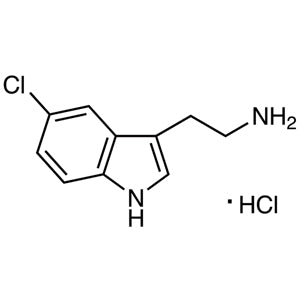
5-ChlorotryptamineHydrochloride TCI C1145
Regular price Rp 2.386.650,00Regular price -
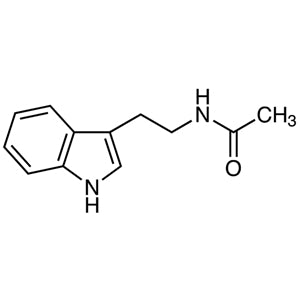
N-Acetyltryptamine TCI A2685
Regular price Rp 2.625.000,00Regular price